

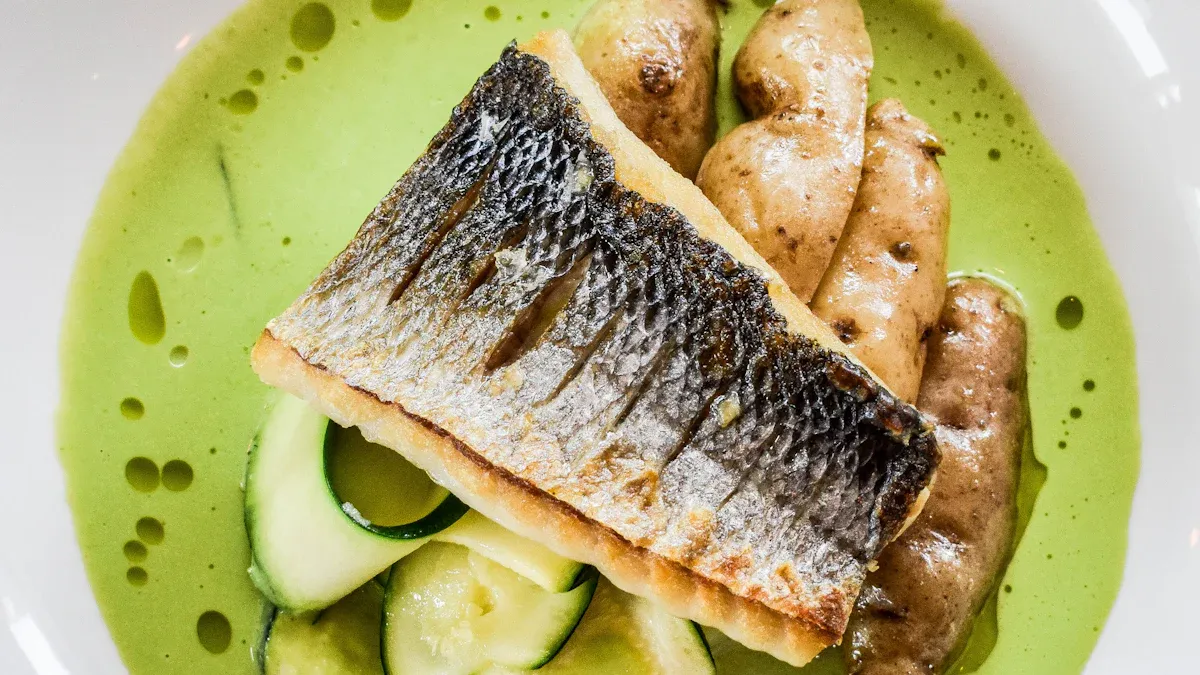
Ocean perch is a lean fish with a light to bright red color and dark dorsal markings. You can find this species, known scientifically as Sebastes alutus, in benthic habitats along the continental shelf. Its firm meat and mild flavor make it a favorite in kitchens worldwide. Many people choose ocean perch for its taste and the impressive Nutrition Facts it offers. The growing global demand reflects its adaptability in traditional and modern cuisines.
Category | Details |
|---|---|
Scientific Name | Sebastes alutus |
Common Names | Pacific ocean perch |
Size | Up to 40 cm, 1.4 kg |
Lifespan | Up to 60 years |
Key Takeaways
Ocean perch is a lean fish packed with protein, offering 11.9 grams per 3-ounce serving. This makes it a great choice for muscle growth and repair.
Eating ocean perch supports heart health due to its high omega-3 fatty acid content, which helps lower inflammation and maintain healthy cholesterol levels.
Ocean perch is low in calories and fat, making it an excellent option for weight management. It helps you feel full without overeating.
This fish is versatile in the kitchen. You can bake, fry, or steam it, allowing you to enjoy a variety of delicious recipes.
Ocean perch is rich in essential nutrients like vitamin B12 and selenium, which boost your immune system and support overall health.
Ocean Perch Overview
Species
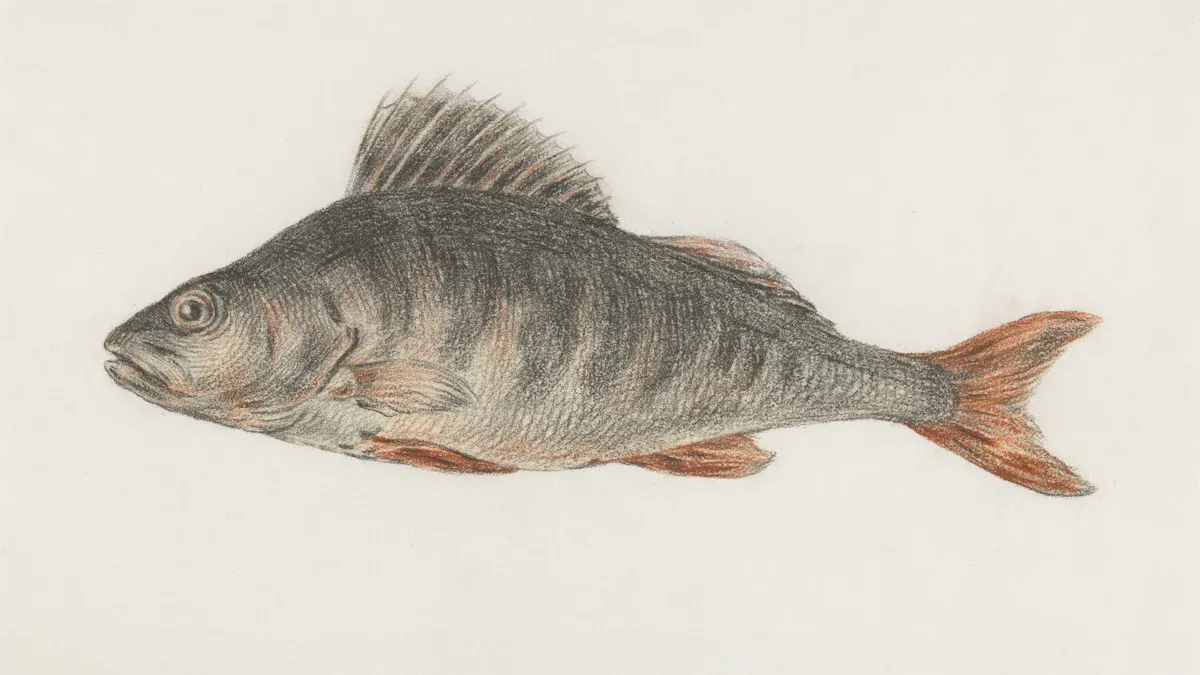
You will find that ocean perch belongs to the species Sebastes alutus. This fish stands out with its light red body and dark-green blotches. In the United States, you see it labeled as ocean perch, while in Canada, it often appears as rockfish or Pacific ocean perch. The fish can grow up to 4.4 pounds and prefers deep waters. Here is a table that helps you identify the main features:
Feature | Details |
|---|---|
Scientific Name | Sebastes alutus |
US Market Name(s) | Ocean Perch |
Canada Market Name(s) | Rockfish, Pacific Ocean Perch |
Physical Characteristics | Light red body, dark-green blotches |
Habitat | North Pacific Ocean, continental shelf |
Depth Range | 82 – 2,700 feet |
Weight | Up to 4.4 pounds |
Habitat
You can spot this fish in the North Pacific, from southern California to northern Honshū, Japan. The Bering Sea, British Columbia, Gulf of Alaska, and Aleutian Islands all provide homes for ocean perch. Most of these fish live at depths between 150 and 420 meters on the outer continental shelf. The fish often feed along the water column at night, showing semi-demersal behavior. The table below shows where you might find ocean perch:
Region/Environment | Description |
|---|---|
North Pacific | Range from southern California to northern Honshū, Japan |
Bering Sea | Included in the range of Pacific ocean perch |
British Columbia | Most abundant region for Pacific ocean perch |
Gulf of Alaska | Commonly found region |
Aleutian Islands | Part of the habitat |
Depth Preference | 150–420 m on the outer continental shelf |
Feeding Behavior | Semi-demersal, feeds along the water column at night |
Tip: Sustainable fishing practices help protect ocean perch habitats and keep fish populations healthy. Responsible seafood management reduces environmental impact and supports marine life balance.
Popularity
You will notice that ocean perch is popular among both chefs and home cooks. The fish has a mild flavor and clean taste, which makes it easy to use in many dishes. Its delicate texture allows you to try gentle cooking methods, such as steaming or baking. Ocean perch does not taste fishy, so you can enjoy it even if you do not like strong seafood flavors. The versatility of this fish means you can prepare it in many ways, making it a favorite in seafood recipes around the world. Regulations in some regions, like the Gulf of Alaska, help maintain the quality and availability of ocean perch by limiting fishing and supporting healthy populations.
Nutrition Facts
Ocean perch stands out as a healthy choice when you look at its nutrition facts. This fish gives you a lean source of protein and important nutrients. You can enjoy it as part of a balanced diet and benefit from its unique fish nutrition profile.
Macronutrients
When you eat a 3-ounce (85-gram) serving of ocean perch, you get a low-calorie meal. This serving size contains only 61 calories. You also get 11.9 grams of protein, which helps your muscles grow and repair. The fat content stays low at just 1 gram per serving. Ocean perch contains no carbohydrates, so you can include it in low-carb meal plans.
Serving Size | Calorie Content |
|---|---|
3 oz (85 g) | 61 calories |
Nutrient | Amount |
|---|---|
Protein | 11.9 g |
Fat | 1 g |
You can see that ocean perch gives you a lean source of energy. The high protein and low fat make it a smart choice for anyone who wants to eat healthy fish. This fish nutrition profile supports muscle health and helps you feel full after meals.
Note: Ocean perch contains no carbohydrates, so it fits well into keto or low-carb diets.
Vitamins & Minerals
Ocean perch provides many vitamins and minerals that your body needs every day. You get a good amount of vitamin B12, phosphorus, and selenium. These nutrients help your body make red blood cells, keep your bones strong, and support your immune system. Ocean perch also gives you omega-3 and omega-3 fatty acids, which help your heart and brain.
Vitamin/Mineral | Amount per Serving | % Daily Value |
|---|---|---|
Vitamin D | 48.0 IU | 8% |
Calcium | 28.0 mg | 2% |
Iron | 0.2 mg | 1% |
Potassium | 187 mg | 4% |
Phosphorus | 248.0 mg | 24% |
Vitamin C | 0.0 mg | 0% |
Vitamin K | 0.1 µg | 0% |
Vitamin A | 40.0 IU | 1% |
Vitamin B1 (Thiamin) | 0.0 mg | 3% |
Vitamin B2 (Riboflavin) | 0.0 mg | 4% |
Vitamin E | 0.8 mg | 5% |
Vitamin B5 | 0.3 mg | 5% |
Vitamin B6 | 0.1 mg | 6% |
Vitamin B3 (Niacin) | 1.0 mg | 6% |
Choline, total | 65.0 mg | 12% |
Vitamin B12 | 1.5 µg | 63% |
Manganese | 0.0 mg | 0% |
Zinc | 0.3 mg | 2% |
Copper | 0.0 mg | 2% |
Magnesium | 23.0 mg | 5% |
Sodium | 287.0 mg | 19% |
Selenium | 28.6 µg | 52% |
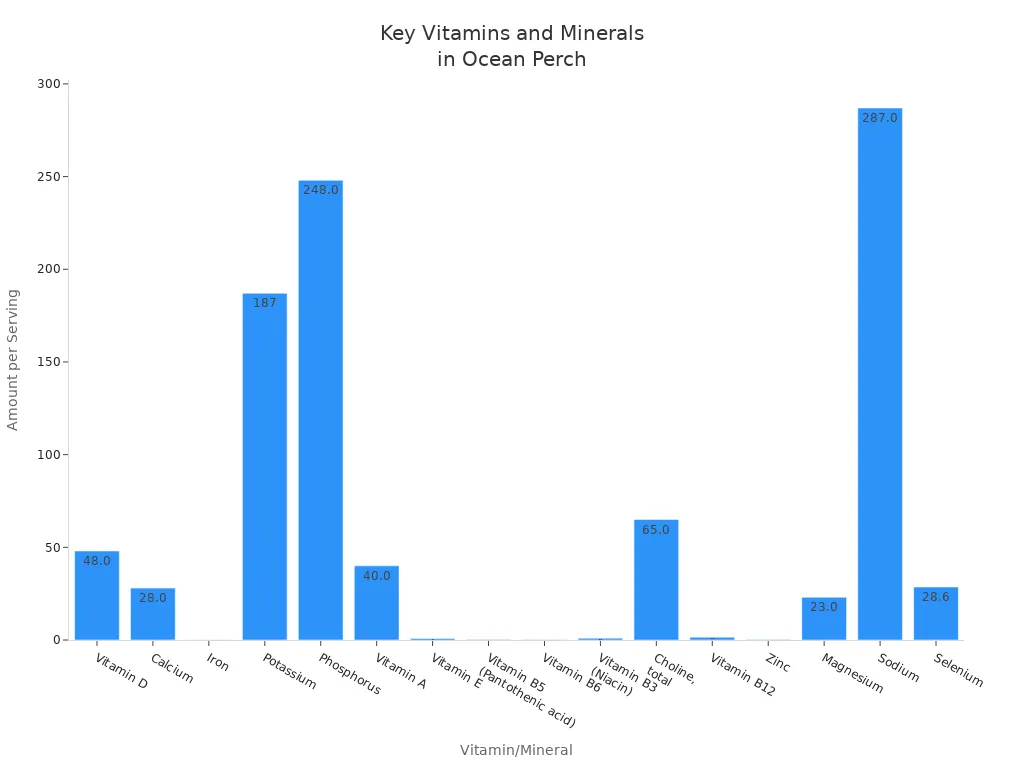
You get 1.5 micrograms of vitamin B12 in each serving, which covers over half of your daily needs. Phosphorus comes in at 248 milligrams, giving you almost a quarter of your daily value. Selenium is another key mineral, with 28.6 micrograms per serving, which is more than half of what you need each day. Ocean perch also gives you omega-3 and omega-3 fatty acids, which help lower inflammation and support your heart.
Nutrient | Amount | % of Recommended Daily Value |
|---|---|---|
Vitamin B12 | 1.7µg | 72% |
Phosphorus | 300.0mg | 30% |
Selenium | 34.6µg | 63% |
Omega-3 | 0.27g | 17% |
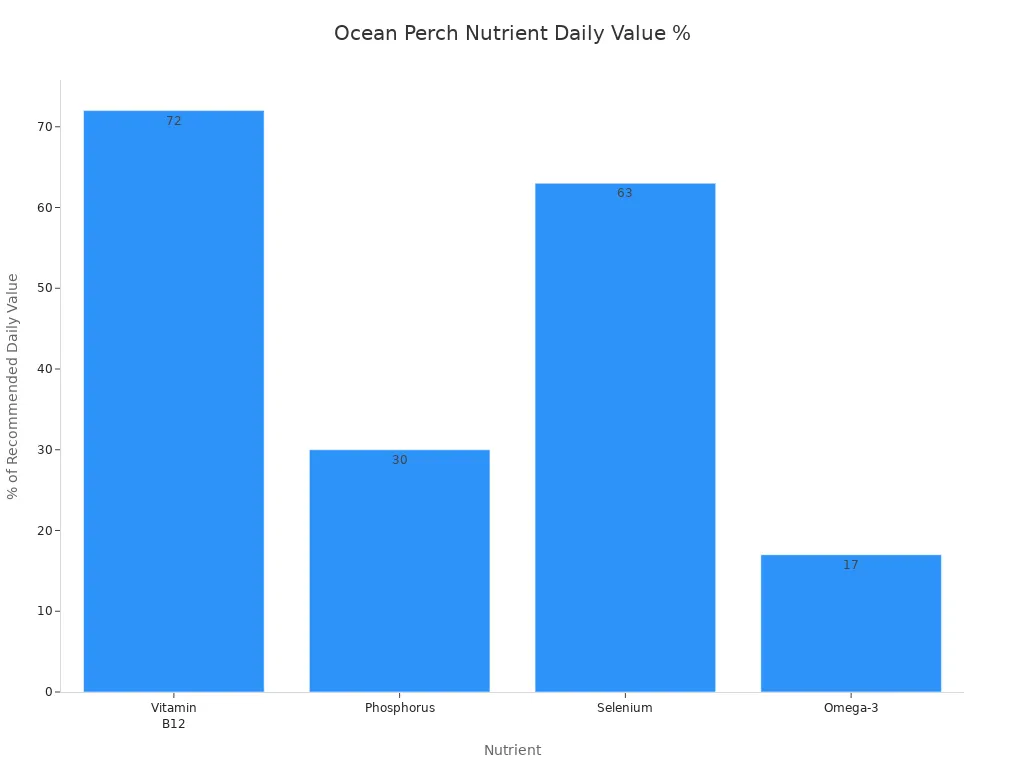
You can see that ocean perch is a great source of fish nutrition. The high levels of vitamin B12 and selenium help your body work well. The omega-3 and omega-3 fatty acids in this fish support your brain and heart health.
Comparison
When you compare ocean perch to other fish, you notice some important differences. Ocean perch has more omega-3 and omega-3 fatty acids than cod. It also has more monounsaturated fat, which is good for your heart. The nutrition facts show that ocean perch is a lean fish, but it still gives you healthy fats.
Seafood | Total Calories | Protein | Total Fat | Omega-3 |
|---|---|---|---|---|
Ocean Perch, baked | 100 | 20g | 2g | 0.3g |
Cod, broiled | 90 | 19g | 1g | 0.1g |
Seafood like ocean perch and cod gives you less fat than other protein foods. Ocean perch stands out because it has more omega-3 and omega-3 fatty acids. These healthy fats help lower your risk of heart disease. You also get more monounsaturated fat in ocean perch than in cod or whiting.
Fish Species | Omega-3 (EPA) | Omega-3 (DHA) | Omega-3 (DPA) | Monounsaturated Fat |
|---|---|---|---|---|
Whiting | 0.283g | 0.235g | 0.017g | 0.445g |
Perch | 0.101g | 0.223g | 0.036g | 0.195g |
Yellow perch contains 221.7 mg of omega-3 fatty acids per 100 grams.
Ocean perch gives you more omega-3 and omega-3 fatty acids than many other white fish.
You get a carb-free meal with ocean perch, which helps if you want to lower your carbohydrate intake.
When you look at fish nutrition, ocean perch gives you a strong mix of protein, vitamins, minerals, and healthy fats. The nutrition facts show why this fish is a smart choice for your meals. You get the benefits of omega-3 and omega-3 fatty acids, plus a lean source of energy.
Health Benefits
Ocean perch offers a variety of health benefits that make it a smart choice for your diet. You get important nutrients from this fish that support your heart, help you manage your weight, and boost your immune system. Let’s look at what ocean perch can do for your health.
Heart Health
You support your cardiovascular health when you eat ocean perch. This fish contains omega-3 fatty acids, which help lower your risk of heart disease. Omega-3 helps reduce inflammation in your blood vessels and supports healthy cholesterol levels. You get a low-fat source of protein, which means you avoid extra saturated fat that can harm your heart.
Eating fish like ocean perch two times a week can help you maintain a healthy heart. Omega-3 works to keep your arteries flexible and may lower your blood pressure.
Ocean perch also provides monounsaturated fats. These fats help protect your heart and support liver health. You get a lean meal that fits into heart-friendly diets.
Nutrient | Role in Heart Health |
|---|---|
Omega-3 | Reduces inflammation |
Monounsaturated | Supports cholesterol balance |
Low Saturated Fat | Protects arteries |
Weight Management
You can manage your weight more easily when you include ocean perch in your meals. This fish gives you high protein and low calories, which helps you feel full without overeating. Protein supports muscle growth and repair, making it easier for you to stay active and healthy.
Fish provides lean protein, which is essential for weight management.
Many fish varieties are low in calories, making them suitable for weight loss diets.
Fish is rich in heart-healthy fats, especially omega-3, which supports overall health.
Studies show that high-protein diets help you gain less weight and improve feed efficiency. You get better growth outcomes when you eat more protein and fewer calories. Ocean perch fits this pattern, giving you a meal that helps you control your weight and build muscle.
Dietary lipid levels and protein content affect weight gain and feed efficiency in fish.
High-protein diets lead to better growth, which suggests similar benefits for people.
The right dietary composition helps you manage your weight, especially with high-protein, low-calorie foods like ocean perch.
Omega-3 also plays a role in weight management. It helps regulate your metabolism and supports liver health. You get a meal that helps you reach your weight goals.
Immune Support
You boost your immune system when you eat ocean perch. This fish contains selenium and vitamin B12, which help your body fight off illness and keep your thyroid healthy.
Selenium supports DNA synthesis and thyroid function.
Selenium protects your body from oxidative stress.
Selenium is highly bioavailable in fish and plays a crucial role in thyroid and immune support.
Vitamin B12 is essential for nerve health and DNA production.
Ocean perch gives you a strong dose of selenium and vitamin B12 in every serving. You help your body produce red blood cells and maintain nerve health. You also support your thyroid, which controls your metabolism and energy levels.
Regular fish consumption gives you omega-3, which has immunoregulatory properties. Omega-3 helps your body produce anti-inflammatory mediators. You may see a reduced risk of chronic inflammatory conditions, such as rheumatoid arthritis, when you eat fish often.
Dietary fish, rich in omega-3, supports immune function.
Regular fish consumption is linked to lower rates of chronic inflammation.
Omega-3 influences the production of anti-inflammatory mediators.
Tip: You can improve your immune system and support liver health by eating fish like ocean perch regularly.
Culinary Uses
Flavor
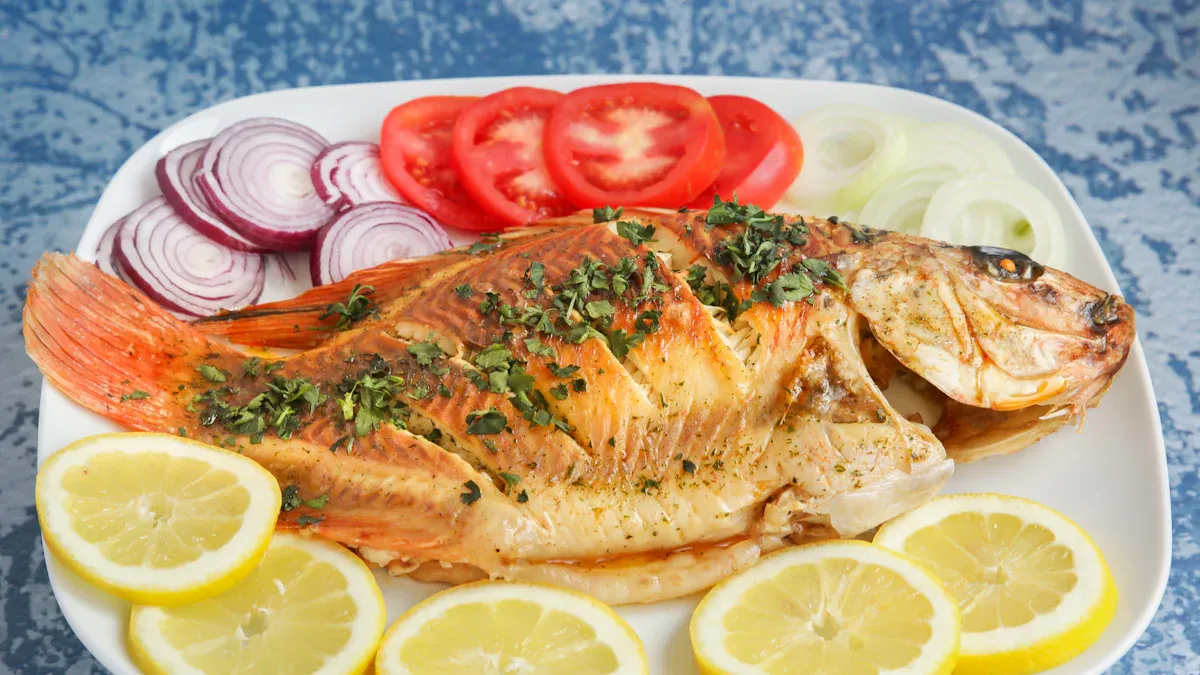
You experience a mild and delicate flavor when you eat ocean perch. This fish has a taste that stands out compared to other white fish. You notice that the flavor is more pronounced than tilapia, yet it remains gentle and clean. The thin, flaky texture feels similar to cod and tilapia, but ocean perch offers a stronger flavor profile. Many people compare the taste to striped bass, describing it as mild but more refined. You can use this fish in many recipes because its flavor adapts well to different seasonings and sauces. The versatility makes ocean perch a favorite among cooks who want a fish that enhances both traditional and modern dishes.
Cooking Methods
You have many options for preparing ocean perch. Chefs and home cooks recommend several popular methods that bring out the best in this fish. The table below shows what cooking methods you can use and how each one works:
Cooking Method | Description |
|---|---|
Bake | You cook fillets evenly and keep the flavor inside. |
Fry | You get a crispy texture, perfect for whole fish or fillets. |
Poach | You preserve moisture and flavor with gentle heat. |
Saute | You cook quickly and add sauces for extra taste. |
Steam | You keep the fish moist and healthy, often used in Asian recipes. |
You can bake ocean perch for a tender result. Frying gives you a crunchy outside and soft inside. Poaching keeps the fish juicy. Sautéing lets you add flavors with sauces. Steaming helps you keep the fish light and healthy.
Recipe Ideas
You find ocean perch in many recipes from around the world. Here are some popular ways to enjoy this fish:
Baked Ocean Perch: You season fillets with olive oil, salt, mustard, paprika, red pepper flakes, and black pepper. This dish cooks in less than 30 minutes.
Crispy Baked Perch: You spread Dijon mustard and mayonnaise on fillets, then coat them with Panko breadcrumbs and Parmesan.
Baked Ocean Perch with Lemon: You pair the fish with lemon and garlic for a fresh, healthy meal.
You also see ocean perch in global cuisines:
Cuisine | Recipe Variation |
|---|---|
Italian | Perch parmesan |
Spanish | Perch in a paella |
Nordic | Perch with yogurt sauce |
Mediterranean | Perch with caper mayonnaise |
General | Pan-fried in citrus-based parsley sauce |
General | Baked with spiced seasonings in cream sauce |
General | Hand-breaded and pan-fried, served fish and chip-style |
You can try these recipes to enjoy the unique flavor and texture of this fish. Ocean perch fits many cooking styles, making it easy for you to add variety to your meals.
You discover that ocean perch is a high-protein food with low saturated fat. These features help you build a balanced diet.
Eating fish may improve heart health.
Fish consumption can boost brain function.
Fish is rich in protein and vitamin D.
Omega-3 fatty acids support your body and brain.
Attribute | Description |
|---|---|
Flavor | Mild, sweet flavor |
Texture | Flaky, absorbs flavors well |
Cooking Methods | Frying, baking, grilling |
Nutritional Value | Rich in protein, vitamins, omega-3 fatty acids |
You prepare ocean perch by pan-frying, poaching, or baking. You enjoy a meal that is easy to make and good for your health. Try adding ocean perch to your meals for both taste and nutrition.
FAQ
What is the best way to store ocean perch?
You should keep ocean perch in the coldest part of your refrigerator. Use an airtight container. If you want to store it longer, freeze the fish in a sealed bag.
What nutrients make ocean perch a healthy choice?
You get high protein, vitamin B12, selenium, and omega-3 fatty acids from ocean perch. These nutrients help your heart, muscles, and immune system.
What does ocean perch taste like?
You taste a mild, slightly sweet flavor with ocean perch. The texture feels flaky and tender. This fish absorbs seasonings well and does not taste fishy.
What are common allergens in ocean perch?
You should know that ocean perch can cause allergic reactions in people sensitive to fish. Always check with your doctor if you have a seafood allergy.
What dishes can you make with ocean perch?
You can bake, fry, steam, or sauté ocean perch. Try recipes like baked fillets, crispy fish tacos, or perch with lemon and herbs.