

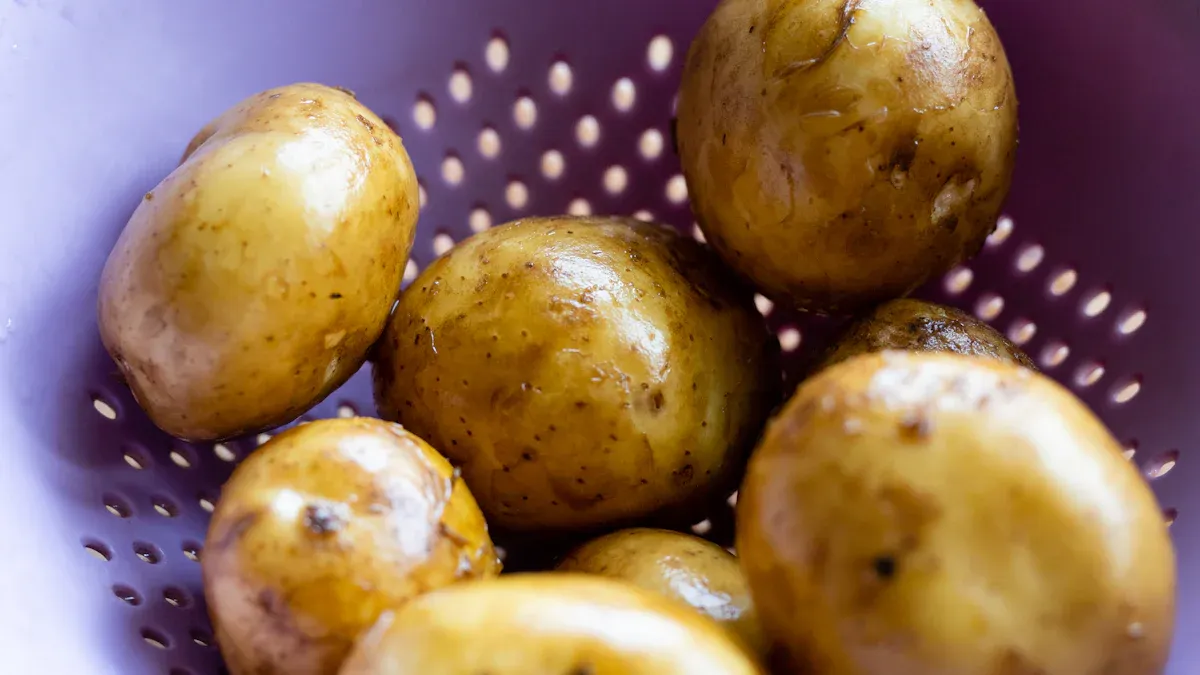
You can safely eat potato skin when you prepare it properly. Potato skins offer impressive nutrition, packed with fiber, potassium, vitamin C, and B vitamins.
Scientists confirm that potato peels deliver protein and bioactive compounds that support health.
The skin contains about 75% of a potato’s total fiber, while the flesh holds only 25%.
You get digestive support, heart benefits, and extra flavor by including potato skins in your meals.
Key Takeaways
Potato skins are rich in nutrients like fiber, potassium, vitamin C, and B vitamins, which support overall health.
Eating potato skins can improve digestive health by providing dietary fiber that promotes gut health and regularity.
Potato skins help lower blood pressure and support heart health due to their high potassium content.
Including potato skins in your meals boosts your immune system with vitamins and antioxidants that fight infections.
Cooking potato skins by baking or roasting retains their nutrients, making them a delicious and healthy addition to your diet.
Potato Skin Nutrition
Nutrients in Potato Skins
Potato skins provide a rich nutritional profile that supports your health. You get more than just flavor when you eat the skin. The nutrients in the skin include fiber, potassium, vitamin C, vitamin B-6, magnesium, iron, and antioxidants. These nutrients help your body in many ways.
Here is a table showing the average amounts of key nutrients found in potato skins per 100 grams:
Nutrient | Amount per 100g |
|---|---|
Calories | 58 kcal |
Net Carbohydrates | 10 grams |
Potassium | 157 mg |
Iron | 1.23 mg |
Copper | Higher than 79% of foods |
Vitamin C | 4.3 mg |
Fiber | 1 g |
Total Fat | 0.04 g |
Protein | 0.98 g |
Calcium | 11 mg |
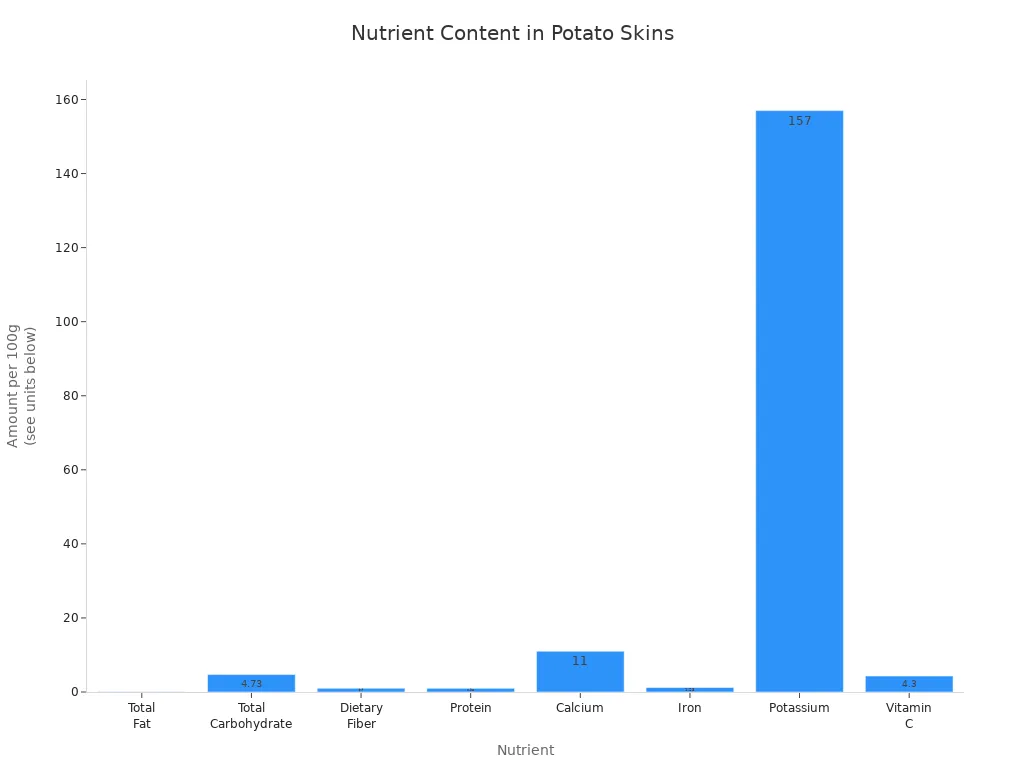
Potato nutrition stands out because the skin contains higher levels of potassium and iron than most other foods. You also get vitamin C, which helps your body heal and keeps your skin healthy. The skin provides about 30-40% of the vitamin C found in a whole potato. A medium potato gives you around 27 milligrams of vitamin C, so the skin makes a big contribution.
You also benefit from vitamin B-6. A medium potato contains about 30% of your daily vitamin B-6 needs. This vitamin helps your body turn food into energy. Magnesium is another important nutrient in potato skins. One medium potato with skin gives you 48 mg of magnesium, which supports your muscles and nerves.
Potato skins contain antioxidants such as flavonoids, polyphenols, anthocyanins, and carotenoids. These compounds protect your cells and help prevent disease. The table below shows some of the main antioxidants and their health benefits:
Antioxidant Compound | Health Benefits |
|---|---|
Vitamin C | Promotes collagen production, vital for skin health and wound healing |
Flavonoids | Antioxidant, anticancer, antibacterial, anti-inflammatory, anti-allergic, analgesic, antiviral |
Polyphenols | Helps prevent cell mutations that may lead to malignancy |
Anthocyanins | Contributes to overall antioxidant activity, especially in colored potatoes |
Carotenoids | Provides additional antioxidant benefits |
Potato Skin vs. Flesh
You get a stronger nutritional profile when you eat the whole potato, including the skin. The skin holds most of the fiber and many vitamins and minerals. If you remove the skin, you lose a lot of these nutrients.
Here is a table comparing the dietary fiber content in whole potatoes and peeled potatoes:
Type of Potato | Dietary Fiber (g/100g) |
|---|---|
Whole Potato (unpeeled) | 2-3 |
Peeled Potato | Less than 2 |
Unpeeled potatoes contain more dietary fiber than peeled potatoes. More than half of the dietary fiber is found in the skin. A medium potato with skin gives you about 2-3 grams of fiber.
Potato nutrition also changes when you peel the potato. The skin provides up to 175% more vitamin C, 115% more potassium, 111% more folate, and 110% more magnesium and phosphorus compared to peeled potatoes. Eating fruits and vegetables with their peels leads to higher nutrient intake.
Here is a table showing potassium content in different foods:
Component | Potassium Content (mg) |
|---|---|
Medium Potato Skin | More than flesh |
Medium Potato Flesh | 620 |
Medium Banana | 420 |
Broccoli | 460 |
Sweet Potatoes | 440 |
Potato skins help lower the glycemic index of potato-based foods. The skin contains fiber and phenolic compounds that slow down starch digestion and glucose release. This means you get a steadier supply of energy and avoid spikes in blood sugar.
Potato skin is rich in fiber and contains vitamins B and C, potassium, calcium, and iron. You get more nutrients in the skin than in the flesh alone.
Potato nutrition stands out among vegetable peels. Eating the skin gives you a better nutritional profile and helps your body stay healthy.
Health Benefits of Potato Skins
Digestive Health
Potato skins offer important health benefits for your digestive system. You get a good amount of dietary fiber from potato skin, which helps you feel full and supports better digestion. Fiber promotes the production of short-chain fatty acids in your gut. These acids help keep your digestive tract healthy. You also help regulate your gut microbiota when you eat fiber from potato skins. Beneficial bacteria like Lactobacillus and Bifidobacterium increase, which leads to improved digestion and overall health.
Here is a table showing how fiber from potato skins supports digestive health:
Evidence Type | Findings |
|---|---|
Dietary Fiber | Promotes short-chain fatty acids (SCFAs) for gut health |
Gut Microbiota | Increases beneficial bacteria like Lactobacillus and Bifidobacterium |
Health Benefits | Increases satiety, relieves constipation, reduces cholesterol |
You also get resistant starch from potato skins. This type of starch helps increase gut microbiome diversity. When you eat resistant starch, you promote beneficial bacteria and support better digestion. Studies show that raw potato starch increases bifidobacteria and improves glycemic responses, especially in older adults. High levels of resistant starch also increase Faecalibacterium, which helps reduce inflammation in your gut.
Evidence Description | Findings |
|---|---|
Resistant starch from potato skins | Promotes beneficial bacteria and increases gut microbiome diversity |
Consumption of raw potato starch | Increases bifidobacteria and improves glycemic responses |
High levels of resistant starch | Linked to anti-inflammatory effects through butyrate production |
You support digestive health and get better digestion when you include potato skins in your meals. You also help relieve constipation and lower cholesterol.
Heart and Bone Support
Potato skins provide health benefits for your heart and bones. You get potassium from potato skin, which helps lower blood pressure. A controlled feeding trial showed that dietary potassium from potatoes reduced systolic blood pressure by 6.01 mm Hg in adults with high blood pressure. This means you support heart health when you eat potato skins.
Magnesium and antioxidants in potato skins also help your bones stay strong. Magnesium improves bone mineral density, especially in women with osteoporosis. You get magnesium from potato skins, which helps your body absorb calcium and build strong bones. Antioxidants like quercetin help reduce inflammation, which supports bone health.
Here is a table showing nutrients in potato skins and their contribution to bone health:
Nutrient | Contribution to Bone Health |
|---|---|
Magnesium | Important for bone health; found in potato skins |
Antioxidants | Help reduce inflammation, indirectly supporting bones |
Phosphorus | Vital for bone formation and maintenance |
Calcium | Aids in bone density and strength |
Zinc | Supports overall bone health |
You get health benefits for your heart and bones when you eat potato skins. You support lower blood pressure, stronger bones, and reduced inflammation.
Immune System Benefits
Potato skins offer health benefits for your immune system. You get vitamin C, B vitamins, iron, and polyphenols from potato skins. Vitamin C protects your immune cells and helps your body make collagen, which improves your skin barrier. B vitamins help your immune cells multiply and defend against germs. Iron supports enzyme function and helps your body produce T lymphocytes, which are important for fighting infections. Polyphenols act as antioxidants and may boost immune function, especially in colored potato varieties.
Here is a table showing how nutrients in potato skins support your immune system:
Nutrient | Role in Immune Function |
|---|---|
Vitamin C | Protects immune cells and improves skin barrier function |
B Vitamins | Necessary for immune cell proliferation |
Iron | Required for enzyme function and T lymphocyte production |
Polyphenols | Antioxidants that may enhance immune function |
You get health benefits for your immune system when you eat potato skins. You help your body fight infections and stay healthy.
Tip: Eating potato skins gives you more nutrition and supports your digestion, heart, bones, and immune system. You get many benefits by including potato skins in your meals.
Culinary Uses for Potato Skins

Safe Preparation Tips
You can enjoy potato skin safely by following a few simple steps. Start by rinsing the potatoes under cold running water to remove dirt. Use a firm brush or your hands to scrub the skin and dislodge any remaining soil. For better removal of pesticides, soak the potatoes in a mixture of one part white vinegar to three parts water for five to ten minutes before scrubbing and rinsing again.
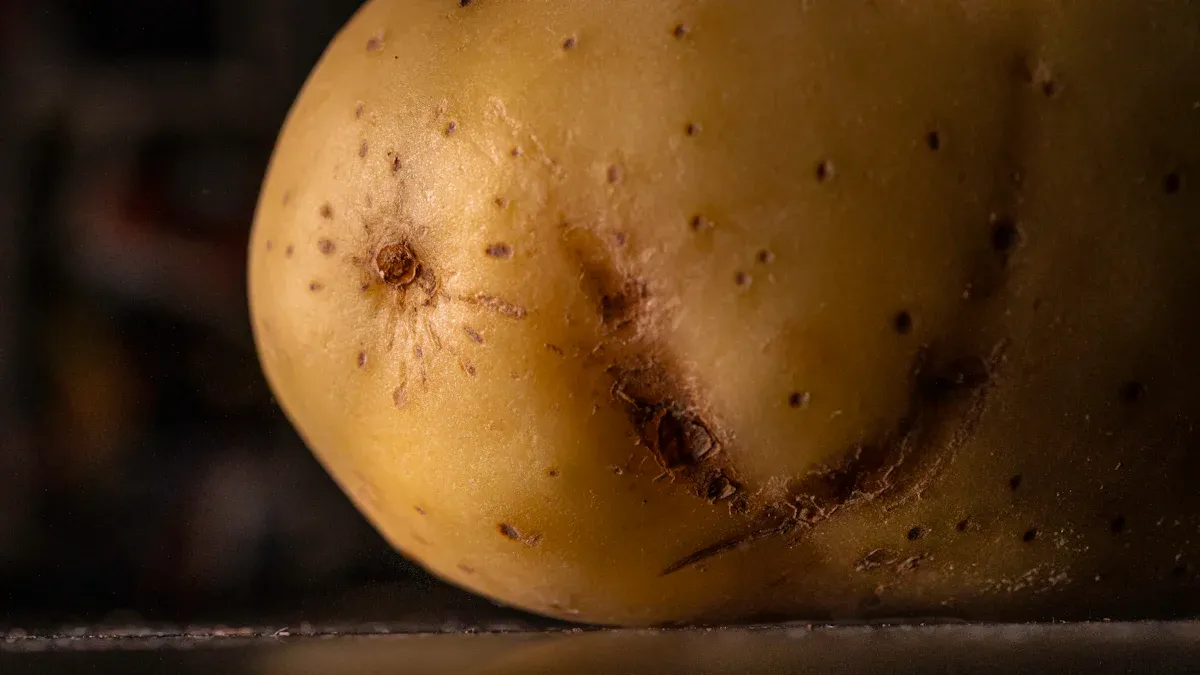
Always check your potatoes for green spots or sprouts. Green or sprouted potato skins contain solanine and chaconine, which are natural toxins. Eating these can cause nausea, headaches, or stomach pain. Discard any potatoes that have turned green or started to sprout to avoid these risks.
Cooking Methods
You have several options for cooking potato peels while keeping their nutrition intact. Boiling is gentle and helps preserve nutrients and antioxidants in the skin. Baking also retains most minerals and vitamins. Roasting works well to keep vitamins and minerals in the skin.
Boiling uses less heat and keeps more nutrients in the potato skin.
Baking keeps more minerals and vitamins than boiling.
Roasting helps the skin stay crisp and flavorful.
Cooking Method | Effect on Nutritional Value |
|---|---|
Boiling | Can lead to nutrient leaching |
Baking | Generally retains nutrients |
Roasting | Retains vitamins and minerals well |
Studies show that boiling colored potatoes preserves more phenolic compounds and antioxidants than baking. Cooking potatoes with their skins on gives you more fiber, vitamins, and minerals, which supports a high-fiber diet.
Easy Potato Skin Recipes
You can make tasty snacks and meals using baked potato skin. Here are some popular ideas:
Bake large potatoes, scoop out the insides, brush the skins with olive oil, and season with salt, pepper, and garlic powder. Air fry or bake until crispy, then top with shredded cheddar cheese, bacon, and green onions. Serve with sour cream.
Use Russet potatoes, sea salt, and olive oil. After baking and cooling, fill the skins with bacon and cheese, bake until melted, and top with sour cream and scallions.
Bake small potatoes, scoop out the flesh, brush the skins with olive oil, season, and bake until crisp. Add cheese, bacon, and green onions before serving.
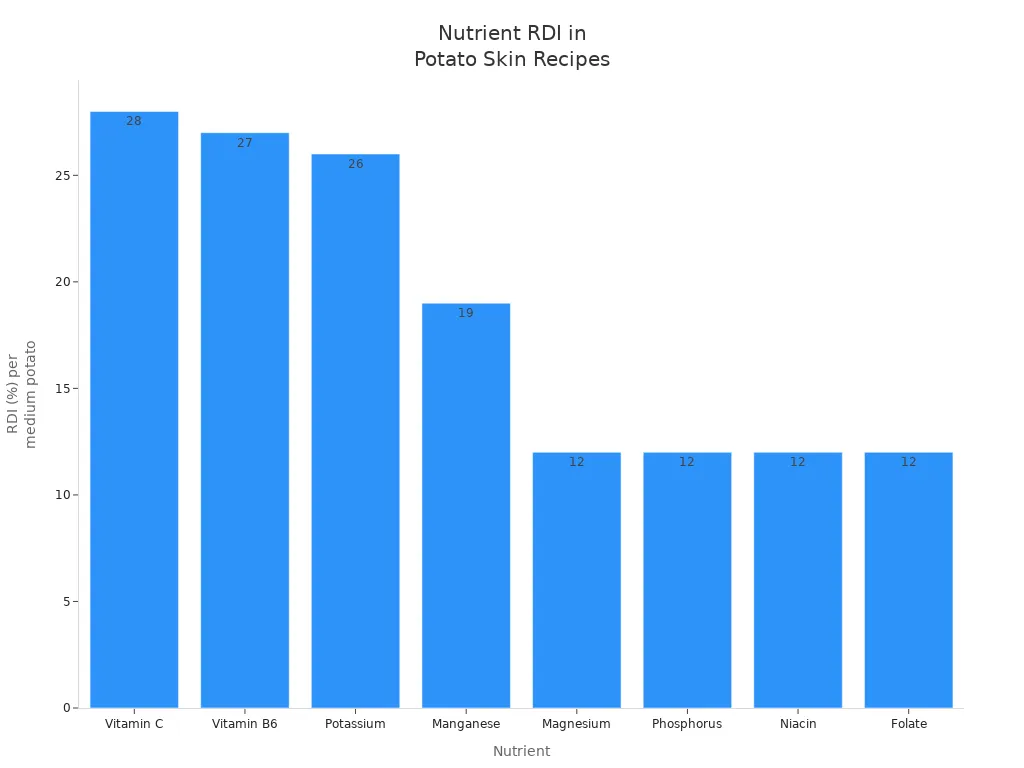
Potato skin-based recipes offer more fiber, vitamins, and minerals than traditional potato dishes. The table below shows the nutrition you get from a medium baked potato skin:
Nutrient | Amount per Medium Baked Potato (with skin) | RDI (%) |
|---|---|---|
Fiber | 3.8 grams | N/A |
Vitamin C | 28% | 28% |
Potassium | 26% | 26% |
Magnesium | 12% | 12% |
Using potato skins in your cooking also helps the environment. You reduce food waste and lower greenhouse gas emissions by keeping potato skins out of landfills. Composting potato peels enriches soil and reduces the need for artificial fertilizers.
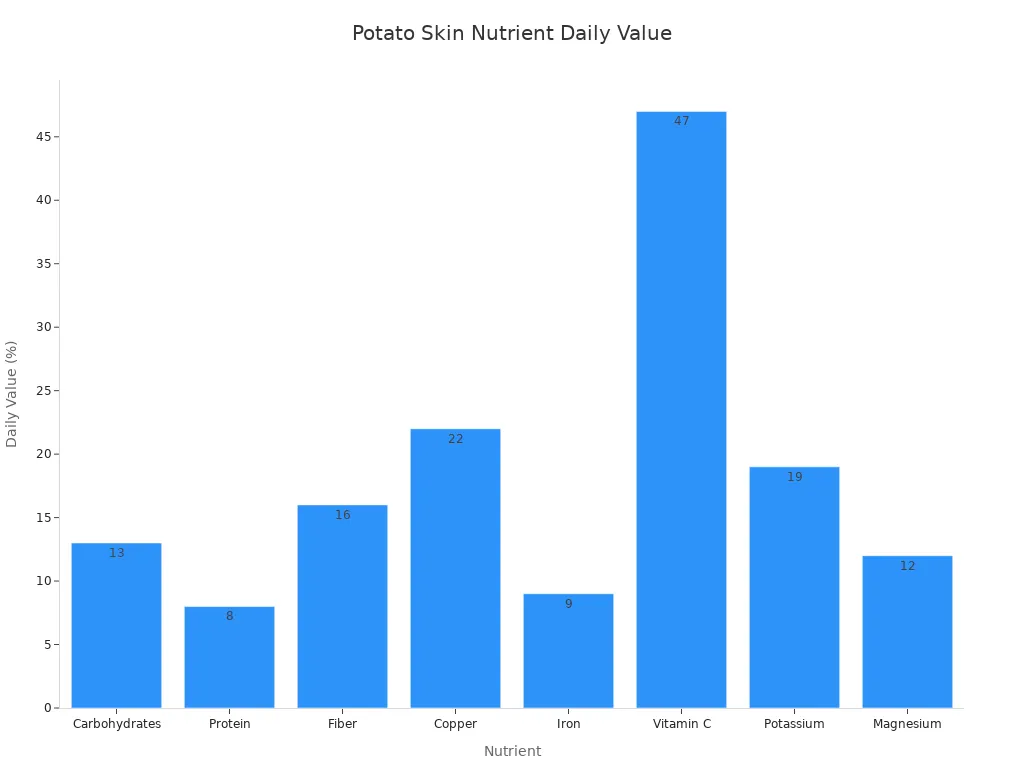
You get important nutrients when you eat potato skins. The skin provides fiber, potassium, vitamin C, and magnesium. These nutrients help your digestion, heart, and bones. The table below shows the nutrition in a medium potato with skin:
Nutrient | Amount per Medium Potato with Skin | Daily Value (%) |
|---|---|---|
Fiber | 4.5g | 16% |
Vitamin C | 42mg | 47% |
Potassium | 905mg | 19% |
Magnesium | 49mg | 12% |
You can boost your nutrition by keeping the skin on. Try these tips:
Scrub potatoes well before cooking.
Bake or roast to keep nutrients.
Add fresh herbs or vegetables for flavor.
Make the most of every potato by using the skin in your meals. You support your health and reduce food waste.
FAQ
What nutrients do you get from potato skins?
You get fiber, potassium, vitamin C, magnesium, and iron from potato skins. These nutrients help your body stay healthy and support your digestion, heart, and bones.
What is the safest way to eat potato skins?
You should scrub potato skins well under running water. Remove any green spots or sprouts. Cook the skins by baking, roasting, or boiling to make them safe and tasty.
What makes potato skins healthier than peeled potatoes?
Potato skins hold most of the fiber and many vitamins and minerals. When you eat the skin, you get more nutrients than if you eat only the flesh.
What should you avoid when eating potato skins?
You should avoid eating green or sprouted potato skins. These can contain toxins that may cause stomach pain or headaches. Always check your potatoes before cooking.
What are some easy ways to use potato skins in meals?
You can bake, roast, or air fry potato skins. Try making crispy snacks, stuffing them with cheese and veggies, or adding them to soups for extra flavor and nutrition.