

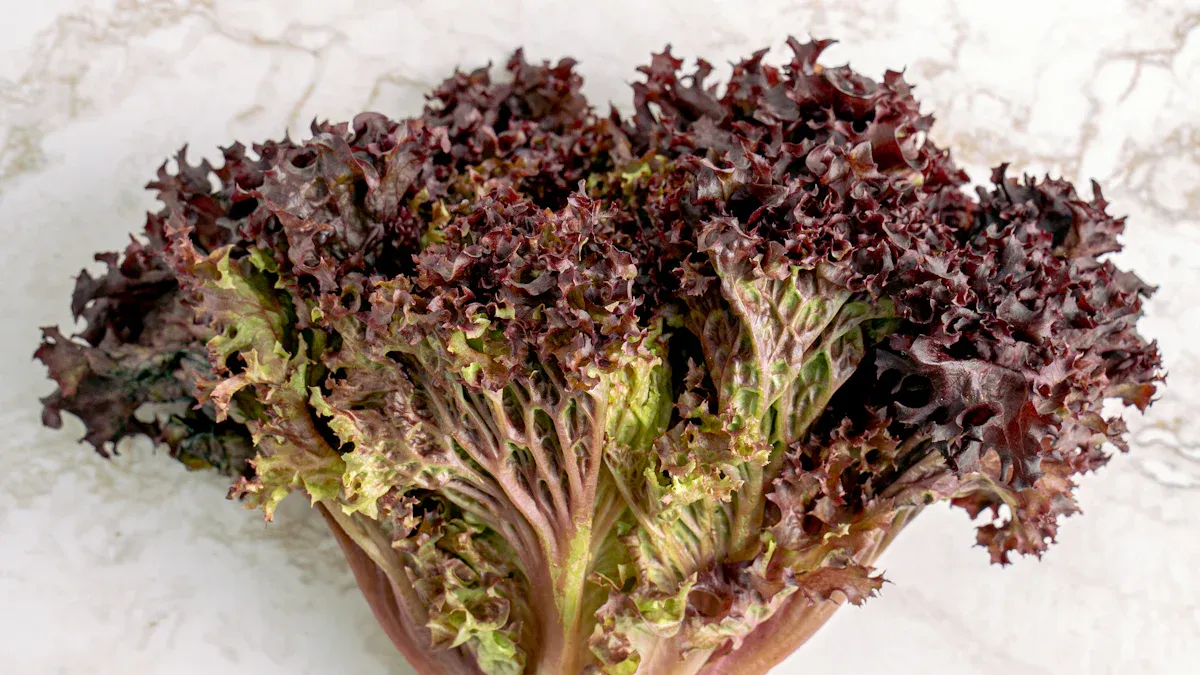
You get a powerful mix of nutrients when you add red leaf lettuce to your diet. Each 100-gram serving gives you 126.3 micrograms of vitamin K, meeting your daily needs. You also receive vitamin A plus antioxidants like anthocyanins, lutein, and zeaxanthin. Red leaf lettuce packs more antioxidant punch than green varieties, helping your heart and eyes. Its high water content supports hydration and weight management. Choosing this lettuce makes your diet smarter and healthier.
Key Takeaways
Red leaf lettuce is low in calories, with only 16 calories per 100 grams, making it an excellent choice for weight management.
This lettuce is rich in vitamins K and A, which support heart health and vision, helping to lower the risk of heart disease and eye conditions.
High in antioxidants like anthocyanins, red leaf lettuce protects your cells from damage and supports overall health.
The high water content (96%) in red leaf lettuce aids hydration and promotes a feeling of fullness, helping with weight control.
Incorporate red leaf lettuce into salads, wraps, and sandwiches to boost your nutrient intake and enjoy its crisp texture.
Red Leaf Lettuce Nutrition Facts
Calories
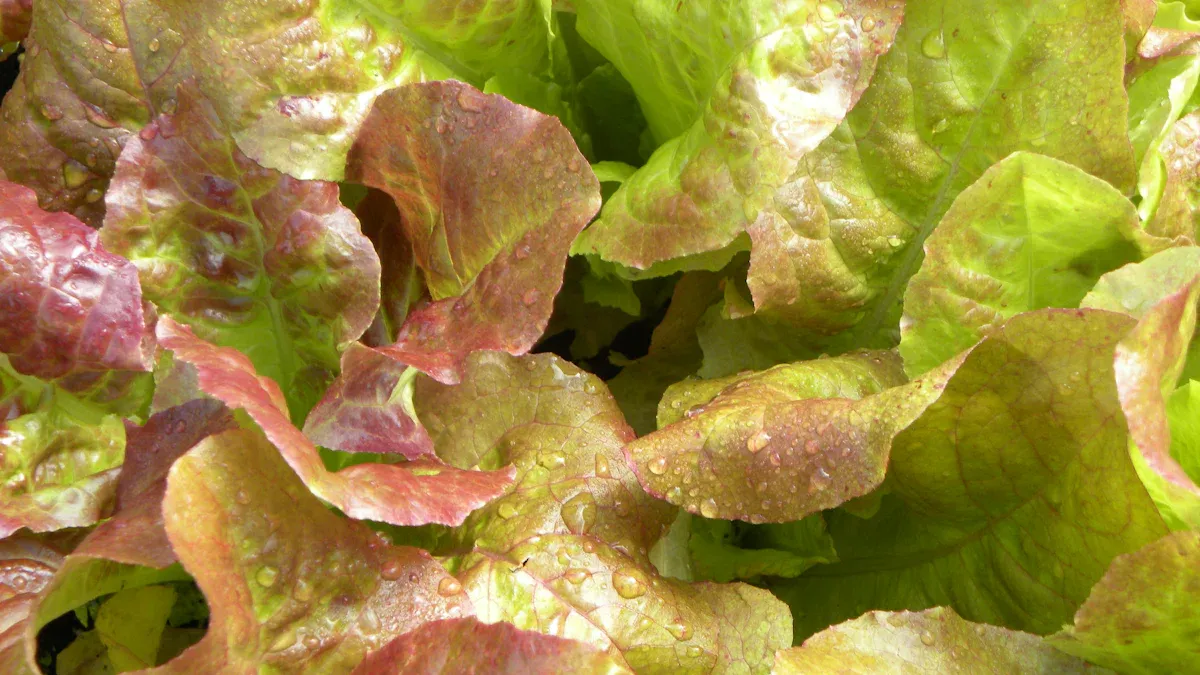
You get a very low amount of calories when you eat red leaf lettuce. For every 100 grams, you consume only 16 calories. This makes it a great choice if you want to manage your weight. The calories for selected serving are much lower than most other salad ingredients. You can enjoy a large portion without worrying about extra energy intake.
Average calories per 100 grams: 16
Macronutrients
Red leaf lettuce provides important macronutrients that help your body function well. You receive dietary fiber and protein in each serving. Fiber supports digestion and helps you feel full. Protein helps build and repair tissues.
Nutrient | Amount per Serving |
|---|---|
Dietary Fiber | 0.9g |
Protein | 1.3g |
You also get a high water content. Red leaf lettuce is made up of 96% water. This keeps you hydrated and helps curb hunger. Eating water-rich foods like this lettuce can promote a feeling of fullness.
96% water content aids hydration
Water-rich foods help you feel full
Vitamins and Minerals
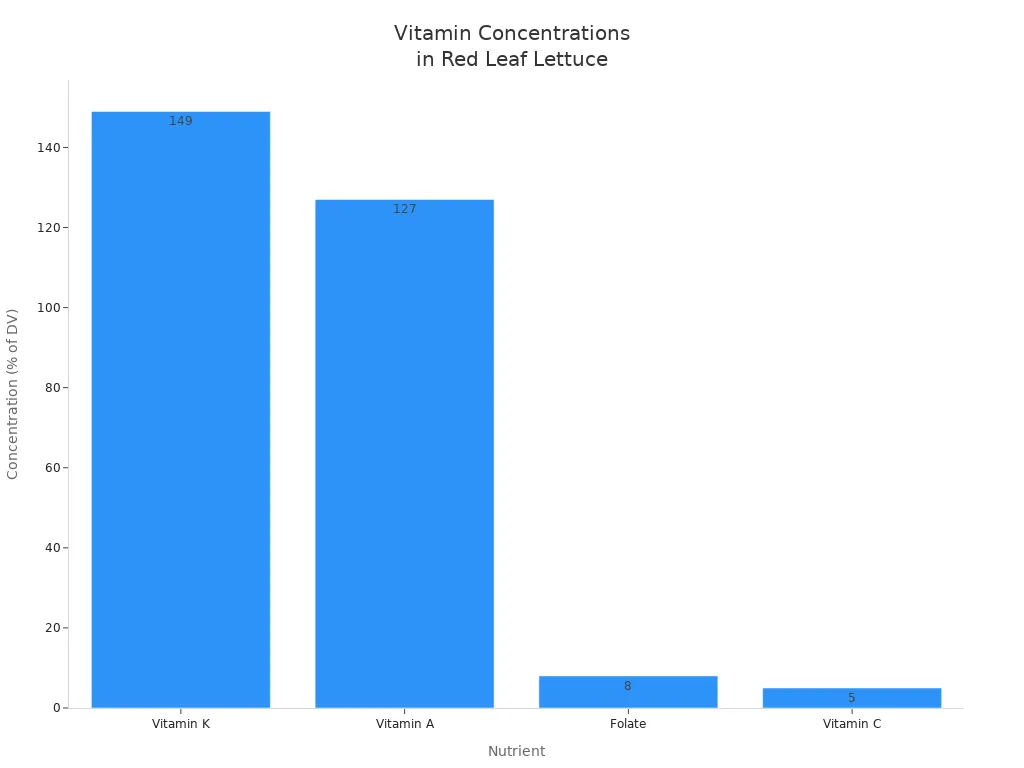
Red leaf lettuce stands out for its vitamin and mineral content. You get high levels of vitamin K and vitamin A. These vitamins support bone health and vision. You also receive folate and vitamin C, which help your body grow and fight infections.
Nutrient | Concentration (% of DV) |
|---|---|
Vitamin K | 149% |
Vitamin A | 127% |
Folate | 8% |
Vitamin C | 5% |
You also get minerals like potassium and calcium. Potassium helps keep your blood pressure healthy. Calcium builds strong bones and teeth. The fiber and potassium in red leaf lettuce support your heart by lowering cholesterol and regulating blood pressure. Vitamin K helps your body absorb calcium, which strengthens bones.
Potassium supports cardiovascular health
Calcium is essential for bones and teeth
Vitamin K aids calcium absorption
Antioxidants
Red leaf lettuce contains powerful antioxidants and phytonutrients. You get anthocyanins, lutein, zeaxanthin, and carotenoids. Anthocyanins give the lettuce its red color and protect your cells from damage. Laboratory studies show a wide range of anthocyanin levels in red leaf lettuce. The most common anthocyanin, Cyanidin 3-O-(6″-O-malonyl)glucoside, makes up most of the total anthocyanin content. Other types, like Cyanidin 3-O-glucoside and Cyanidin 3-O-(3″-O-malonyl)glucoside, also appear in some samples.
Anthocyanins protect cells from damage
Lutein and zeaxanthin support eye health
Carotenoids help your body fight free radicals
Tip: Eating red leaf lettuce gives you a strong mix of antioxidants that help your body stay healthy and fight disease.
You get a rich source of nutrition from red leaf lettuce. Its nutrition facts show why it is a smart choice for your meals. You support hydration, heart health, and eye health every time you add it to your plate.
Health Benefits of Red Leaf Lettuce
Heart Health
You support your heart every time you eat red leaf lettuce. The vitamin K in this leafy vegetable plays a key role in keeping your arteries healthy. It helps your body produce matrix Gla proteins, which prevent calcium from building up in your blood vessels. This process lowers your risk of heart disease.
Studies show that people who eat more vitamin K have healthier hearts. For example:
A Dutch study found a 9% reduction in coronary heart disease risk for each increase in menaquinone intake.
Participants with the highest vitamin K intake had a much lower risk of heart disease and lived longer.
Vitamin K helps raise good cholesterol (LDL) and lower bad cholesterol, which supports heart health.
Antioxidants in red leaf lettuce also protect your heart. They lower cholesterol and reduce inflammation. The table below shows how these nutrients help your cardiovascular system:
Findings | Details |
|---|---|
LDL/HDL Ratio | Decreased with lettuce diet |
Liver Cholesterol | Marked decrease (−41%) |
Fecal Steroid Excretion | Increased (+44%) |
Dietary Cholesterol Absorption | Depressed (−37%) |
Lipid Peroxidation | Limited in heart (TBARS evidence) |
Antioxidant Enzymes | Enhanced in blood and liver tissues |
Eating red leaf lettuce gives your body nutrients that help keep your heart strong and healthy.
Eye Health
Red leaf lettuce contains carotenoids like lutein and zeaxanthin. These nutrients protect your eyes from damage and help you see better. They filter harmful blue light and keep your retina safe. People who eat more lutein and zeaxanthin have a lower risk of age-related macular degeneration (AMD) and cataracts.
Research supports these benefits:
Evidence Type | Findings | Implications |
|---|---|---|
Epidemiological Studies | Lutein and zeaxanthin linked to reduced AMD risk | Supports dietary intake for eye health |
Clinical Studies | Carotenoids protect the macula from blue light | Prevents eye diseases |
Interventional Studies | High intake improves visual acuity | Enhances eye health |
Meta-analysis | 26% decreased risk of cataracts | Reinforces need for carotenoid-rich diets |
AREDS2 Study | Lutein and zeaxanthin slow AMD progression | Specific dietary recommendations for eye health |
A diet rich in red leaf lettuce can increase plasma levels of lutein and zeaxanthin. This helps your body absorb these nutrients and use them to protect your vision.
Tip: Add red leaf lettuce to your meals to help keep your eyes healthy as you age.
Immune Support
You boost your immune system when you eat red leaf lettuce. Vitamin A in this vegetable helps your body fight infections and keeps your skin and digestive system strong. Beta-carotene, a carotenoid found in red leaf lettuce, acts as an antioxidant and supports your immune cells.
Vitamin A regulates genes that control immune responses.
Beta-carotene helps your body produce retinoids, which are vital for immune function.
The antioxidants in red leaf lettuce, especially quercetin, reduce inflammation and help your body respond to threats.
Quercetin works by lowering inflammation in your body. It suppresses the movement of white blood cells and decreases chemicals that cause swelling.
Eating red leaf lettuce gives your immune system the nutrients it needs to defend against illness.
Weight Management
Red leaf lettuce offers important benefits for weight management. Its low calorie density lets you eat larger portions without consuming too many calories. The high water content helps you feel full and stay hydrated.
You can eat a big salad with red leaf lettuce and still keep your calorie intake low.
The fiber in red leaf lettuce supports digestion and helps you feel satisfied after meals.
Research shows that eating a small salad before your main course helps you eat less overall.
If you want to manage your weight, choose red leaf lettuce for your salads and meals.
You get many health benefits from red leaf lettuce. The nutrients in this vegetable support your heart, eyes, immune system, and weight goals. Adding red leaf lettuce to your diet helps you stay healthy and feel your best.
Red Leaf Lettuce vs. Other Types
Nutrition Comparison
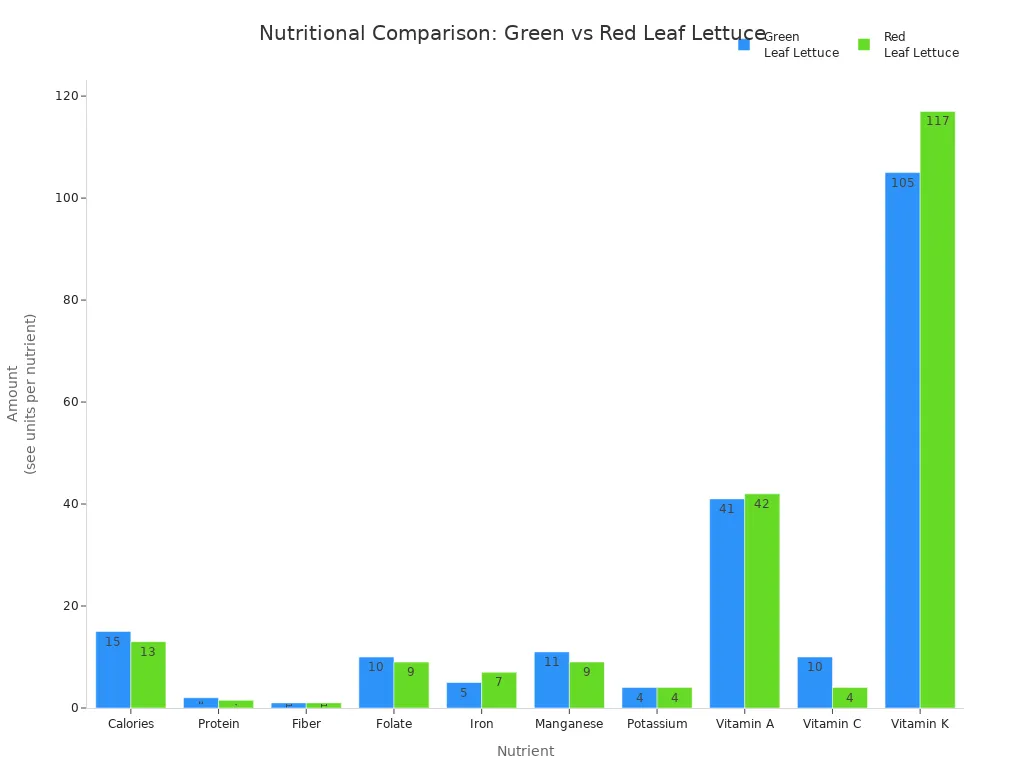
You may wonder what sets red leaf lettuce apart from other popular varieties. When you compare its nutrition to green leaf, iceberg, and butterhead lettuce, you see clear differences. Red leaf lettuce contains more vitamin K and vitamin A than green leaf lettuce. It also offers higher antioxidant levels, which help protect your cells.
Nutrient | Leaf lettuce, green | Leaf lettuce, red |
|---|---|---|
Calories | 15 | 13 |
Protein | 2 grams | 1.5 grams |
Fiber | 1 gram | 1 gram |
Folate | 10% of the DV | 9% of the DV |
Iron | 5% of the DV | 7% of the DV |
Manganese | 11% of the DV | 9% of the DV |
Potassium | 4% of the DV | 4% of the DV |
Vitamin A | 41% of the DV | 42% of the DV |
Vitamin C | 10% of the DV | 4% of the DV |
Vitamin K | 105% of the DV | 117% of the DV |
Butterhead lettuce has more potassium, but red leaf lettuce provides much more vitamin A and vitamin K.
Nutrient | Butterhead Lettuce (per 100g) | Red Leaf Lettuce (per 100g) |
|---|---|---|
Potassium | 238 mg | 187 mg |
Vitamin A (IU) | 3312 IU | 7492 IU |
Vitamin K | 102.3 µg | 140.3 µg |
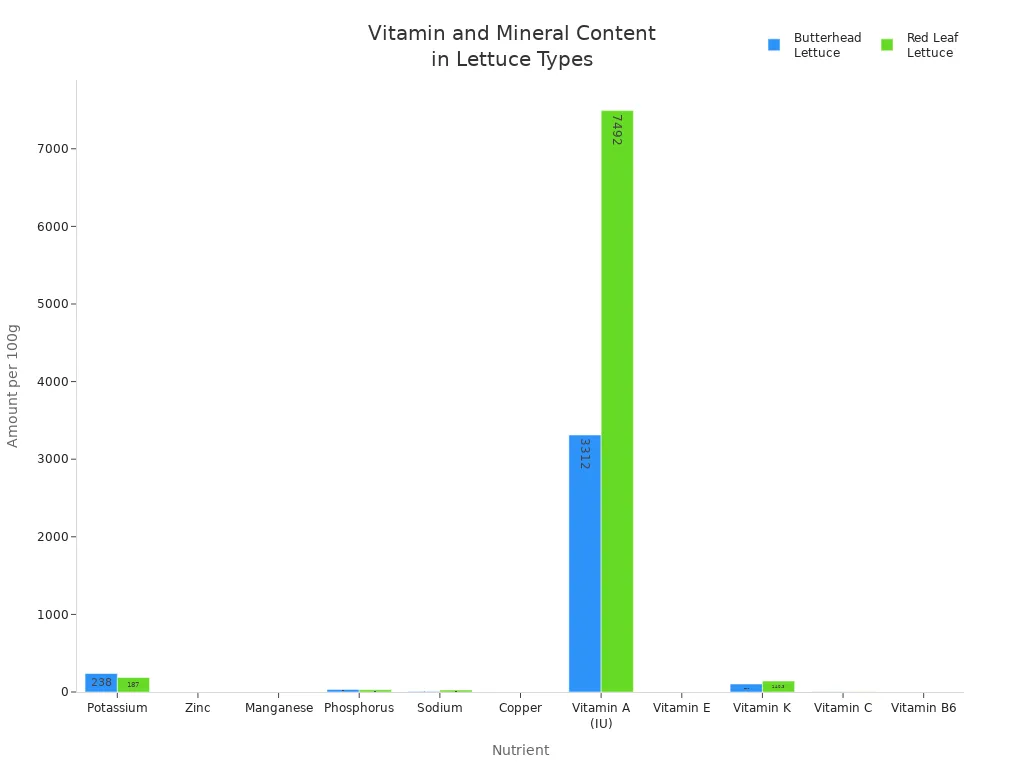
Red leaf lettuce stands out for its high vitamin K and antioxidant content.
Taste and Texture
You experience crisp leaves and a mild, sweet flavor when you eat red leaf lettuce. Both red and green leaf lettuce share these qualities. The flavor can change depending on sunlight and water during growth. Many people enjoy the gentle crunch and subtle taste in salads and sandwiches.
Crisp leaves give a refreshing bite.
Mild, sweet flavor suits many dishes.
Growing conditions can affect taste.
Tasting events show that people have personal preferences, but most agree that red leaf lettuce adds a delicate texture and pleasant flavor.
Best Uses
You can use red leaf lettuce in many ways. Its crisp texture and mild flavor make it perfect for fresh salads. Culinary experts recommend it for sandwiches and wraps, where it adds a refreshing layer. You can also use it as a garnish to brighten up your plate.
Add to mixed green salads for color and crunch.
Use as a healthy wrap instead of bread.
Layer in sandwiches and burgers for extra freshness.
Pair with citrus or tangy cheese for bold flavors.
Try it in salads with tahini dressing, lemon vinaigrette, or grilled vegetables.
Tip: Red leaf lettuce works well in salads, wraps, and as a garnish. You get both nutrition and visual appeal.
How to Eat Red Leaf Lettuce
Salads
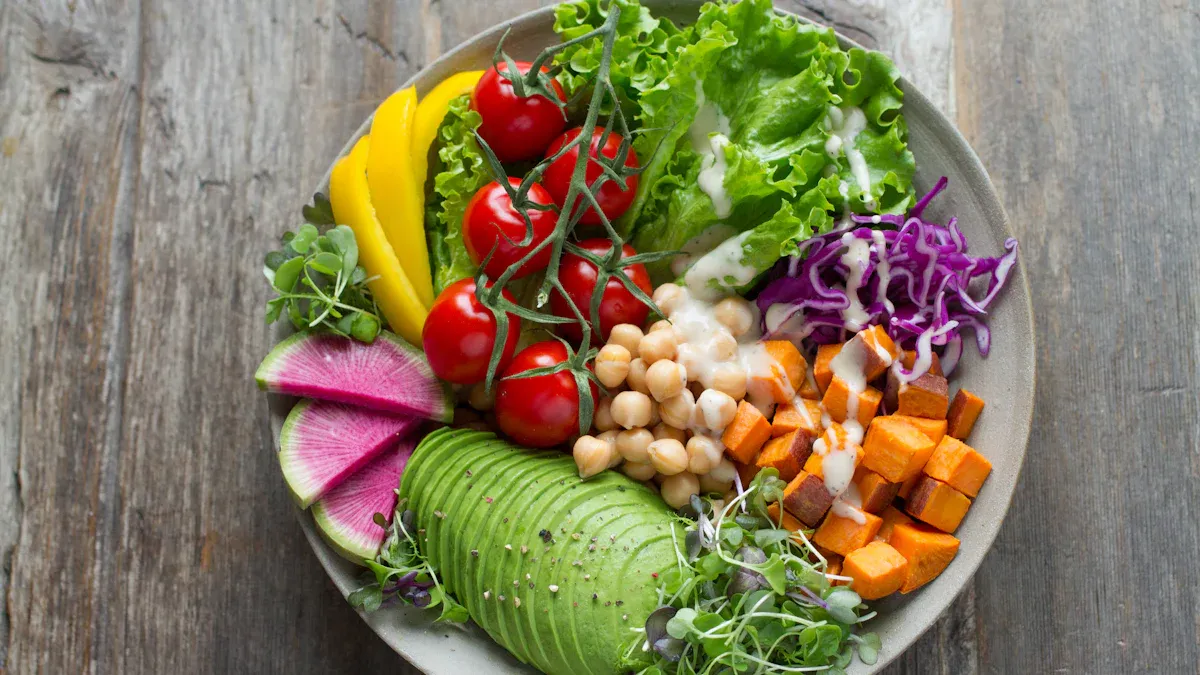
You can enjoy red leaf lettuce in salads for a fresh and nutritious meal. A recommended serving size is 2 cups, shredded, which equals about 56 grams. This amount gives you a good balance of vitamins and minerals. A typical head of red leaf lettuce provides about 5.5 servings, so you have plenty for several meals.
Nutritionists suggest building a balanced salad by following these steps:
Start with red leaf lettuce as your base.
Add 4-6 colorful vegetables for extra nutrients.
Include a protein source, such as grilled chicken or beans.
Mix in a complex carbohydrate like quinoa or brown rice.
Sprinkle seeds for healthy fats.
Choose a healthy dressing.
Add fresh fruits for sweetness.
Tip: Eating salads with red leaf lettuce helps you meet your daily nutrient goals and supports a healthy diet.
Sandwiches & Wraps
You can use red leaf lettuce to add crunch and color to sandwiches and wraps. The soft, tender leaves make it easy to wrap around fillings. This texture works well with lighter dishes and does not overpower other flavors. You can layer red leaf lettuce in sandwiches or use whole leaves as a wrap for grilled chicken, shrimp, or tofu.
The mild flavor and delicate nature of red leaf lettuce make it a favorite for wraps. You get a satisfying bite without the toughness of other greens. This choice fits well in a balanced diet and adds visual appeal to your plate.
Meal Ideas
You have many creative options for using red leaf lettuce in meals. Here are some ideas that maximize its nutritional value:
Toss with goat cheese, dried cranberries, toasted almonds, and honey balsamic dressing for a flavorful salad.
Use leaves as wraps for grilled meats or tofu with vegetables and sauce.
Layer on whole-grain toast with avocado, radishes, and cherry tomatoes.
Fill lettuce cups with ground turkey, black beans, and salsa for taco-style meals.
Blend into smoothies with berries, bananas, Greek yogurt, and almond milk.
Make pesto by blending with basil, garlic, and olive oil.
Grill and drizzle with balsamic glaze and feta.
Sauté in olive oil with garlic for a quick side dish.
Add to Buddha bowls with quinoa and roasted vegetables.
Blend into soup with vegetable broth and onions.
Chefs often include red leaf lettuce in main courses for added health benefits. The table below shows what you gain:
Health Benefit | Description |
|---|---|
Heart Health | Magnesium and potassium support a healthy heartbeat. |
Cancer Prevention | Antioxidants like beta carotene and vitamin C protect against free radicals. |
Blood Pressure Control | Potassium helps manage blood pressure. |
Weight Loss Support | Low calories and high fiber promote satiety and reduce calorie intake. |
Note: Adding red leaf lettuce to your diet gives you variety and boosts your nutrient intake.
You get vitamin K, vitamin A, and antioxidants when you eat red leaf lettuce. These nutrients help your heart, eyes, and immune system stay strong. You can enjoy crisp leaves in salads, wraps, and sandwiches. Compared to other lettuces, you receive more health benefits and greater versatility.
Choose red leaf lettuce to boost your nutrition and support your well-being.
FAQ
What makes red leaf lettuce different from green leaf lettuce?
You get more antioxidants and vitamin K in red leaf lettuce. The red color comes from anthocyanins, which help protect your cells. Green leaf lettuce has less vitamin K and fewer antioxidants.
What nutrients do you find in red leaf lettuce?
You find vitamin K, vitamin A, folate, and vitamin C in red leaf lettuce. You also get fiber, water, and antioxidants like lutein and zeaxanthin. These nutrients help your heart, eyes, and immune system.
What is the best way to store red leaf lettuce?
You keep red leaf lettuce fresh by placing it in a sealed bag in your refrigerator. You should wash and dry the leaves before storing. Use within five days for best taste and nutrition.
What health benefits can you expect from eating red leaf lettuce?
You support your heart, eyes, and immune system when you eat red leaf lettuce. The fiber helps with digestion. The low calorie content helps you manage your weight.
What dishes work well with red leaf lettuce?
You can use red leaf lettuce in salads, wraps, and sandwiches. You can also add it to smoothies or use it as a garnish. The crisp texture and mild flavor fit many recipes.