

Provided that you want a quick, satisfying chowder that’s safe for a gluten‑free diet, you’ve got several solid packaged options to try this year. I’ll walk you through five top picks that balance taste, texture, and ingredient transparency so you can pick what fits your pantry and preferences – and point out a few things to watch for before you buy.
| Progresso New England Clam Chowder Soup (18.5 oz) |

| Classic Comfort | Gluten Free: Yes – gluten free | Ready-to-Prepare: Ready to serve; heat and eat | Contains Potatoes: Contains tender potato chunks | VIEW LATEST PRICE | Read Our Analysis |
| Progresso Manhattan Clam Chowder Soup (19 oz) |

| Tomato-Based Favorite | Gluten Free: Yes – gluten free | Ready-to-Prepare: Canned, ready to eat in minutes | Contains Potatoes: (Manhattan chowder) Tomato base typically includes potatoes (implied by chowder style) | VIEW LATEST PRICE | Read Our Analysis |
| Progresso Rich & Hearty New England Clam Chowder Soup 18.5 oz. 4 Pack |

| Family Pack Pick | Gluten Free: Yes – gluten free | Ready-to-Prepare: Ready-to-serve canned soup | Contains Potatoes: Contains tender chunks of real potatoes | VIEW LATEST PRICE | Read Our Analysis |
| Progresso Chicken Corn Chowder with Bacon (18.5 oz) |
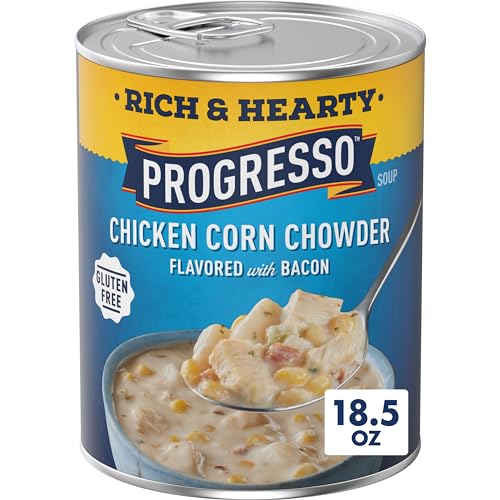
| Hearty & Savory | Gluten Free: Yes – gluten free | Ready-to-Prepare: Ready to serve; heat and eat | Contains Potatoes: Includes potatoes | VIEW LATEST PRICE | Read Our Analysis |
| Rill Foods Puget Sound Seafood Chowder 6.8 oz |

| Gourmet Small-Batch | Gluten Free: Yes – gluten free | Ready-to-Prepare: Packaged soup mix; requires added milk/water/seafood and cooking | Contains Potatoes: Uses potatoes sourced from WA/OR | VIEW LATEST PRICE | Read Our Analysis |
More Details on Our Top Picks
Progresso New England Clam Chowder Soup (18.5 oz)
Should you need a quick, gluten-free comfort meal, Progresso’s New England Clam Chowder (18.5 oz) is a solid pick-you get a ready-to-serve, shelf-stable can with real clams and potato chunks that heats in minutes for an easy lunch or dinner. You’ll find traditional New England flavor without artificial flavors or added MSG (aside from naturally occurring yeast extract). The 18.5 oz can yields about two servings at 180 calories per cup. Just heat on the stovetop or microwave-no water required-and handle the hot container carefully. It’s a convenient, classic option whenever you desire a simple, satisfying soup.
- Gluten Free:Yes – gluten free
- Ready-to-Prepare:Ready to serve; heat and eat
- Contains Potatoes:Contains tender potato chunks
- Seafood or Meat Inclusion:Contains clams
- No Artificial Flavors/Colors or Preservatives:No artificial flavors
- Packaged Size / Format:18.5 oz can (single)
- Additional Feature:Traditional creamy texture
- Additional Feature:No added MSG
- Additional Feature:Single 18.5 oz can
Progresso Manhattan Clam Chowder Soup (19 oz)
Provided you need a quick, gluten-free seafood soup that still tastes homemade, Progresso’s Traditional Manhattan Clam Chowder (19 oz) is a smart pick: it delivers clam and vegetable flavors in a rich tomato broth, comes ready to eat in minutes, and contains no artificial flavors or colors. You’ll appreciate that it’s canned for convenience and labeled gluten free, so you can grab it for a fast lunch or weeknight dinner without second-guessing ingredients. Heat and serve straight from the can or add fresh herbs and crusty gluten-free bread to enhance it – a simple, reliable pantry staple.
- Gluten Free:Yes – gluten free
- Ready-to-Prepare:Canned, ready to eat in minutes
- Contains Potatoes:(Manhattan chowder) Tomato base typically includes potatoes (implied by chowder style)
- Seafood or Meat Inclusion:Contains clams (Manhattan clam chowder)
- No Artificial Flavors/Colors or Preservatives:No artificial flavors; no artificial colors
- Packaged Size / Format:19 oz can (single)
- Additional Feature:Tomato-based broth
- Additional Feature:No artificial colors
- Additional Feature:19 oz ready-to-eat can
Progresso Rich & Hearty New England Clam Chowder Soup 18.5 oz. 4 Pack
Should you want a quick, comforting clam chowder that’s ready whenever you are, Progresso Rich & Hearty New England Clam Chowder is a solid pick-each 18.5 oz can delivers creamy broth with real clams and tender potato chunks, no artificial flavors or colors, and the four-can pack keeps your pantry stocked for several meals. You’ll heat and serve this ready-to-eat soup in under five minutes, making it ideal for busy nights. The traditional New England profile is straightforward and satisfying, with recognizable clam and potato pieces. Keep cans on hand for reliable, gluten-friendly convenience whenever hunger strikes.
- Gluten Free:Yes – gluten free
- Ready-to-Prepare:Ready-to-serve canned soup
- Contains Potatoes:Contains tender chunks of real potatoes
- Seafood or Meat Inclusion:Contains clams
- No Artificial Flavors/Colors or Preservatives:No artificial flavors; no artificial colors
- Packaged Size / Format:18.5 oz cans, 4-pack (each can 18.5 oz)
- Additional Feature:Multi-can value pack
- Additional Feature:Tender potato chunks
- Additional Feature:No colors from artificial sources
Progresso Chicken Corn Chowder with Bacon (18.5 oz)
Should you need a quick, gluten-free canned meal that still tastes hearty, Progresso’s Rich and Hearty Chicken Corn Chowder with Bacon delivers. You’ll get an 18.5 oz shelf-stable can-about two servings-filled with chicken, corn, potatoes, celery, onion, and bacon flavor in a creamy broth. It contains no artificial flavors and clocks roughly 190 calories per one-cup serving. You can warm it on the stovetop or in the microwave with no water added; just handle the hot product carefully. It’s a convenient, gluten-free lunch or dinner alternative whenever you want a fast, satisfying canned chowder.
- Gluten Free:Yes – gluten free
- Ready-to-Prepare:Ready to serve; heat and eat
- Contains Potatoes:Includes potatoes
- Seafood or Meat Inclusion:Includes chicken (and bacon flavor)
- No Artificial Flavors/Colors or Preservatives:No artificial flavors
- Packaged Size / Format:18.5 oz can (single)
- Additional Feature:Bacon-flavored savory notes
- Additional Feature:190 calories per cup
- Additional Feature:Includes chicken and corn
Rill Foods Puget Sound Seafood Chowder 6.8 oz
In case you want a quick, restaurant-style seafood chowder that’s also gluten free, Rill Foods’ Puget Sound Seafood Chowder is a great pick. You’ll get a 6.8 oz packet from a family-owned Washington State company using Pacific Northwest potatoes and ingredients, with no artificial flavors, preservatives, or added MSG. It’s small-batch sourced and gluten free. For busy nights, you’ll add 6 cups water, 15 oz evaporated milk or substitute, optional bacon or ham, and ½–1 lb seafood; it yields about 10 cups. Simmer 20 minutes, stir to avoid scorching, and finish with wine, sour cream, or chives.
- Gluten Free:Yes – gluten free
- Ready-to-Prepare:Packaged soup mix; requires added milk/water/seafood and cooking
- Contains Potatoes:Uses potatoes sourced from WA/OR
- Seafood or Meat Inclusion:Intended for seafood (Puget Sound seafood chowder; add fresh/canned seafood)
- No Artificial Flavors/Colors or Preservatives:No artificial flavors, no preservatives, no added MSG
- Packaged Size / Format:6.8 oz pouch/package (yields ~10 cups after added ingredients)
- Additional Feature:Small-batch Pacific Northwest
- Additional Feature:Requires added milk/water
- Additional Feature:Makes about 10 cups
Factors to Consider When Choosing Gluten Free Packaged Chowders
Whenever you pick a gluten-free packaged chowder, check ingredient transparency so you know what’s really in the can. Look for clear allergen declarations and statements about gluten cross-contact risk to judge safety. Also compare the nutritional profile and serving size accuracy to make sure the product meets your dietary needs.
Ingredient Transparency
Because labels can hide both obvious and unexpected sources of gluten, you should read ingredient lists and allergen statements carefully before buying a packaged chowder. Check for explicit “gluten-free” claims and scan for wheat, barley, rye, malt, brewer’s yeast, and vague terms like “modified food starch” without a source. Favor labels that specify origin (for example, “modified food starch (corn)”) and list whole-food ingredients instead of ambiguous entries like “natural flavors” or unspecified “spices.” Review “may contain” and facility statements to judge trace contamination risk. Keep a running list of confirmed gluten-free ingredients and red-flag terms. Whenever labels leave questions, contact the manufacturer for sourcing and processing clarification prior to your purchase.
Gluten Cross-Contact Risk
Reading labels helps you spot concealed gluten, but you also need to take into account cross-contact risks that can put gluten into otherwise safe chowders. Check ingredient lists for wheat, barley, rye, malt, dextrin (from wheat), or “modified food starch” without a source-those can hide gluten. Prefer products with a certified gluten-free label or third-party verification, which generally means <20 ppm. Read allergen statements and “may contain” or “made in a facility that also processes” warnings to judge shared-equipment risk. Favor manufacturers that disclose dedicated gluten-free lines or cleaning protocols, since shared lines raise cross-contact likelihood. Should you be unsure, contact the manufacturer and ask for testing data or their gluten-control procedures; lack of clear documentation should raise your concern.
Allergen Declarations
Although labels can look straightforward, you’ll still need to scrutinize allergen declarations to be sure a packaged chowder is truly gluten‑free. Look for a clear “gluten‑free” statement or third‑party certification; manufacturers must declare whether gluten ingredients are used, and a certified symbol adds confidence. Scan the ingredient list for wheat, barley, rye, malt, hydrolyzed wheat protein, and concealed culprits like “modified food starch” or “malt extract” unless marked gluten‑free. Check the “Contains” or “May contain” box for wheat and cross-contact warnings such as “manufactured in a facility that also processes wheat.” Verify flavorings, sauces, and thickeners are explicitly gluten‑free. Should you be uncertain, contact the manufacturer and favor products with documented gluten testing.
Nutritional Profile
After you’ve confirmed allergen declarations, look closely at the chowder’s nutritional profile to make sure it fits your diet and health goals. Check calories per serving-cream-based chowders often run 150–250 kcal-so you can match portions to energy needs. Compare protein: real seafood or chicken varieties commonly provide 8–15 g per serving, which helps satiety. Review total and saturated fat, since cream bases raise both and affect heart-health choices. Monitor sodium closely; packaged chowders frequently contain 600–1,200+ mg per serving, which can blow daily limits. Finally, scan ingredient lists for added sugars, fiber, and any vitamin or mineral fortification to judge overall nutritional quality and whether the product complements your diet.
Serving Size Accuracy
Whenever you check serving-size info on a gluten-free packaged chowder, match the listed cups or grams to the portion you actually eat so nutrition estimates aren’t misleading. Compare stated servings (often 1 cup) to the can’s total-many cans hold about two servings-so finishing a whole container can double listed calories, sodium, and macros. Verify weight-based measures too: dense chowders can make a “cup” heavier than you expect, skewing calorie counts. Measure portions with a food scale or measuring cup rather than eyeballing; small overfills add meaningful sodium and calories. Should you dilute the soup or add mix-ins (milk, seafood, vegetables, bacon), recalculate per-serving nutrition because added volume and ingredients change macronutrient and sodium totals.
Preparation Simplicity
Being aware of your true serving size helps with nutrition, but you’ll also want to think about how much prep the chowder actually needs. Check whether it’s ready-to-heat or a concentrated base that needs milk, water, or seafood-ready-to-serve just needs warming, bases add shopping and steps. Compare heating methods and times: microwave-safe cans and stovetop directions matter, and many ready soups heat in under five minutes. Read ingredient lists closely for required add-ins like milk, evaporated milk, bacon, or fresh seafood so you can plan. Prefer single-portion or smaller cans to avoid leftover handling, or larger cans if you don’t mind refrigerating extras. Keep in mind cold-start instructions and warnings about boiling after adding dairy to avoid surprises.
Shelf Stability And Packaging
Should you want the convenience of a long-lasting gluten‑free chowder, check the label for “shelf‑stable” or “canned” and observe the Best By date-properly sealed products can last about 1–5 years depending on the packaging and storage. Prefer metal cans or aseptic cartons with intact seams and no dents, bulges, rust, or leaks, since damaged packaging can allow spoilage even when labeled gluten‑free. Verify storage instructions-store in a cool, dry place away from direct sunlight-and avoid exposing cans to extreme heat or freezing, which degrade texture and nutrients. Note whether the product needs refrigeration after opening and the manufacturer’s recommended hold time (typically 3–5 days). Should you eat partial portions, choose single‑serve or resealable packaging to limit air exposure.
Flavor Authenticity
Whenever you judge a gluten‑free packaged chowder, focus on what’s actually in the bowl: visible seafood and potato pieces, a clear dairy or tomato base depending on style, and aromatics listed near the top of the ingredient list signal real ingredients rather than heavy thickeners or vague “natural flavors.” You should prefer labels that list whole-clam or seafood pieces and identifiable potato chunks instead of extracts or purees, since solids give authentic texture and flavor. For New England–style, confirm milk or cream (or a clear alternative) plus a listed seafood component so richness isn’t just starch. For Manhattan‑style, expect a bright tomato broth with diced vegetables and seafood. Avoid products that rely primarily on “natural flavors” or yeast extracts instead of real seafood, dairy, and aromatics.
