


You might wonder if apricot seeds offer real Health Benefits or pose serious health risks. Many people claim these seeds can boost your immune system or energy, but research does not support these ideas. Apricot seeds contain amygdalin, which can lead to cyanide poisoning. Here is what studies show:
Health Risk | Description |
|---|---|
Cyanide Toxicity | Ingestion of amygdalin can cause symptoms from weakness to seizures or death. |
Chronic Consumption Effects | Long-term use may lead to eyesight problems, deafness, or loss of balance. |
You will find practical advice and facts that help you make safe choices about apricot seeds.
Key Takeaways
Apricot seeds contain amygdalin, which can convert to cyanide in the body. Consuming large amounts can lead to serious health risks, including cyanide poisoning.
These seeds offer antioxidant benefits, helping to protect cells from damage and potentially supporting cardiovascular health.
Apricot kernels have antibacterial properties, showing effectiveness against various bacteria and fungi, making them interesting for further research.
Always check if apricot seeds are sweet or bitter before use. Bitter seeds can be toxic if not prepared properly.
Consult a healthcare professional before adding apricot seeds to your diet, especially for children and those with health conditions.
Health Benefits of Apricot Seeds
Antioxidant Effects
You may hear that apricot kernels have strong antioxidant effects. These seeds contain several antioxidants, such as tocopherols, polyphenols, and β-carotene. Antioxidants help protect your cells from damage caused by free radicals. This protection can lower the risk of some diseases and support overall health.
Recent research shows that apricot kernels contain major antioxidant components like caffeic acid and gallic acid. The table below highlights the main antioxidants found in apricot kernels and their quantities:
Antioxidant Type | Quantity (mg/kg or μg/g) |
|---|---|
α-tocopherol | 19.6-40.0 |
γ-tocopherol | 315.4-502.3 |
δ-tocopherol | 28.3-58.5 |
Total polyphenols | 0.85-1.22 mM gallic acid/L |
β-carotene | 42.3-66.8 μg/g |
Antioxidant capacity | 1.07-1.38 mM Fe2+/L |
Studies show that apricot kernels can reduce free radicals and may support cardiovascular health. You can find these antioxidants in both sweet and bitter apricot kernels. The health benefits of apricot seeds come from these natural compounds.
Antibacterial Properties
Apricot kernels also show antibacterial activity. Apricot seed oil can fight several types of bacteria and fungi. The table below lists the bacteria and fungi affected by apricot seed oil:
Bacterial Strain | Antibacterial Activity of Apricot Seed Oil |
|---|---|
E. coli | Yes |
P. mirabilis | Yes (Highest Activity) |
S. aureus | No |
K. pneumoniae | Yes |
Bacillus cereus | Yes |
Enterococcus faecalis | Yes |
Serratia marcescens | Yes |
Pseudomonas aeruginosa | Yes |
Candida albicans | Yes |
C. glabrata | Yes |
C. parapsilosis | Yes |
You may wonder which bacteria are most affected. Apricot kernels can inhibit Mycobacterium tuberculosis, Helicobacter pylori, and Salmonella typhimurium. These health effects make apricot kernels interesting for further research.
Anti-inflammatory Potential
Apricot kernels contain compounds that may help reduce inflammation. Amygdalin, polyphenolic compounds, and pectin are the main anti-inflammatory agents. Amygdalin can lower the levels of pro-inflammatory cytokines, such as TNF-α and IL-1β. Polyphenols, including tannins, help repair the intestinal lining. Pectin supports colon health by producing short-chain fatty acids.
Researchers have studied the anti-inflammatory potential of apricot kernels in animal models. The table below shows findings from recent research:
Study Title | Findings |
|---|---|
Analgesic, Antioxidant, Anti-Inflammatory, and Wound-Treating Actions of Bitter Apricot Kernel Extract | Apricot kernel extracts may reduce pain and inflammation and promote healing. |
Phytochemical screening, acute toxicity, analgesic and anti-inflammatory effects of apricot seeds ethanolic extracts | Apricot kernels show anti-inflammatory effects in animal studies. |
You may find these potential benefits of apricot seeds useful for health, but more human clinical trials are needed.
Claimed Benefits vs. Evidence
Many people claim that apricot kernels have cancer fighting properties. Some believe these seeds can treat cancer or kill cancer cells. You may see products marketed for cancer treatments based on these claims. However, scientific research does not support the use of apricot kernels for cancer treatment.
The most common misconception is that amygdalin, found in apricot kernels, can cure cancer. Studies have not shown safety or effectiveness for amygdalin or laetrile as cancer treatments. The FDA does not approve amygdalin for cancer treatment because of toxicity risks. More research and human clinical trials are needed to prove any anticancer effects.
You can find other health benefits of apricot kernels, such as promoting digestive health, lowering blood pressure, and supporting skin health. Apricot kernels are high in fiber and contain pangamic acid, which may help heart health. Apricot seed oil can moisturize your skin.
Note: While apricot kernels have potential benefits, you should know that claims about cancer fighting and cancer treatments lack strong scientific support. Always look for evidence from peer-reviewed research before trusting health claims.
Apricot Seeds: Nutrition and Uses

Nutritional Profile
You may want to know what nutrients apricot seeds contain. These seeds pack a lot of energy and important minerals. The table below shows the main nutrients found in 100 grams of apricot seeds:
Nutrient | Amount per 100g |
|---|---|
Calories | 520 |
Total Fat | 45 g |
Saturated Fat | 4 g |
Cholesterol | 0 mg |
Sodium | 10 mg |
Total Carbohydrates | 18 g |
Dietary Fiber | 5 g |
Sugars | 1 g |
Protein | 25 g |
Vitamin A | 0 mcg |
Calcium | 180 mg |
Iron | 6 mg |
Potassium | 700 mg |
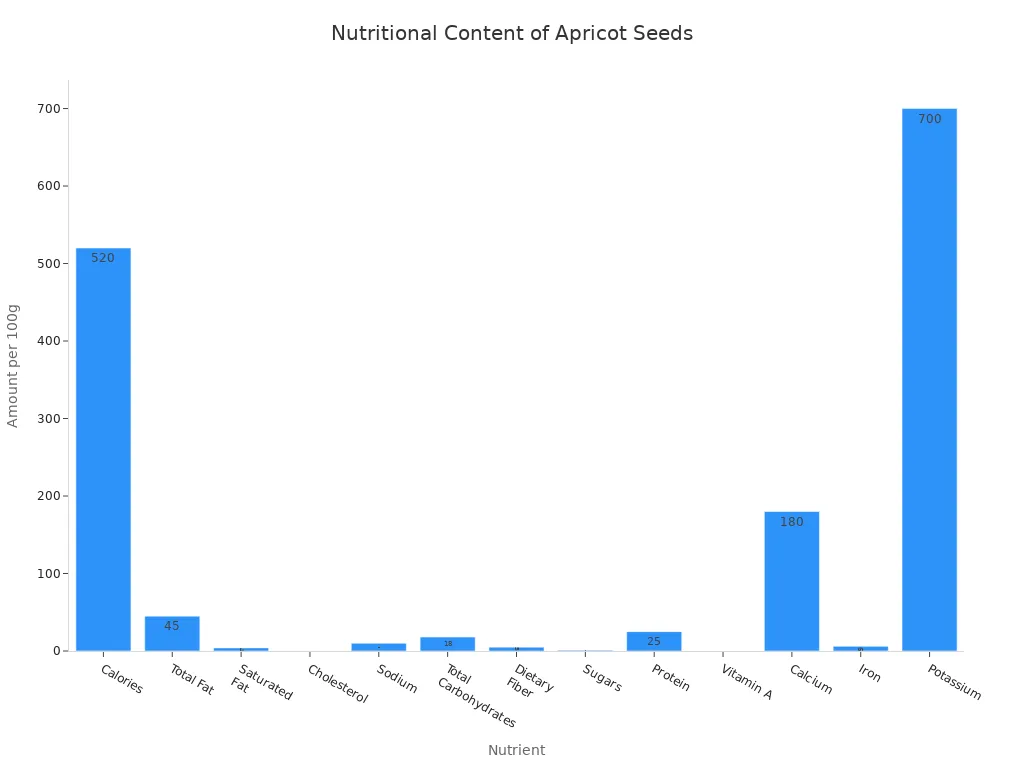
Apricot seeds offer a unique nutrition profile compared to other seeds and nuts. For example, almonds have more vitamin E and fiber, while apricot seeds contain vitamin B17 and higher iron levels. You get a good amount of protein and minerals from apricot seeds, but they also have more saturated fat than almonds.
Common Uses
You can use apricot seeds in several ways. People often add them to baked goods, granola, or trail mixes. Some use apricot seed oil for cooking or as a salad dressing. You may find apricot seeds in traditional medicine or as a snack in some cultures. Apricot seeds sometimes appear in cosmetic products because of their oil’s moisturizing properties.
Tip: Always check if the seeds are sweet or bitter before using them in recipes. Bitter apricot seeds can be toxic if not prepared properly.
Preparation Methods
You need to prepare apricot seeds carefully to reduce their toxicity. Here are some common methods:
Boil bitter apricot seeds for 15 minutes to lower cyanide content by up to 98%.
Grind, soak, and cook the seeds to make them safer, but extra detoxification steps are needed.
Use debitterizing methods like cold water soaking, hot water soaking, or acid solutions.
Try novel techniques such as vacuum, ultrasound, or microwave debitterizing.
Method Category | Detoxification Methods |
|---|---|
Conventional | Cold water debitterizing, Hot water debitterizing, Acid solution debitterizing, Acid-base alternate debitterizing |
Novel | Vacuum debitterizing, Ultrasound debitterizing, Microwave debitterizing |
You can also mix powdered apricot seeds with water and use ultrasound devices to help detoxify them. Enzymatic reactions break down amygdalin, and drying the seeds removes harmful hydrogen cyanide.
Risks and Safety
Cyanide Toxicity
You need to know what makes apricot seeds risky. Raw apricot seeds contain amygdalin and cyanogenic glycosides. When you eat apricot seeds, your body converts amygdalin into cyanide. Cyanide is a dangerous poison that can harm your health. The concentration of amygdalin in raw apricot seeds ranges from 0.1 to 4.1 mg/g. The total amygdalin content in apricot seeds is about 7.9 ± 0.2 g/100 g. Even small amounts can cause serious side effects of apricot seeds.
You may wonder why people still use apricot kernel products. Some believe they help with cancer treatment, but research shows the risks outweigh the benefits. The fda has not approved apricot seeds for cancer or any other medical use. Eating apricot seeds can lead to cyanide poisoning, especially if you consume bitter varieties.
Symptoms of Overconsumption
You should recognize the signs of cyanide poisoning from apricot seeds. Early symptoms include headache, confusion, rapid heartbeat, and fast breathing. Later symptoms can become severe. You may experience nausea, vomiting, irregular heartbeats, coma, fluid in the lungs, or kidney failure. Here is a list of common side effects of apricot seeds:
Weakness
Anxiety
Restlessness
Difficulty breathing
Shortness of breath
Loss of consciousness
Seizures
Cardiac arrest
Children face higher risks. Medical literature reports several cases of apricot seed poisoning in children. Between 2010 and 2017, three pediatric patients suffered from apricot seed ingestion. Seven children received hydroxocobalamin as an antidote for cyanide poisoning. You should avoid giving apricot seeds to children.
Regulatory Warnings
You need to pay attention to fda warnings and other health authority alerts. The fda has issued warnings about high levels of amygdalin in certain apricot seed products. These warnings highlight the risk of cyanide toxicity. The fda listed several products from Apricot Power that pose health risks:
Date | Authority | Warning Description | Affected Products |
|---|---|---|---|
May 24, 2024 | FDA | Warning about high levels of amygdalin in Apricot Power products, which can lead to cyanide toxicity. | – Apricot Power – Bitter Apricot Seeds – NGR FY24-015 (California Select) – Net weight 8oz (227g) |
Apricot Power – Seeds Bitter Apricot Seeds – NGR FY24-016 (Organic Turkish Select) – Net weight 8oz (227g)
Apricot Power – Seeds Bitter Apricot Seeds – NGR FY24-017 (South African Select) – Net weight 16oz (454g) | | | CDC | Highlights Salmonella outbreaks related to apricot seeds, emphasizing hygiene. | N/A |
Australia has banned the sale of apricot kernels due to safety concerns related to cyanide poisoning. The Food Standards of Australia and New Zealand intervened after several cases of cyanide poisoning from raw apricot kernels.
Health Canada has issued warnings about the risks of consuming apricot kernels, reminding Canadians to limit their consumption due to the risk of cyanide poisoning.
You should always check for fda warnings before buying apricot products. Many countries restrict or ban apricot kernel sales to protect public health.
Safe Consumption Guidelines
You may ask, “how many apricot seeds can you eat?” The answer depends on the type and your age. Experts recommend that you avoid eating apricot seeds, especially bitter varieties. Children should not eat apricot seeds at all. If you choose to eat apricot seeds, limit your intake to one or two sweet seeds per day. Bitter apricot seeds contain more amygdalin and pose greater risks.
Here are some safety tips for apricot seeds:
Never eat raw apricot seeds in large amounts.
Always check product labels for fda warnings.
Avoid apricot seeds if you have health problems or take medication.
Do not use apricot seeds for cancer treatment.
If you suspect cyanide poisoning, call an ambulance or poison control center right away. Do not induce vomiting. Make sure you stay safe from smoke or fumes before seeking help.
First Aid Measure | Description |
|---|---|
Seek Immediate Help | Call an ambulance or poison control center if cyanide exposure is suspected. |
Do Not Induce Vomiting | Avoid inducing vomiting or using syrup of Ipecac, as it is not recommended. |
Ensure Safety | If there is a fire, ensure safety from smoke or fumes before calling for help. |
You should always ask your doctor before eating apricot seeds. The risks of side effects of apricot seeds are high, especially for children and people with health conditions. Research shows that the fda continues to monitor apricot products for safety. You need to stay informed and protect your health.
When you look at apricot seeds, you find both health benefits and serious risks.
Apricot seeds contain amygdalin, which some studies link to possible cancer effects, but the FDA does not approve them for cancer treatment.
Eating too many apricot seeds can cause cyanide poisoning, with symptoms like headache and nausea.
Medical experts warn that children and pregnant women face higher risks.
You should always ask a healthcare professional before adding apricot seeds to your diet.
FAQ
What is amygdalin in apricot seeds?
Amygdalin is a natural compound found in apricot seeds. Your body can convert it into cyanide. This process makes eating large amounts of apricot seeds dangerous.
What symptoms show cyanide poisoning from apricot seeds?
You may notice headache, nausea, dizziness, or rapid heartbeat. Severe cases can cause seizures or loss of consciousness. Seek medical help if you suspect poisoning.
What types of apricot seeds are safer to eat?
Sweet apricot seeds contain less amygdalin than bitter ones. You should choose sweet seeds and eat only small amounts. Bitter seeds pose higher risks.
What should you do before adding apricot seeds to your diet?
You should talk to your doctor first. Medical advice helps you avoid health risks. Always check product labels for safety warnings.