


Persian lime is a popular citrus fruit you find in markets around the world. You can see that Mexico produces over two million tonnes each year, making it a global leader.
Country | Lime Variety | Production Volume (tonnes) | Export Share (%) |
|---|---|---|---|
Mexico | Persian Lime | >2,000,000 | 80-90 |
Brazil | Tahiti Lime | 1,200,000 | N/A |
You benefit from Persian lime because it is high in vitamin c, which helps your body stay strong. You also get important nutrients like fiber and calcium. If you want a fruit that is high in vitamin c and packed with antioxidants, Persian lime is a smart choice.
You can enjoy Persian lime for its great taste and many Health Benefits. It is high in vitamin c, so you get a boost for your immune system.
Key Takeaways
Persian lime is rich in vitamin C, which boosts your immune system and helps your body fight illness.
This fruit contains important nutrients like fiber, calcium, and potassium, supporting overall health and digestion.
You can enjoy Persian lime in various dishes, from marinades to salads, enhancing flavor without adding many calories.
Eating limes may help improve skin health by providing antioxidants that protect against damage and promote firmness.
Proper storage of Persian limes ensures they stay fresh longer, allowing you to enjoy their taste and health benefits.
Nutrition
Vitamins and Minerals
You get many important nutrients from Persian lime. This fruit is high in vitamin c, which helps your body fight off illness and keeps your skin healthy. You find that 100 grams of lime can give you between 21 mg and 29.1 mg of vitamin c. Some sources show that the vitamin c content can reach up to 29 mg per 100 grams. This makes Persian lime a rich in vitamin c choice among citrus fruits.
You also get vitamin B6, folate, potassium, calcium, and magnesium from limes. These nutrients help your body work well. Vitamin B6 supports your brain and nerves. Folate helps your cells grow. Potassium keeps your muscles and heart strong. Calcium and magnesium help your bones stay healthy.
Tip: Eating limes gives you a boost of vitamins and minerals without adding many calories to your diet.
Calorie Content
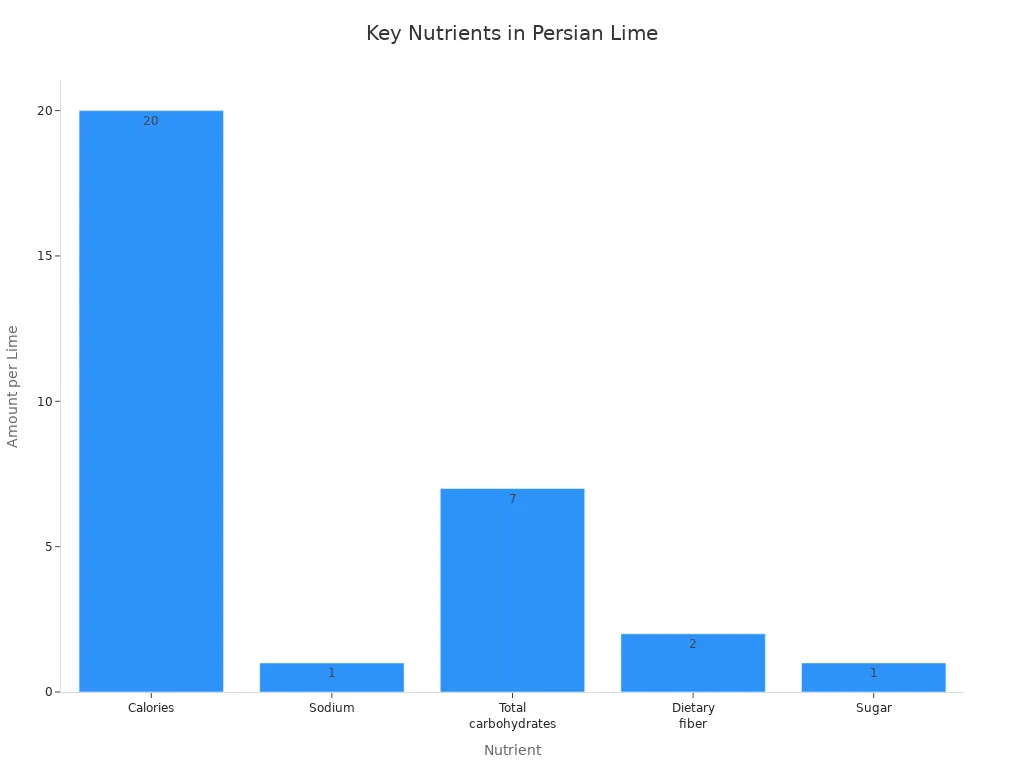
Limes have a low calorie count, which makes them a smart snack. One medium-sized Persian lime contains about 20 calories. If you use the juice from one lime, which weighs around 44 grams, you get only 11 calories. This means you can add lime to your meals without worrying about extra calories.
Here is a table that shows how the calorie content of Persian lime compares to other citrus fruits:
Fruit | Calories (per 100g) |
|---|---|
Persian Lime | 20-30 |
Lemon | 29 |
Lime | 30 |
You see that the nutritional value of lime is similar to other citrus fruits. Limes are a good choice if you want flavor and nutrition without high calories.
Good Source of Antioxidants
Persian lime is a good source of antioxidants. These compounds protect your cells from damage. You find several types of antioxidant compounds in limes, such as ascorbic acid, gallic acid, and ellagic acid. The concentration of ascorbic acid ranges from 54.32 to 85.64 mg per gram of dry weight. Gallic acid and ellagic acid also add to the antioxidant power of limes.
Antioxidant Compound | Concentration (mg/g DW) |
|---|---|
Ascorbic Acid | 54.32 to 85.64 |
Gallic Acid | 9.45 to 28.25 |
Ellagic Acid | 6.55 to 11.50 |
Limes also contain flavonoids and limonoids. Flavonoids are found in the peel and white part of the fruit. Limonoids are most concentrated in limes and help fight harmful molecules in your body. These antioxidants help keep you healthy and may lower your risk of disease.
You get many nutritional benefits from eating limes. The nutritional value of lime comes from its high in vitamin c content and its role as a good source of antioxidants. Limes stand out among citrus fruits for their nutrition and health benefits.
Health Benefits
Health Benefits of Limes
You can find many health benefits of limes that make them a valuable addition to your diet. Limes contain nutrients and compounds that support your body in several ways. Here is a table that shows the most commonly reported health benefits of limes:
Health Benefit | Description |
|---|---|
Boosts immunity | High in vitamin C, which may help enhance the immune system. |
Promotes healthy skin | Contains properties that may contribute to skin health. |
Reduces heart disease risk | Research indicates potential reduction in heart disease risk factors. |
Prevents kidney stones | High citric acid content may help prevent kidney stones by increasing citrate levels. |
Increases iron absorption | Vitamin C in limes can improve iron absorption from plant-based foods. |
You see that the health benefits of limes cover many important areas, including immunity, skin, heart, and digestion. Clinical studies show that dried lime may help reduce the severity of common cold symptoms, although the effect is not always significant compared to a placebo.
Immunity Support
You may help boost immunity by eating limes. Vitamin C, which is abundant in limes, plays a key role in supporting your immune system. This vitamin helps your white blood cells, such as lymphocytes and phagocytes, work better. These cells fight off germs and protect against infection. Vitamin C also acts as an antioxidant, which shields your immune system from damage caused by free radicals.
When you eat foods rich in vitamin C, like limes, you increase the production of immune cells. This may help improve immunity and make your body more effective at fighting off infection. Many people choose limes because they want to boost immunity and stay healthy.
Skin Health
You can promote healthy skin by adding limes to your meals. Limes are rich in vitamin C and flavonoids, which are known for their antioxidant properties. These compounds help your skin stay firm and smooth. They also protect your skin from damage and may promote healthy skin by fighting free radicals.
By neutralizing free radicals, antioxidants help prevent the breakdown of collagen and elastin, essential proteins for maintaining skin’s firmness and elasticity.
Here are some ways limes support your skin:
Limes provide over 20% of your daily value for vitamin C in just one medium fruit.
Higher vitamin C intake links to a lower risk of wrinkles and dry skin, especially in older women.
Citric acid in limes acts as a natural exfoliant, removing dead skin cells and improving skin texture.
Flavonoids and vitamin C together help rejuvenate your skin and protect against infection.
You may notice that limes promote healthy skin in several ways, making them a smart choice for your daily routine.
Digestion
You support your digestive health when you eat limes. The peel of Persian lime contains a high amount of dietary fiber, which helps keep your digestive system working well. Fiber promotes regular bowel movements and improves gut health.
Limes also contain polyphenols, which act as antioxidants and support your digestive tract. Flavonoids in limes stimulate your digestive system, while essential oils can ease stomach gas pain. When you include limes in your diet, you help your body digest food more easily and stay comfortable.
Heart Health
You may reduce heart disease risk by eating limes. Studies show that Persian lime juice and peel can increase the antioxidant capacity in your blood. This helps reduce fatty streaks in your arteries, which lowers the risk of heart disease.
Antioxidants, especially flavonoids found in the peel and pulp of limes, play a big role in heart health. These compounds reduce inflammation and protect your heart from chronic diseases. When you eat limes, you give your body the tools it needs to keep your heart strong and healthy.
Iron Absorption
You can increase iron absorption from plant-based foods by eating limes. Vitamin C in limes helps your body absorb non-heme iron, which comes from foods like beans, lentils, and leafy greens. When you eat limes with these foods, your body takes in more iron, which helps prevent iron deficiency.
Risks and Side Effects
While limes offer many health benefits, you should know about possible risks and side effects. Eating too many limes or using lime juice on your skin can cause problems.
Excessive lime juice can lead to phytophotodermatitis, a skin condition that happens when lime juice and sunlight mix.
Lime juice may interact with some medications, making their effects stronger or causing side effects.
Using lime juice in the vagina can cause itching, burning, and pain.
Some people may have allergic reactions to limes. Symptoms can include:
Skin rashes or hives that are red and itchy.
Swelling of the lips, tongue, or face, sometimes with a burning feeling.
Gastrointestinal discomfort after eating limes.
In rare cases, severe reactions like anaphylaxis, which need immediate medical help.
Most people can enjoy the health benefits of limes safely. If you notice any unusual symptoms, you should talk to a doctor.
Culinary Uses

Persian lime stands out for its versatility in the kitchen. You can find this fruit in many global cuisines, where it adds a bright, tangy flavor to both sweet and savory dishes. The most popular culinary uses include squeezing fresh juice over meats, fish, tacos, and salads, or using dried lime in traditional recipes.
Preparation Tips
You can prepare Persian lime in several ways to enhance your meals. Freshly juiced lime brings a tangy taste to dishes, while dried and crushed lime offers a unique earthy flavor. If you want to dry the fruit at home, you blanch the limes in boiling water for about a minute, cool them in an ice bath, dry them with a towel, and then let them air dry until they turn dark brown and hollow. Store dried limes in an airtight container at room temperature.
When you want to extract juice, select limes that are bright green and firm. Store them at room temperature if you plan to use them soon. For easier juicing, freeze the whole fruit, then thaw before slicing and juicing. This method helps break down the membranes inside, making it easier to get more juice.
Recipe Ideas
You can explore many culinary uses for Persian lime in different cultures. Here is a table showing some popular ways this fruit appears in global dishes:
Culinary Use | Description |
|---|---|
Dried Lime in Persian Cuisine | A staple ingredient that adds a distinctive flavor to dishes, different from fresh lime juice. |
Marinades | Used in marinades for chicken kebabs, enhancing flavor significantly. |
Fish Dishes | Incorporated into fish kebabs and rice dishes, adding depth to the broth. |
Soups and Stews | Ground dried limes are used in chicken soup and lamb braises for flavor enhancement. |
Dried Lime Tea | Simmered with rock candy, it serves as a soothing nightcap. |
Shrimp Risotto | In Saudi Arabia, ground dried limes are used in a shrimp dish called mashbuss rubyan. |
You can also try a simple Persian salad. Chop cucumbers, cherry tomatoes, and scallions, then toss with olive oil, lime juice, salt, and pepper. Add honey or sugar to balance the acidity. This salad makes a refreshing side dish and highlights the bright flavor of the fruit.
Storage
To keep Persian lime fresh, store the fruit at temperatures between 5 and 12°C. Good air circulation helps prevent gas buildup and mold. If you store limes right after harvest and monitor temperature and humidity, you can enjoy their flavor longer. For dried limes, use an airtight container at room temperature.
Tip: Proper storage helps you enjoy both eating lime fruit and drinking lime juice at their best quality.
Persian lime gives you vitamin C, antioxidants, and minerals. You support your immune system, skin, and heart when you eat this fruit. You add flavor to salads, meats, and drinks with fresh or dried lime.
You get nutrition and health benefits.
You enjoy many ways to use Persian lime in your kitchen.
Try adding Persian lime to your meals. You discover new tastes and help your body stay healthy.
FAQ
What makes Persian lime different from other limes?
Persian lime has a larger size, seedless flesh, and a milder, less acidic taste than key lime. You often find it in grocery stores because it ships well and stays fresh longer.
What nutrients do you get from Persian lime?
You get vitamin C, vitamin B6, folate, potassium, calcium, and magnesium from Persian lime. These nutrients help your body stay healthy and support your immune system, skin, and bones.
What are common ways to use Persian lime in cooking?
You can squeeze Persian lime juice over meats, fish, and salads. You can also use dried lime in stews, soups, and teas. The zest adds flavor to desserts and drinks.
What should you know about storing Persian limes?
Store fresh Persian limes at cool room temperature or in the refrigerator. Keep dried limes in an airtight container. Proper storage helps keep the fruit fresh and flavorful.
What risks should you consider when eating Persian lime?
Some people may have allergic reactions, such as rashes or swelling. Using lime juice on your skin can cause irritation in sunlight. Eating too much lime may upset your stomach.