

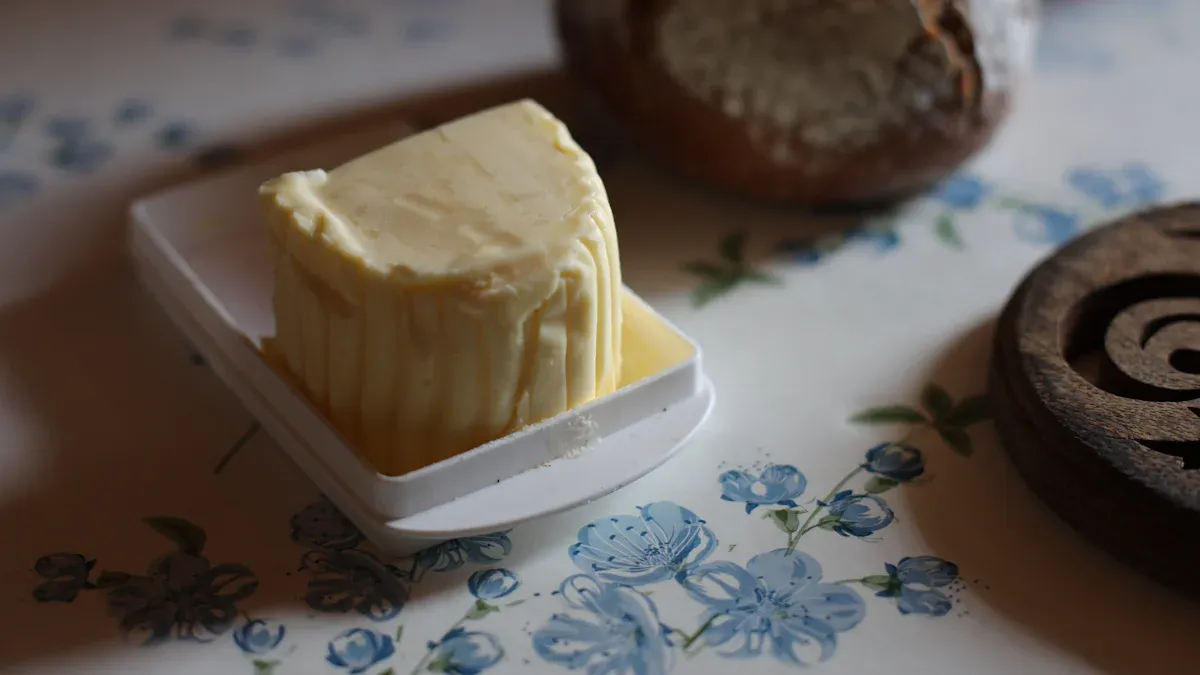
Butter and ghee are popular in kitchens worldwide. You know butter as a dairy product made from churning cream. Ghee is clarified butter, with a rich history rooted in Indian tradition. It is often called ‘sacred fat’ and features in ancient texts like the Vedas. The global ghee market is also growing, projected to reach $13.4 billion by 2034. This shows its continued importance. How do these two common fats differ in composition, culinary uses, and health impacts? This comparison of ghee versus butter helps you understand their distinctions.
Key Takeaways
Ghee is butter with milk solids and water removed, making it almost pure fat.
Ghee has a higher smoke point, so it is better for cooking at high temperatures.
Ghee has less lactose and casein, which is good for people who cannot eat dairy.
Butter has a creamy taste, while ghee has a nutty, caramelized flavor.
Both ghee and butter have important vitamins and can be part of a healthy diet in small amounts.
Butter
Butter Production and Makeup
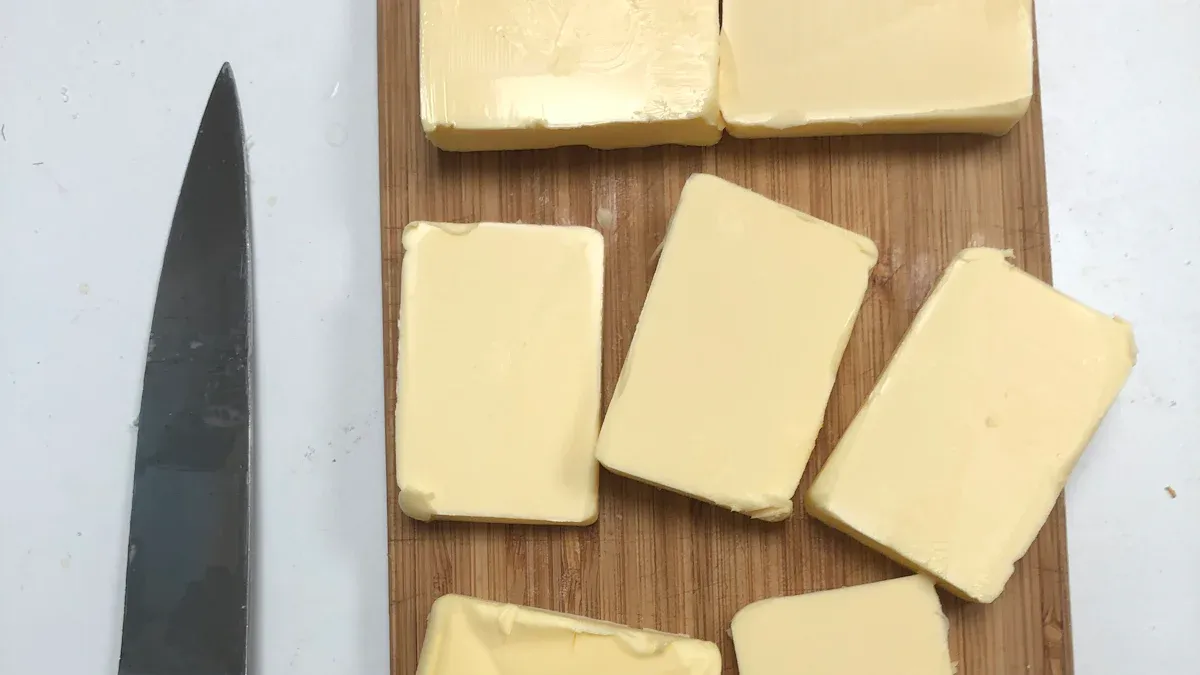
You might wonder how butter comes to be. Traditional butter making involves churning cream. This process separates butterfat from other milk components. Historically, farms and small creameries made butter in small batches. They often held cream for up to a day before churning. This allowed for culturing, where lactic acid-producing cultures helped separate the butterfat. The fluid that drained during churning became buttermilk. Washing the butter with water after churning removed residual milk solids. This step prevented spoilage and helped preserve the butter.
Today, the process is more industrialized but follows similar steps:
Ripening: Sometimes, cultures are added to ferment milk sugars. This creates lactic acid and desirable flavors, especially for cultured butter.
Aging: Cream is held at cool temperatures for 12-15 hours. This crystallizes butterfat globules, ensuring proper churning and texture.
Churning: Cream is agitated until butter granules form. These granules grow and coalesce, separating into a semisolid butter mass and liquid buttermilk.
Draining & Washing: The buttermilk drains off.
Salting & Working: Salt is added for flavor and preservation. The butter is then worked to achieve a consistent texture.
Packing & Storage: The butter is shaped, wrapped, and stored.
Butter is primarily fat. It typically contains around 80% butterfat. The remaining composition includes about 16% water and up to 2% milk solids, such as lactose and casein. Salted butter, for example, often has 81% fat, 16% water, and 1% protein.
Butter’s Nutritional Profile
Butter offers a unique nutritional profile. It contains various types of fat, including short-chain, medium-chain, and long-chain fatty acids. You will find saturated fatty acids (SFAs), monounsaturated fatty acids (MUFAs), and polyunsaturated fatty acids (PUFAs) in butter. Palmitic acid (C16:0) is the most abundant saturated fat. Oleic acid (C18:1 cis 9) is the predominant unsaturated fatty acid.
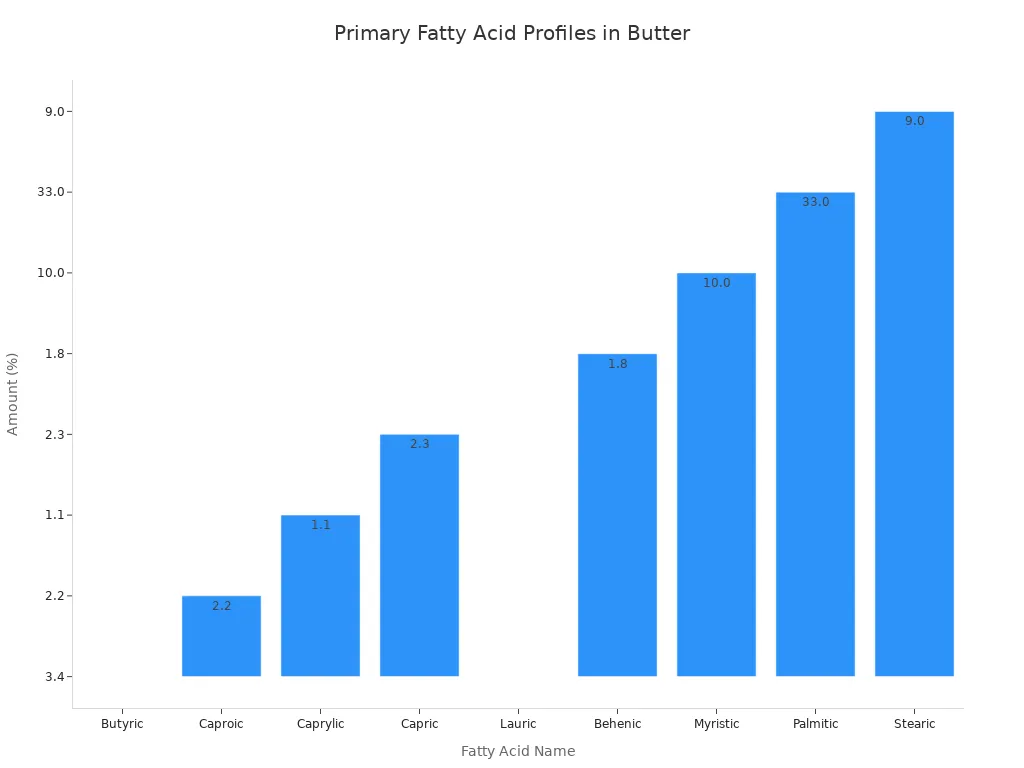
Butter is also a good source of fat-soluble vitamins. It provides Vitamin A, which is the most abundant. One tablespoon of unsalted butter contains about 97 micrograms of Vitamin A. This accounts for approximately 14% of the recommended daily allowance for women and 11% for men. You also get Vitamins D, E, and K2 from butter. These vitamins are crucial for various bodily functions.
Understanding Ghee
Ghee Production and Clarification
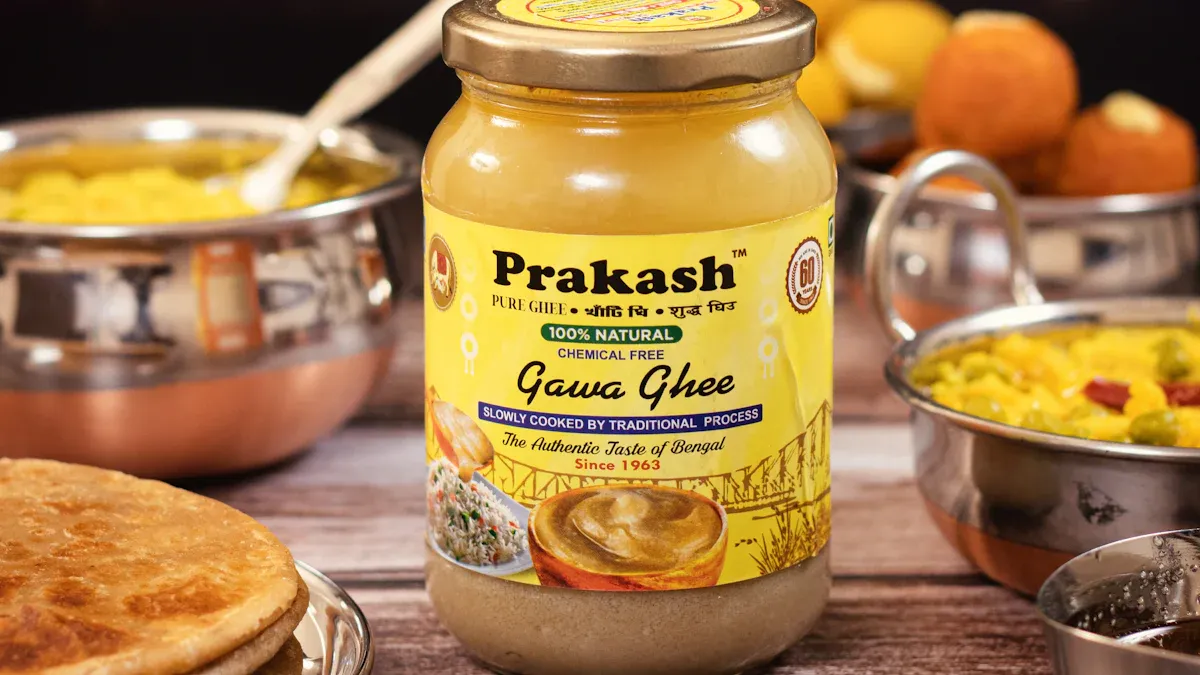
You might know ghee as clarified butter. Its creation involves a careful process. You take butter and simmer it to remove water and milk solids. This clarification process gives you pure ghee.
Here is how you make ghee:
You melt unsalted butter in a saucepan over medium-high heat.
You continue cooking until a white layer of milk proteins floats to the surface.
You bring the butter to a boil. The milk proteins will become foamy at this point.
You lower the heat to medium and continue to gently boil. The milk proteins will break apart.
As boiling continues, milk proteins will sink to the bottom. The bubbling will calm and then stop. This shows water evaporation. You adjust the heat to prevent scorching.
Once boiling stops, you pour the butter through a cheesecloth-lined strainer or coffee filter into a heatproof container. This removes the browned milk solids. You then cool and refrigerate it.
This process removes most of the dairy proteins, like casein, and lactose. This means ghee contains fewer dairy proteins than regular butter. This makes ghee a good choice for people sensitive to dairy products.
Ghee’s Composition
Ghee is almost pure fat. It has a higher concentration of fat than butter. You will find nearly 100% of its calories come from fat. For example, 100 grams of ghee contains about 99.5 grams of fat. A single tablespoon (15g) of ghee has around 14 grams of total fat. This high fat content is a key characteristic of ghee.
Ghee versus Butter: Key Differences
You often find both ghee and butter in kitchens, but they have distinct differences. Understanding these differences helps you choose the right one for your cooking and dietary needs. This section explores the key distinctions between ghee versus butter.
Fat Content and Dairy Solids
You will notice a primary difference in their fat concentration. Ghee contains a higher percentage of fat than butter. While butter is about 80% fat, ghee is nearly 100% fat. This difference impacts their nutritional breakdown.
Type of fat per tbsp. | Ghee | Butter |
|---|---|---|
Saturated | 10 g | 7 g |
Monounsaturated | 3.5 g | 3 g |
Polyunsaturated | 0.5 g | 0.4 g |
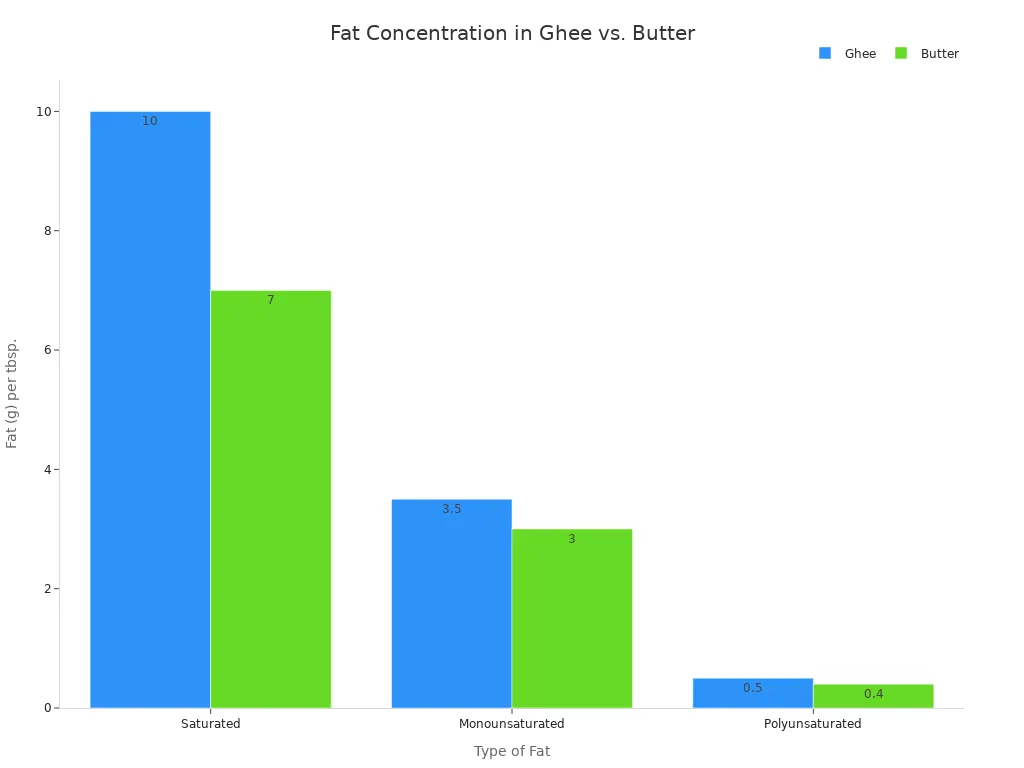
Ghee has a slightly higher concentration of fat than butter. The overall fat and calorie differences between ghee and butter are small.
Another significant difference lies in their dairy solids. Butter contains small amounts of lactose and casein. These are dairy components that can trigger sensitivities in some people. Ghee, however, is characterized by the absence of lactose. Clarified butter, including ghee, is casein and lactose-free. This makes it generally safe for those with lactose or casein intolerance. Ghee has much lower levels of dairy proteins, such as casein, and lactose than regular butter. This is because its production removes many dairy proteins. You can typically tolerate ghee well if you have lactose intolerance or milk sensitivities. Its production removes milk solids, resulting in almost entirely pure fat with little to no lactose or casein.
Smoke Point and Flavor
The smoke point is another crucial difference. This is the temperature at which a fat begins to burn and smoke.
Fat/Oil | Smoke Point (F) | Smoke Point (C) |
|---|---|---|
Butter | 350 | 177 |
Ghee (clarified butter) | 485 | 252 |
Ghee has a significantly higher smoke point. It ranges from 85 to 135° F above most other oils. This higher smoke point makes ghee better for high-heat cooking. You can fry, sauté, and roast with ghee without it burning easily. Butter, with its lower smoke point, is better for lower-temperature cooking or finishing dishes.
Their flavor profiles also differ.
Product | Flavor Profile |
|---|---|
Butter | Creamy, milky, smooth, velvety |
Ghee | Deep, nutty, caramelized |
Butter offers a creamy, milky, and smooth taste. Ghee, due to the caramelization of milk solids during its production, develops a deep, nutty, and caramelized flavor. You will find this distinct taste enhances many dishes, especially in Indian cuisine.
Storage and Shelf Life
You store ghee and butter differently to maximize their shelf life.
For ghee, you should store it in an airtight container. A dark container with a tight lid is best. Place the container on a dry, dark shelf in a kitchen cabinet. Keep it away from heat and light. Always use a dry spoon when taking ghee from the jar. Prevent moisture from entering the jar, as it can cause rancidity. Do not expose the ghee jar to sunlight. Pure ghee is photo-sensitive, and sun exposure shortens its life. Avoid inserting fingers into the ghee jar, as skin contact can spoil its shelf life. Glass jars are best for long-term storage. BPA-free airtight plastic jars can also work. You can refrigerate ghee to extend its shelf life up to a year, even after opening. It will solidify but remain scoopable. For long-term storage, use the freezer. This can extend shelf life indefinitely, though quality may slowly degrade. Freeze it in an airtight, freezer-safe container and avoid refreezing.
You store butter differently. For short-term storage (a few days to weeks), maintain butter at 20°C (68°F) or below. This keeps it firm yet spreadable. For regular consumption, ideal refrigerator temperatures are 4-7°C (39-45°F). This maintains structure, prevents bacterial growth, and preserves flavor. For long-term storage, freeze butter at -12°C to -15°C (10°F to 5°F). This halts deterioration processes and maintains quality for several months. Use moisture-proof materials like aluminum foil or wax paper for packaging. This prevents water loss and blocks external moisture. Packaging should also provide barriers against oxygen, light, and odors. This prevents oxidative rancidity, flavor deterioration, and odor absorption. Avoid temperature fluctuations. These can cause textural changes. Store butter away from heat sources and in stable areas of the refrigerator, not the door. Maintain relative humidity levels between 65-75%. This prevents mold growth, packaging deterioration, or excessive moisture loss from the butter. Keep butter in its original wrapper or an airtight container. This protects it from light, air, and odors. Salted butter lasts longer due to its preservative qualities. Unsalted butter should always be refrigerated or frozen.
Health Aspects of Ghee and Butter
You might wonder how ghee and butter affect your body. Both offer unique nutritional profiles. You can understand their impact on your health by looking at their specific components.
Fat Types and Digestion
You find different types of fats in both ghee and butter. One important type is short-chain fatty acids (SCFAs). Ghee has a higher percentage of these. About 25% of the fat in ghee comes from SCFAs. Butter contains a lower amount, typically 12-15%.
Butyrate is a key SCFA. Your lower intestinal tract produces butyrate. Microbes ferment dietary fibers to create it. Butyrate is a main energy source for your colon cells. It helps keep your gut healthy. It also plays a role in how your body uses energy. Butyrate makes your intestinal barrier stronger. It also boosts your gut’s immune system. This SCFA helps control immune and inflammatory responses. It works by acting as a histone deacetylase (HDAC) inhibitor. It also signals through G protein-coupled receptors (GPCRs). Butyrate affects your gut-brain connection. It also influences how your body handles glucose and lipids. This includes making gut hormones like GLP-1 and PYY. Because ghee has more SCFAs, it may offer more of these digestive benefits.
Vitamins and Nutrients
Both ghee and butter contain important fat-soluble vitamins. You get Vitamins A, D, E, and K from both. If the cows eat grass, their products are especially rich in these vitamins. However, ghee often has a higher concentration of these vitamins per gram. This is because the clarification process removes water and milk solids. This makes the vitamins more concentrated. For example, traditional ghee preparation can increase levels of vitamin K2 and retinol (active vitamin A). Ghee is a good carrier for these fat-soluble vitamins. It is particularly rich in vitamin K2.
Butter also provides a highly absorbable form of Vitamin A. Your body absorbs retinol, the animal-derived Vitamin A, very efficiently. Studies show you absorb about 30% of it within an hour. This is much higher than the less than 5% absorption from plant sources. This means butter helps you get more usable Vitamin A.
You also consider saturated fat content. Both ghee and butter contain saturated fats. You can include these fats in a balanced diet. The key is moderation.
Potential Health Benefits
Ghee offers several potential health benefits. Its unique mix of fatty acids is gaining scientific interest. This includes SCFAs, conjugated linoleic acids (CLAs), omega-3, and omega-6 fatty acids. These fatty acids, along with monounsaturated fatty acids (MUFAs) and polyunsaturated fatty acids (PUFAs), show therapeutic properties. They can help reduce inflammation. They also improve your lipid profiles.
Ayurveda, an ancient Indian medicine system, has long recognized ghee’s benefits for gut health. Modern science now explores the wider advantages of ghee’s full fatty acid spectrum. This goes beyond just saturated fats. Ghee may improve digestion. It can also reduce inflammation. Some research suggests it might help with weight loss. It could also strengthen your bones.
Culinary Uses
You use different fats for different cooking needs. Butter and ghee each bring unique qualities to your kitchen. Understanding these qualities helps you choose the best fat for your dish.
Cooking with Butter
Butter is versatile in many dishes. You often use unsalted butter for baking. This lets you control the salt in your recipe. Cold butter is essential for flaky pastries like pie crusts and biscuits. It creates layers as it melts. Room temperature butter works best for creaming with sugar. This method adds air, making your baked goods light and tender. Melted butter adds moisture and density to things like brownies. Brown butter gives a rich, nutty flavor to dishes. Butter’s fat content, usually around 80% in US supermarkets, is good for baking. Higher butterfat can make cakes rise less. Butter’s lipids give food a good mouthfeel, color, and texture. Its flavor comes from compounds like diacetyl. Butter makes cakes moist. It helps create flaky layers in pastries by preventing too much gluten from forming. This fat also keeps baked goods fresh longer.
Cooking with Ghee
Ghee is excellent for high-heat cooking. Its high smoke point means it does not burn easily. You can use ghee for sautéing, frying, and deep-frying. It is a staple in Indian and Middle Eastern cuisine. You can temper spices in ghee to build flavor for curries. Ghee is also key in many Indian sweets and Middle Eastern baked goods like baklava. When you sear meats or seafood with ghee, it creates a nice caramelized crust. You can also use it to finish sauces, making them velvety. Ghee adds a rich, nutty, and slightly caramelized flavor to your food. It enhances the aroma and taste of dishes like biryani. Ghee helps bind ingredients in sweets, giving them an indulgent feel. It can make baked goods like bread and pies crispier. You can even spread ghee on warm bread or pour it over vegetables for a rich taste. These ghee recipes show its versatility.
Making Your Choice
You now understand the distinct characteristics of ghee and butter. Making your choice between them depends on your personal needs and how you plan to use them in the kitchen.
Dietary Needs and Preferences
You consider your dietary needs and preferences carefully when selecting a fat for your kitchen. If you experience lactose intolerance or casein sensitivity, ghee often presents a better choice. Its careful production process removes most milk solids, including lactose and casein. This makes ghee a suitable alternative for many individuals with dairy sensitivities, allowing them to enjoy a rich, buttery flavor without discomfort. Butter, however, retains these dairy components, which can trigger adverse reactions in some people. Beyond dietary restrictions, you might also prefer ghee for its distinct nutty and caramelized flavor if you enjoy that profile in your cooking. Butter offers a classic creamy and smooth taste that many find comforting and familiar, perfect for traditional recipes. Your personal preference for flavor and texture ultimately guides your decision, ensuring you choose a fat that aligns with your palate and well-being.
Cooking Style Considerations
Your specific cooking style significantly influences your fat selection. For high-heat cooking methods like frying, sautéing, or searing, you should confidently use ghee. Its remarkably high smoke point prevents it from burning easily, ensuring your food cooks without imparting a bitter or acrid taste. This makes ghee ideal for stir-fries, pan-seared meats, and deep-frying, where consistent high heat is crucial. Butter, with its lower smoke point, is more appropriate for lower-temperature cooking. You use butter effectively for baking, where it contributes to moisture and texture, or for spreading on toast and finishing delicate sauces. It adds a rich, creamy element to baked goods and savory dishes alike. When you need a fat that withstands intense heat without breaking down, ghee is superior. For delicate flavors and applications where you do not need extreme heat, butter works well. This comparison of ghee versus butter clearly highlights their distinct culinary roles, allowing you to choose the best fat for your intended dish.
You now understand the distinct characteristics of ghee and butter. Ghee, a clarified fat, suits high-heat cooking and those with dairy sensitivities. Butter, with its creamy flavor, excels in baking and spreading. Neither is inherently “better” than the other. You choose based on your cooking methods, dietary needs, and flavor preferences. Both can be part of a healthful diet when you consume them in moderation.
FAQ
What is the main difference between ghee and butter?
You make ghee by simmering butter. This process removes water and milk solids. Butter contains about 80% fat, water, and milk solids. Ghee is nearly 100% fat. It has a higher smoke point.
Can you use ghee if you are lactose intolerant?
Yes, you can often use ghee if you are lactose intolerant. The clarification process removes most lactose and casein. This makes ghee suitable for many people with dairy sensitivities.
Which is better for high-heat cooking?
Ghee is better for high-heat cooking. It has a much higher smoke point than butter. You can fry, sauté, and roast with ghee without it burning easily. Butter works best for lower temperatures.
Does ghee have more nutrients than butter?
Ghee has a higher concentration of fat-soluble vitamins per gram. This includes Vitamins A, D, E, and K. The removal of water and milk solids makes these vitamins more concentrated in ghee.
How do you store ghee?
You store ghee in an airtight container. Keep it in a cool, dark place. You do not need to refrigerate it for short-term use. Refrigeration extends its shelf life.