

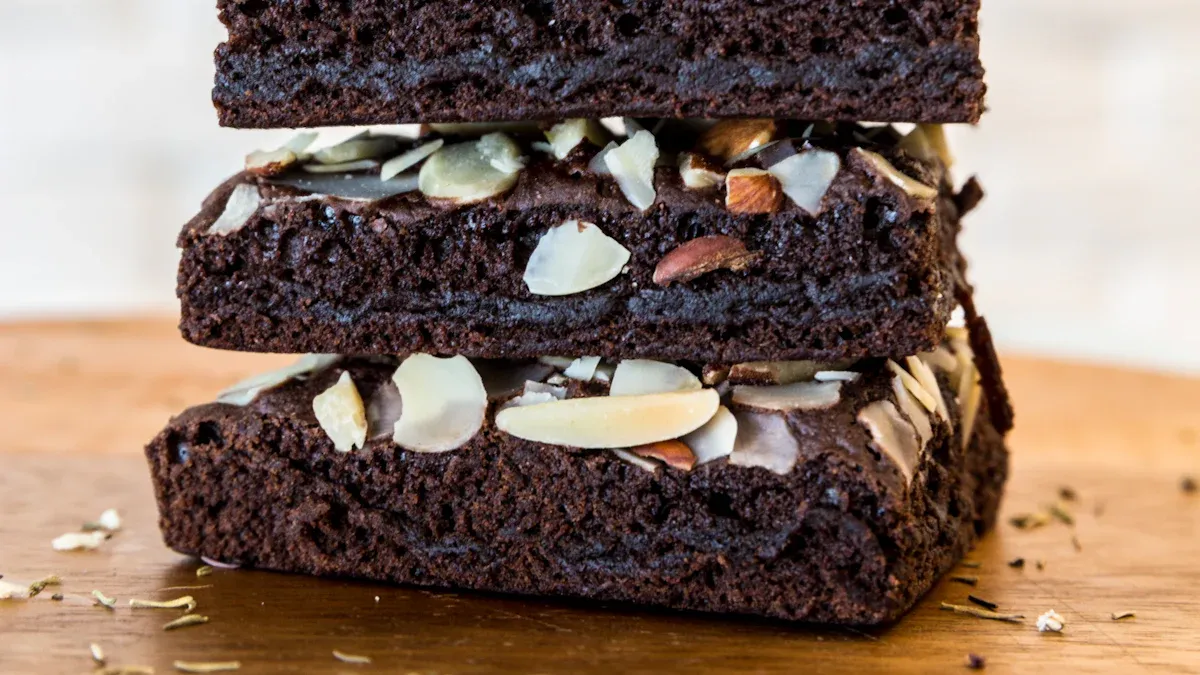
Almond flour is a versatile, nutrient-dense choice. It comes from premium almonds. This gluten-free and grain-free alternative offers many benefits. You can use it for low-carb and keto baking. Its popularity for healthier baking continues to rise. The global almond flour market reached USD 2167.01 million in 2023. This shows its wide acceptance. Many people now seek healthier food options and gluten-free baking solutions. You can make countless delicious recipes with this special almond flour. It provides a great base for your next recipe.
Key Takeaways
Almond flour is a healthy choice. It has few carbs and no gluten. It comes from ground almonds without skins.
Almond flour helps keep your blood sugar steady. It has healthy fats and protein. This helps you feel full and can help with weight control.
Almond flour is great for gluten-free baking. It works for people who cannot eat gluten. It makes baked goods moist and tender.
Baking with almond flour is different. It needs less water and browns faster. You might need to add extra eggs to help things stick together.
You can use almond flour in many recipes. It works for sweet treats, savory dishes, and breakfast foods. Store it in the fridge or freezer to keep it fresh.
What is Almond Flour
Definition and Production
Almond flour comes from ground almonds. You make it by blanching almonds. This process removes their outer skins. Then, you grind these blanched almonds into a very fine powder. This gives you a light, fine flour.
Here is how you make blanched almond flour:
You blanch the almonds. Submerge raw almonds in boiling water for about 30 seconds.
You drain them well. Then you rub off the skins with a kitchen towel or by hand.
You dry the blanched almonds completely. Spread them in a single layer on a baking sheet. You can dry them in a low oven for an hour or at a higher temperature for 20-30 minutes. Ensure they cool fully.
You grind the dried almonds. Use a coffee grinder, blender, or food processor. Pulse in short, quick bursts. This prevents the almonds from turning into almond butter.
You sift the ground almonds. This separates the fine flour from any coarser pieces. You can regrind the coarser pieces and sift again to achieve a superfine flour.
You transfer the finished almond flour to a sealed container for storage.
Nutritional Profile
Almond flour offers many nutrients. It is rich in healthy fats and protein. It also provides important vitamins and minerals. For example, it has a good amount of Vitamin E. This vitamin acts as an antioxidant. You also get minerals like magnesium, manganese, and copper from this versatile almond product.
Here is a look at some nutrients in a 14g serving of almond flour:
Nutrient | Amount (per 14g serving) | Daily Value (DV) |
|---|---|---|
Vitamins | ||
Thiamin (Vitamin B1) | 0.027 mg | 2% |
Riboflavin (Vitamin B2) | 0.100 mg | 8% |
Niacin (Vitamin B3) | 0.490 mg | 3% |
Vitamin E (alpha-tocopherol) | 3.33 mg | 22% |
Minerals | ||
Calcium | 33.04 mg | 3% |
Copper | 0.14 mg | 16% |
Iron | 0.46 mg | 3% |
Magnesium | 37.52 mg | 9% |
Manganese | 0.257 mg | 11% |
Phosphorus | 67.34 mg | 5% |
Potassium | 92.26 mg | 2% |
Zinc | 0.42 mg | 4% |
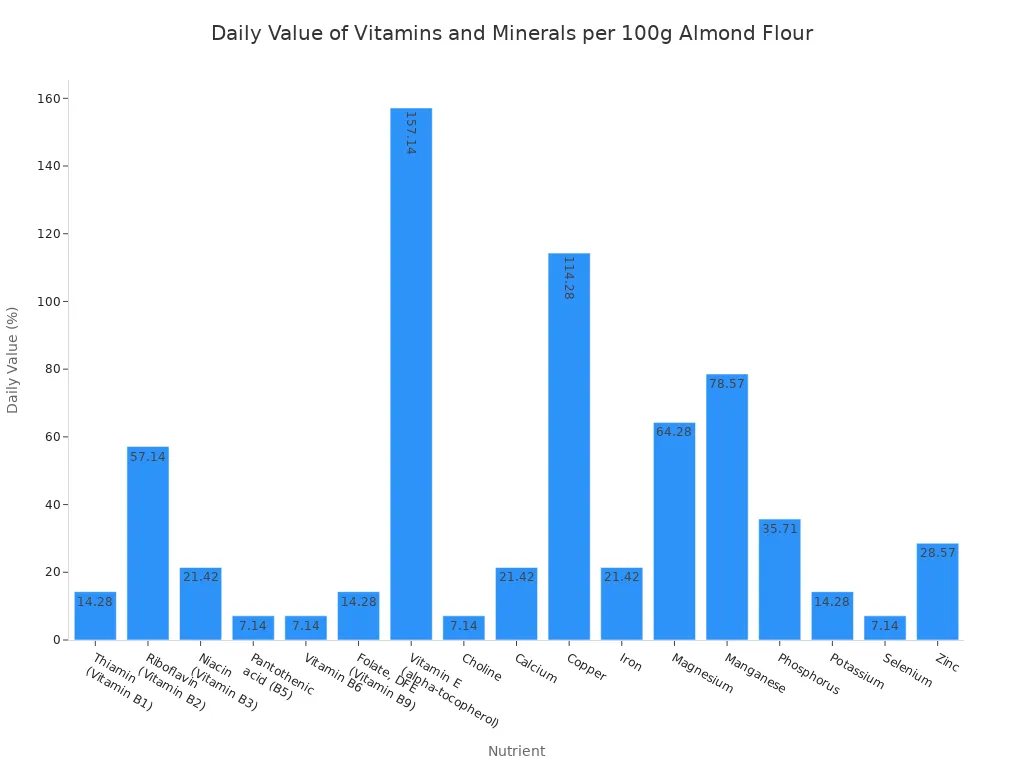
Almond flour also has good fiber content. It provides 3 grams of dietary fiber per 28 grams. This is more than all-purpose wheat flour, which has 0.9 grams. Whole wheat flour has 4 grams.
Almond Flour vs. Almond Meal
People often confuse almond flour with almond meal. They are similar but have key differences. Almond flour comes from blanched almonds. This means the skins are off. It has a fine, powdery texture and a pale, off-white color. Almond meal comes from whole, unpeeled almonds. It includes the skins. This gives it a coarser texture and brown flecks.
Here is a comparison:
Feature | Almond Meal | Almond Flour |
|---|---|---|
Preparation | Contains whole almond, skin included | Made from skinless, blanched almonds |
Consistency | More granular, brown specks and spots | Pale, off-white, extremely fine grain (powdery) |
Taste | May be a bit more bitter | Mild flavor |
Culinary Use | Bread crumb substitute, coating, savory dishes | Delicate baked goods, smooth/uniform finish, fluffy results (macaroons, bread, muffins), sweet to savory dishes |
You can use both in cooking. However, almond flour is better for delicate baked goods like macarons. Almond meal works well for rustic items or as a bread crumb substitute.
Low-Carb Benefits
Almond flour is an excellent choice for low-carb and ketogenic diets. It helps you manage blood sugar and supports weight management. You can enjoy delicious baked goods without the high carbohydrate load of traditional flours.
Glycemic Index and Blood Sugar
You want to keep your blood sugar levels stable. Almond flour helps you do this. It has a very low glycemic index. This means it causes a slower, steadier rise in blood sugar levels. Traditional wheat flour, especially all-purpose flour, contains many carbohydrates. These carbs can cause quick spikes in your blood sugar.
The glycemic index of almond flour is so low that it is hard to measure precisely. However, experts agree that it is a low glycemic food. This makes it a smart choice for you if you are watching your carbohydrate intake. While other forms of almond, like whole almonds, may show more direct benefits for blood glucose reduction and satiety in studies, almond flour still offers a significant advantage over high-carb flours.
Macronutrient Breakdown
You will find almond flour has a favorable macronutrient profile. This makes it ideal for low-carb and keto lifestyles. A 0.25 cup serving of almond flour contains 5.5 grams of total carbohydrates. It has only 2.4 grams of net carbohydrates. For every 100 grams, almond flour contains about 21.10 grams of carbohydrates.
This low-carb flour also provides healthy fats and protein. Look at the typical amounts per serving:
Nutrient | Amount Per Serving (7g) |
|---|---|
Total Fat | 4g |
Protein | 2g |
A quarter-cup serving gives you about 15 grams of fat and 24 grams of protein. These healthy fats and proteins help you feel full and satisfied. This is important for managing your diet. Almond flour is calorie-dense, with 579 kcal per 100 grams. It has about 50 grams of fat, much of which is heart-healthy monounsaturated fat. In contrast, all-purpose flour has 332 kcal per 100 grams. It is rich in carbohydrates but lower in fat, protein, and fiber. Even though almond flour has more calories, its nutrient profile supports your health goals.
Weight Management Support
Almond flour can be a valuable tool for weight management. The rich combination of fiber, protein, and healthy fats in almond helps you feel full. This feeling of fullness, called satiety, can reduce your overall calorie intake.
Research shows that eating almonds can regulate your appetite. They influence hormones that control hunger. Studies have found that consuming almonds as snacks can reduce hunger and your desire to eat. This is especially true when you eat them between meals. One study showed that almond snacks increased satiety. This led to eating less at lunch and dinner without increasing daily energy intake.
The high fiber content in almond flour also helps. It can reduce how many macronutrients your body absorbs. This lowers the net metabolizable energy and helps with weight control. Clinical trials show that adding almonds to a calorie-restricted diet can reduce body fat more effectively than diets without nuts. Almonds also improve your gut microbiota. This can boost your metabolic health and support weight management. You can confidently use almond flour in your keto recipes to help you reach your weight goals.
Almond Flour for Gluten-Free Baking
You might need to avoid gluten for various health reasons. Almond flour offers a great solution for your gluten-free baking needs. It helps you create delicious foods without gluten.
Gluten Intolerance and Celiac Disease
Many people cannot eat gluten. Gluten is a protein found in wheat, barley, and rye. Two main conditions make avoiding gluten necessary: gluten intolerance (also called non-celiac gluten sensitivity) and celiac disease.
Celiac disease is an autoimmune condition. Eating gluten damages your small intestine. Non-celiac gluten sensitivity causes symptoms similar to celiac disease. However, it does not cause intestinal damage.
You can see how common these conditions are around the world:
Condition | Global Prevalence | Specific Regions/Countries | Notes |
|---|---|---|---|
Celiac Disease | ~1% | US: 0.7-0.8% (biopsy-verified) | Prevalence has increased 4-5 times over 50 years |
Sweden & Finland: 2-3% | |||
UK & Germany: Lower rates | |||
China: Low | |||
Indian Punjab: 1% | |||
Sub-Saharan Africa: Rare | |||
Non-Celiac Gluten Sensitivity | Not clearly defined | UK: 13% reported sensitivity, 3.7% on GFD | |
Australia: 7.3% reported adverse effects from wheat | |||
US: 0.55-0.63% on GFD (without CD) | Similar prevalence to celiac disease | ||
Italy: Slightly more common than celiac disease | Multicenter study |
If you have gluten intolerance, you might experience many symptoms. These can affect your digestive system and other parts of your body. Common symptoms include:
Bloating
Abdominal discomfort or pain
Diarrhea
Flatulence
Headaches
Tiredness or fatigue
Constipation
Migraine
Depression and anxiety
Widespread pain (including joint and muscle pain)
Brain fog (difficulty thinking, forgetfulness, mental fatigue)
Leg or arm numbness (neuropathy)
These symptoms show why finding safe, gluten-free alternatives is important for your health.
A Safe Gluten-Free Alternative
Almond flour is a safe and delicious choice for gluten-free baking. It contains no gluten. This makes it perfect for people with celiac disease or gluten sensitivity. You can use it in many recipes.
Almond flour brings great qualities to your baked goods. It adds a unique flavor and texture.
Flavor Profile: Almond flour gives a nutty and subtly sweet taste. This makes it different from regular grain flours.
Texture Contribution: Its light texture helps keep baked goods moist and tender. This is true for cookies, crusts, and cakes.
You will find almond flour makes your baked goods moist and tender. Its high-fat content helps keep moisture in. This results in softer and richer cakes, muffins, and cookies. Overall, baking with almond flour improves recipes by adding moisture and richness. You can use it for pie crusts, cakes, cookies, pancakes, and breads.
To ensure your almond flour is truly gluten-free, you must buy certified products. This is especially important if you have celiac disease. Certification helps prevent contamination. Contamination can happen if the flour is processed in facilities that also handle gluten-containing flours. For example, some brands like Wildly Organic certify their almond flour as gluten-free. They process it in dedicated gluten-free facilities. Bob’s Red Mill also ensures their almond flour is gluten-free. They process, package, and test it in a dedicated gluten-free facility. They even use special testing to meet strict gluten-free rules.
Preventing Cross-Contamination
When you bake gluten-free, preventing cross-contamination is very important. This means keeping gluten-free foods away from gluten-containing foods. This applies to both how almond flour is made and how you use it at home.
In commercial facilities, many things can cause contamination.
Pests like insects, mites, rats, and birds can bring microorganisms and parasites. These can cause serious diseases.
Chemicals like pesticides, cleaning products, and heavy metals can threaten flour safety.
Molds can produce mycotoxins. These can cause severe health problems.
Human pathogens like E. coli and Salmonella can come from animal feces. Improper manure use near almond orchards can lead to contamination.
Workers can cause cross-contamination if they are not trained well or if they are sick.
Harvesting equipment and transport vehicles must be clean. If not, they can introduce pathogens to the almonds.
Harvesting bins should only store nuts. They should not hold toxic chemicals or fertilizers.
Manufacturers take great care to prevent contamination.
We take great care to prevent the introduction of any contaminants to the product we receive, and to prevent potential cross contamination of processing lots from product co-mingling.
They also focus on cleaning equipment.
Cross contamination of harvested almonds with bacteria can occur if the equipment or transportation vehicles used have not been cleaned and inspected prior to use. In order to minimize the potential for cross contamination, it is sometimes necessary to sanitize the harvesting equipment and the transport vehicles/containers prior to use during harvest operations.
You also need to prevent cross-contamination in your home kitchen. Here are some best practices:
Teach everyone in your home about keeping foods and kitchen items gluten-free.
Set aside a gluten-free area in your refrigerator and pantry. Use a top shelf to prevent crumbs from falling.
Clean cooking equipment thoroughly. Or, keep separate items like wooden utensils, cutting boards, and nonstick pans.
Check appliances and utensils. Use toaster bags for toasters. Strainers and flour sifters are hard to clean of gluten.
Buy separate sets of key kitchen tools, especially plastic or wood items. Use cupcake liners or parchment paper for baking pans.
Avoid double-dipping in shared condiments. Buy duplicates or divide family-sized containers. Use squeeze bottles for condiments.
Be careful when shopping. Avoid bulk sections due to shared scoops. Be cautious with prepared foods from delis where shared surfaces are common.
Mastering Baking with Almond Flour
You can achieve great results when you understand how almond flour works. It behaves differently from traditional wheat flour. This section gives you practical advice for using it in your kitchen.
Unique Baking Properties
Almond flour has special qualities. It lacks gluten, which gives elasticity to wheat flour. This means your dough will not stretch like wheat dough. Almond flour also has a higher fat content. This makes your baked goods moist and tender. You will notice it browns faster than wheat flour.
Consider how much water different flours absorb. Almond flour absorbs less water than wheat flour.
Flour Type | Amount of Flour (g) | Water Absorbed (g) |
|---|---|---|
Almond Flour | 30 | 17 |
Whole Wheat Flour | 30 | 22 |
Heat-Treated Whole Wheat Flour | 30 | 23 |
Vital Wheat Gluten | 30 | 25 |
Heat-Treated Vital Wheat Gluten | 30 | 31 |
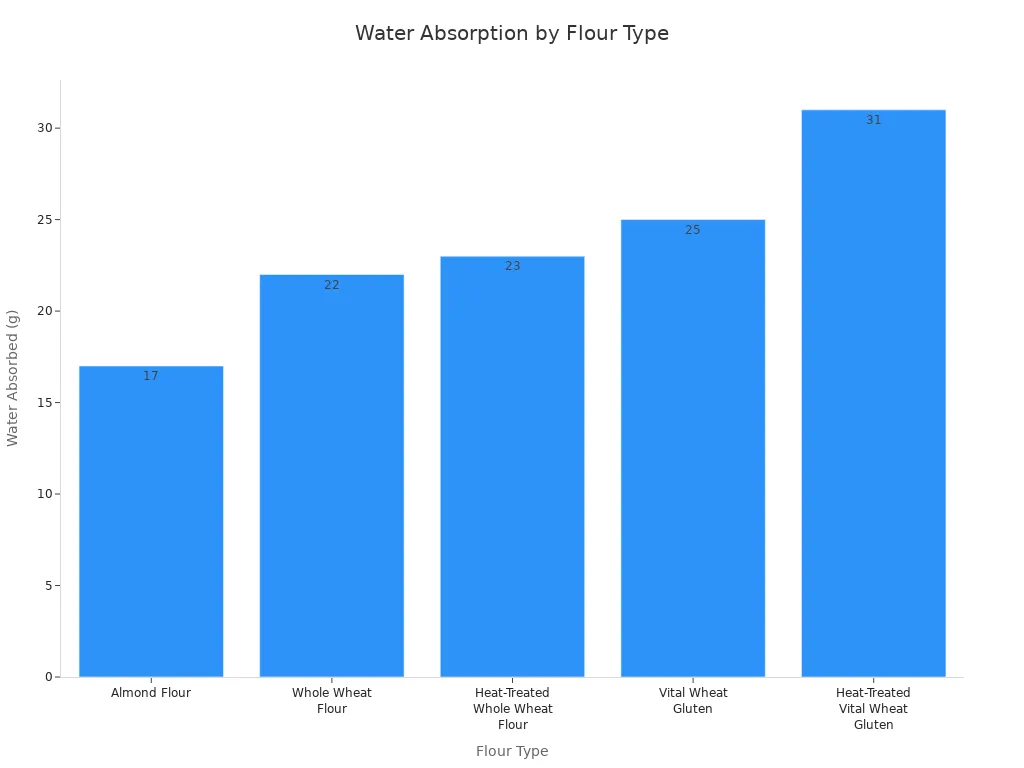
You can see that 30 grams of almond flour needs about 17 grams of water for a similar consistency. This is less than whole wheat flour.
Substitution Guidelines
You can often substitute almond flour for wheat flour in many recipes. Start with a 1:1 ratio. This means you use 1 cup of almond flour for 1 cup of wheat flour. However, you might need to adjust this.
If your batter becomes too wet, add more almond flour. Continue until you get the right consistency.
For baked dishes, add extra egg whites. This helps bind the ingredients. It also prevents your product from falling apart.
Do not overpack your measuring cup. Almond flour is denser than traditional flour.
You might need more almond flour than wheat flour. On average, 3/4 cup of traditional flour might convert to 1 1/2 cups of almond flour. This is a 1:2 ratio.
Add extra eggs or egg whites. This compensates for almond flour’s lack of gluten. Gluten acts as a binder in other flours.
Baking Tips for Success
You can make delicious treats with almond flour. Follow these tips for your next baking recipe.
Use Binders: Almond flour needs help with structure. Xanthan gum is a good gluten replacer. Use about 1/4 teaspoon per cup of flour for non-yeasted items. Ground flaxseed also works as a binder. You can also use eggs, baking powder, coconut flour, oats, banana, applesauce, or flaxseed gel. These help your recipe hold together.
Adjust Temperature: Almond flour burns easily. You should decrease the baking temperature by 25 degrees when converting a recipe. A moderate oven temperature of about 325°F (165°C) is often best. This prevents burning. It also ensures the inside cooks thoroughly.
Adjust Liquids: Almond flour has more fat and moisture. Many almond flour recipes need less oil and other liquids. Your batters will be naturally thicker. Avoid making the batter too thin. This can lead to a soggy product that will not bake properly.
Popular Almond Flour Recipes
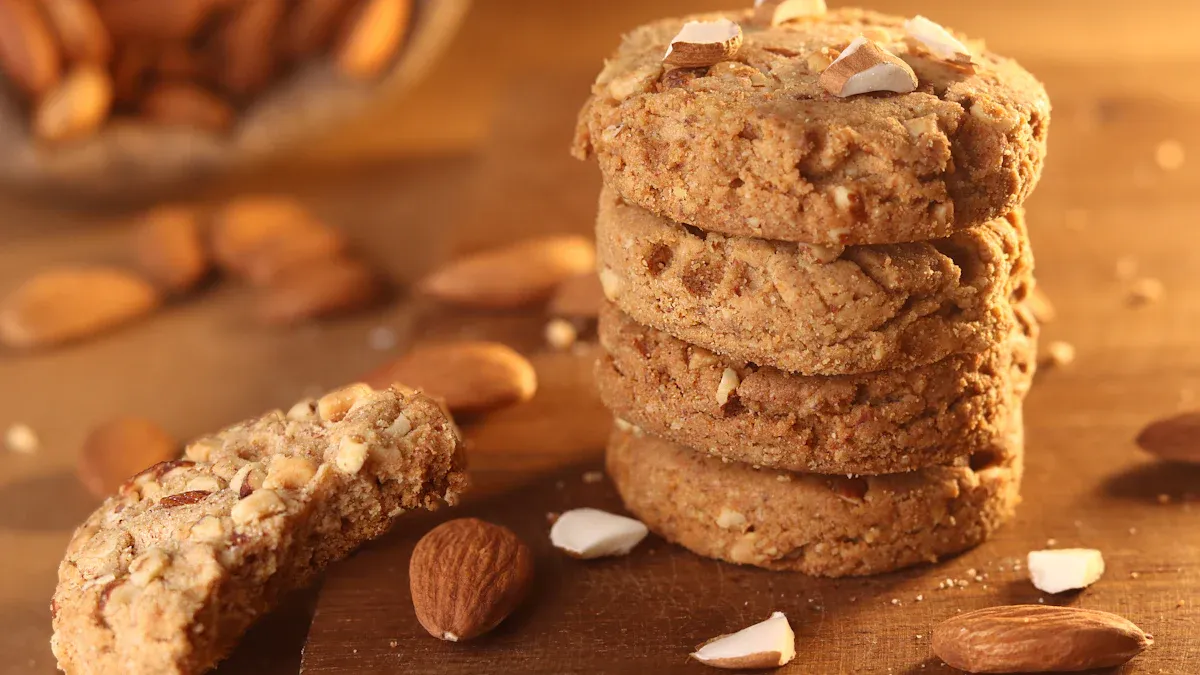
You can use almond flour in many delicious ways. It works well in both sweet and savory dishes. You will find many almond flour recipes to try.
Sweet Treats and Desserts
Almond flour makes wonderful sweet treats. You can bake many delicious almond flour desserts. For example, you can make Keto Blueberry Lemon Bread. This recipe uses almond flour for a moist, flavorful loaf. You can also create rich Keto Brownies. These brownies are fudgy and low in carbs. Keto Raspberry Lemonade Muffins are another great option. These almond flour muffins are light and tangy. You can also make classic Banana Bread with almond flour. This gives it a tender texture. Many almond flour muffins and macarons also use this versatile flour. You can even find great cookie recipes that use almond flour. These almond flour snacks are perfect for a sweet craving.
Savory Dishes and Breads
Almond flour is also great for savory dishes. You can make a delicious Keto Bread. This bread is perfect for sandwiches. You can also use almond flour as a breading. It works well for chicken, fish, or pork. This helps keep the meat moist. It also gives a crisp texture when baked. You can use almond flour as a coating for chicken in a Chicken Parmesan recipe. This helps achieve a crisp texture. Almond flour is also an ingredient in savory crackers. It gives them a crunchy texture and a nutty sweetness. You can use almond flour as a gluten-free breading or coating for fried or baked foods. It also works as a thickening agent in soups, stews, and sauces. You can even make an almond flour crust for savory tarts.
Breakfast Favorites
Start your day with tasty almond flour recipes. You can make fluffy almond flour pancakes. These almond flour pancakes are a hearty breakfast. Other popular almond flour breakfast recipes include Almond Flour Breakfast Bars. You can also bake Almond Flour Blueberry Muffins. These gluten-free blueberry muffins are a great way to enjoy fruit. Almond Flour Strawberry Scones are another delightful choice. These almond flour muffins and pancakes make breakfast special. You will love these almond flour snacks to begin your day.
Buying and Storing Almond Flour
Availability
You can easily find almond flour in many places. Major grocery stores like Walmart, Safeway, Kroger, Publix, and Albertsons usually stock it. Look in their baking aisles or health food sections. Specialty stores also offer a good selection. These include Whole Foods, Trader Joe’s, and Sprouts Farmers Market. You can also buy almond flour online. Websites like Amazon and Thrive Market sell it. Many brands, such as Bob’s Red Mill and King Arthur Flour, have their own websites for direct orders. Grocery delivery services like Instacart and Walmart Grocery also provide this product.
Proper Storage
Storing almond flour correctly keeps it fresh. You should use high-quality glass jars or food-grade plastic containers. Make sure they have secure lids. This protects the flour from moisture, air, and pests. It also stops clumping. Store your almond flour in a cold place. The fridge or freezer works best. This prevents the flour from going bad, a process called rancidity. For long-term storage, especially if you buy a lot, keep it in the freezer. If you cannot refrigerate or freeze it, store the almond flour in a cool, dark place. A cupboard or pantry away from light and heat is ideal. An airtight container is key to keeping out air and water. Proper storage can keep your almond flour fresh for up to two years.
You now understand the many benefits of almond flour. It is low-carb, gluten-free, and incredibly versatile. This almond product works in many baking and cooking applications. Almond flour is valuable for health-conscious individuals. It helps those managing conditions like type 2 diabetes. Anyone seeking delicious gluten-free options will find it useful. You can confidently experiment with almond flour. Many foolproof recipe options exist. You will find a great recipe for any dish. This almond flour recipe offers rewarding results. It supports a healthier lifestyle. Try a new recipe today.
FAQ
What is the main difference between almond flour and almond meal?
Almond flour comes from blanched, skinless almonds ground very fine. It has a pale, powdery texture. Almond meal includes the almond skins. It has a coarser texture and brown flecks.
Can you substitute almond flour 1:1 for regular wheat flour?
You can often substitute almond flour for wheat flour. Start with a 1:1 ratio. You might need to add more almond flour if the batter is too wet. You may also need extra binders like eggs.
Why does almond flour burn more easily than wheat flour?
Almond flour has a higher fat content than wheat flour. This causes it to brown faster. You should decrease your baking temperature by 25 degrees Fahrenheit. This prevents burning and ensures even cooking.
How do you properly store almond flour?
You should store almond flour in an airtight container. Keep it in a cold place like your fridge or freezer. This prevents rancidity. Proper storage keeps it fresh for up to two years.