

You probably didn’t expect vinegar to spark this much debate, but it’s quietly become a pantry essential for flavor and wellness. You’ll want bottles that balance bold apple taste, live “mother” culture, and clean sourcing—so choosing well matters more than you believe. Keep going to see five top picks for 2026 and what makes each one stand out.
| Lucy’s Organic Raw Apple Cider Vinegar (2-Pack) |
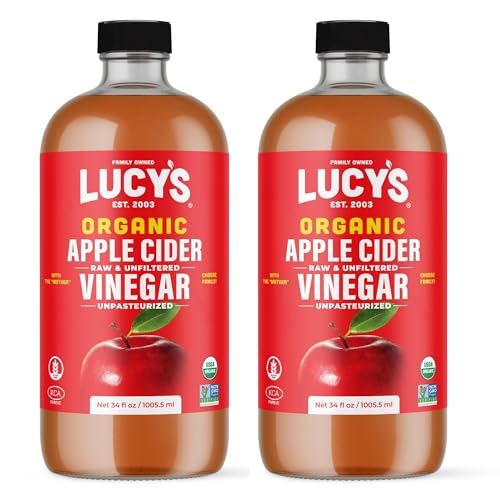
| Best for Families | Raw / Unpasteurized: Raw, unfiltered, unpasteurized (contains the “mother”) | Organic / Natural Claims: USDA Organic; Certified Organic; Non‑GMO Project Verified | Contains “Mother” / Live Cultures: Contains the “mother” | VIEW LATEST PRICE | Read Our Analysis |
| Slide Ridge Apple Honey Wine Vinegar 8.5 fl oz (4-Pack) |

| Most Flavorful | Raw / Unpasteurized: Unpasteurized (honey wine vinegar, raw wildflower honey used) | Organic / Natural Claims: Non‑GMO; made from raw wildflower honey (no additives) — artisan/natural | Contains “Mother” / Live Cultures: Raw honey fermentation (unfiltered artisan vinegar; implied live fermentation character) | VIEW LATEST PRICE | Read Our Analysis |
| Bragg Organic Raw Apple Cider Vinegar 32 oz |

| Best Known Brand | Raw / Unpasteurized: Unpasteurized, raw (contains the “mother”) | Organic / Natural Claims: USDA Organic; Non‑GMO Project Verified | Contains “Mother” / Live Cultures: Contains the “mother” | VIEW LATEST PRICE | Read Our Analysis |
| BRAGG VINEGAR APPLE CIDER UNF ORG 16 OZ |

| Daily Wellness Pick | Raw / Unpasteurized: Raw, unfiltered, unpasteurized (contains the “mother”) | Organic / Natural Claims: USDA Certified Organic; Non‑GMO Verified; Kosher | Contains “Mother” / Live Cultures: Contains the “mother” (strands of proteins, enzymes, live bacteria) | VIEW LATEST PRICE | Read Our Analysis |
| Lucy’s Organic Raw Apple Cider Vinegar (34oz) |

| Best Glass Packaging | Raw / Unpasteurized: Raw, unfiltered, unpasteurized (contains the “mother”) | Organic / Natural Claims: USDA Organic; Certified Organic; Non‑GMO Project Verified | Contains “Mother” / Live Cultures: Contains the “mother” | VIEW LATEST PRICE | Read Our Analysis |
More Details on Our Top Picks
Lucy’s Organic Raw Apple Cider Vinegar (2-Pack)
Choose Lucy’s Organic Raw Apple Cider Vinegar (2‑pack) provided you want a genuinely raw, unfiltered ACV with the “mother” in inert glass bottles—it’s USDA Organic, Non‑GMO Verified, diluted to a gentle 5% acidity for easy cooking and daily use, and free of preservatives or Apeel coatings. You’ll appreciate apples from the Pacific Northwest that yield a golden color and rich, thick flavor. The 34 oz glass bottles protect purity and prevent microplastic leaching. It’s unpasteurized and additive‑free, making it versatile for dressings, marinades, and wellness shots. Family‑owned since 2003, the brand centers organic integrity and Latino roots.
- Raw / Unpasteurized:Raw, unfiltered, unpasteurized (contains the “mother”)
- Organic / Natural Claims:USDA Organic; Certified Organic; Non‑GMO Project Verified
- Contains “Mother” / Live Cultures:Contains the “mother”
- Family‑Owned / Small Producer Background:Family owned company (founded 2003; family involved)
- No Artificial Additives / Preservatives:No preservatives; no artificial additives
- Culinary & Health Uses:Suitable for recipes, drinks, health tonics (milder acidity due to dilution)
- Additional Feature:Diluted to 5% acidity
- Additional Feature:34 oz glass bottles
- Additional Feature:No Apeel‑coated apples
Slide Ridge Apple Honey Wine Vinegar 8.5 fl oz (4-Pack)
Looking for a small-batch, honey-forward vinegar to brighten dressings and drinks? You’ll appreciate Slide Ridge’s Apple Honey Wine Vinegar, an 8.5 fl oz bottle sold in a 4-pack from a family-owned Utah producer. It’s made from raw, unfiltered wildflower honey fermented into honey wine, non-GMO and unpasteurized, with no additives or preservatives. Expect a bright, naturally honeyed flavor that’s artisanally handcrafted. Use it in vinaigrettes, marinades, glazes, sauces, or for pickling; it also works well with fish and chips. Drink it straight in tonics or smoothies whenever you desire pure, flavorful vinegar.
- Raw / Unpasteurized:Unpasteurized (honey wine vinegar, raw wildflower honey used)
- Organic / Natural Claims:Non‑GMO; made from raw wildflower honey (no additives) — artisan/natural
- Contains “Mother” / Live Cultures:Raw honey fermentation (unfiltered artisan vinegar; implied live fermentation character)
- Family‑Owned / Small Producer Background:Family‑owned company producing honeybee products since 2004
- No Artificial Additives / Preservatives:No additives, preservatives, or artificial flavors
- Culinary & Health Uses:Versatile for marinades, vinaigrettes, pickling, raw consumption, health drinks
- Additional Feature:Made from wildflower honey
- Additional Feature:Small 8.5 fl oz bottles
- Additional Feature:Produced in Mendon, Utah
Bragg Organic Raw Apple Cider Vinegar 32 oz
In case you want a reliably organic, unpasteurized cider vinegar with the traditional “mother” intact, Bragg Organic Raw Apple Cider Vinegar, 32 oz is often the go-to choice for health-conscious cooks and DIYers. You’ll get USDA Organic, Non-GMO Project verified vinegar made from organically grown apples, naturally gluten-free and unpasteurized to preserve enzymes. It contains the “mother,” those historic strand-like chains of protein and enzyme molecules that enthusiasts value. You can use it for dressings, marinades, DIY tonics, and cleaning, enjoying a zesty, flavorful, healthy liquid that stays true to traditional raw cider vinegar characteristics.
- Raw / Unpasteurized:Unpasteurized, raw (contains the “mother”)
- Organic / Natural Claims:USDA Organic; Non‑GMO Project Verified
- Contains “Mother” / Live Cultures:Contains the “mother”
- Family‑Owned / Small Producer Background:(Bragg is a family-founded, legacy brand — positioned as traditional/natural)
- No Artificial Additives / Preservatives:All‑natural raw apple cider vinegar (no artificial additives stated)
- Culinary & Health Uses:Described as zesty, flavorful, healthy — used in food and health contexts
- Additional Feature:32 oz single bottle
- Additional Feature:Naturally gluten‑free
- Additional Feature:Long‑standing heritage branding
BRAGG VINEGAR APPLE CIDER UNF ORG 16 OZ
Should you want a simple, organic apple cider vinegar with the live “mother” for daily wellness rituals or salad dressings, Bragg’s 16‑ounce bottle fits the bill. You get raw, unfiltered vinegar made from USDA‑certified organic apples, Non‑GMO Verified and kosher. The murky “mother” contains strands of proteins, enzymes and live bacteria that support natural cleansing uses. Bragg recommends a daily 2 oz shot or using it as a salad topper. The brand stresses ingredients sourced from the land, not a lab, and encourages a diet rich in organic fruits and vegetables for radiant health.
- Raw / Unpasteurized:Raw, unfiltered, unpasteurized (contains the “mother”)
- Organic / Natural Claims:USDA Certified Organic; Non‑GMO Verified; Kosher
- Contains “Mother” / Live Cultures:Contains the “mother” (strands of proteins, enzymes, live bacteria)
- Family‑Owned / Small Producer Background:Bragg brand positioning emphasizes natural sourcing and heritage (legacy brand)
- No Artificial Additives / Preservatives:All‑natural, raw, unfiltered (no artificial additives stated)
- Culinary & Health Uses:Suggested daily shot, salad dressing topper, general culinary/health use
- Additional Feature:16 oz travel‑friendly size
- Additional Feature:Kosher certified
- Additional Feature:Daily 2 oz shot suggested
Lucy’s Organic Raw Apple Cider Vinegar (34oz)
Choose Lucy’s Organic Raw Apple Cider Vinegar should you want a USDA Organic, unfiltered, unpasteurized option with the “mother” that’s diluted for a milder taste and easy mixing in drinks or recipes. You’ll get a Non‑GMO Project Verified, family‑owned product packed in a 34 oz glass bottle that preserves flavor and avoids plastics. The apples come mainly from the Pacific Northwest, benefiting from rich soil and abundant water. No preservatives, no Apeel coating, and organic certification from Organic Certifiers back quality claims. Founded in 2003 near Miguel and family, the brand focuses on clean, approachable vinegar for cooking and tonics.
- Raw / Unpasteurized:Raw, unfiltered, unpasteurized (contains the “mother”)
- Organic / Natural Claims:USDA Organic; Certified Organic; Non‑GMO Project Verified
- Contains “Mother” / Live Cultures:Contains the “mother”
- Family‑Owned / Small Producer Background:Family owned (founded 2003; family involved)
- No Artificial Additives / Preservatives:No preservatives; no artificial additives
- Culinary & Health Uses:Used in recipes, drinks, health tonics (diluted for milder taste)
- Additional Feature:Pacific Northwest apples
- Additional Feature:Glass packaging preserves quality
- Additional Feature:Family founded 2003
Factors to Consider When Choosing Apple Cider Vinegars
Whilst picking an apple cider vinegar, you’ll want to check acidity level, whether it’s raw or pasteurized, and provided that it’s organic and non‑GMO. Pay attention to flavor and aroma for cooking or drinking, plus packaging and purity to avoid contaminants. Those factors will help you choose the right bottle for taste and health needs.
Acidity Level Matters
Because acetic acid determines both flavor and safety, check an apple cider vinegar’s acidity before you buy or use it. You’ll find acidity listed as a percentage—most culinary ACVs sit between about 4% and 6%. Choose higher acidity (5–6%) when you want a sharper sour taste and reliable preservative power for pickling; tested recipes assume at least 5% to prevent bacterial risk. Opt for around 4% when you prefer a milder tang for dressings and drinks. Should the label omit percentage, treat the vinegar as higher strength for safety. Whenever diluting for tonics, account for acidity: mix roughly 1–2 tablespoons in an 8-ounce glass of water to avoid throat irritation and protect tooth enamel.
Raw Versus Pasteurized
Should you want the full range of enzymes, beneficial bacteria, and that cloudy “mother,” reach for raw (unpasteurized) apple cider vinegar; pasteurized versions have been heated to kill microbes and give you a clearer, more shelf-stable product. Raw vinegar keeps visible strands of proteins, enzymes, and beneficial bacteria that pasteurization reduces or destroys, so it’s favored for dressings, tonics, and probiotic-focused uses. Expect cloudiness and sediment with raw bottles; pasteurized bottles look clear and consistent. In the event your immune system is compromised or you need sterility, choose pasteurized vinegar for its lower microbial load. Match your choice to how you’ll use it and your health needs.
Organic And Non‑GMO
Provided that you want to minimize synthetic pesticides and fertilizers in your apple cider vinegar, look for USDA Organic (or an equivalent) certification and, provided that avoiding GMOs matters to you, a Non‑GMO Project Verified or explicit non‑GMO label. Organic certification means apples were grown without most synthetic pesticides, herbicides, or synthetic fertilizers and often indicates stricter handling that reduces synthetic preservatives or artificial additives. In case you want live cultures like the “mother,” verify raw or unpasteurized labeling separately—organic doesn’t guarantee unfiltered or unpasteurized processing. Keep in mind organic and non‑GMO labels address agricultural inputs, not flavor, acidity, or dilution. Always check the ingredient list and acidity percentage when those factors matter to you, and choose brands whose labels clearly match your priorities.
Flavor And Aroma
Anytime you’re choosing apple cider vinegar, taste and smell matter as much as labels: acidity, residual sugars, and the presence of the “mother” shape how bright, tangy, mellow, or slightly sweet the vinegar comes across, and different fermentation methods can add fruity, honeyed, floral, or vinous subtleties. You’ll find most consumer vinegars near 5% acetic acid; higher acidity reads sharper, while residual sugars soften the edge. The mother brings an earthy complexity and cloudiness that can deepen aromas. Try diluting or mixing into dressings and marinades to reveal subtler notes obscured beneath straight acidity. Store bottles away from light and heat to keep volatile aromatics intact and avoid off-flavors from oxidation or container interactions, so your selected vinegar stays true to its scent and taste.
Packaging And Purity
While flavor matters, the bottle matters just as much whenever you’re choosing apple cider vinegar: glass—especially amber or opaque—keeps acids and aromatics stable and won’t leach chemicals the way many plastics can. Pick airtight, opaque or amber glass to limit oxygen and light exposure, preserving volatile flavors and preventing oxidative breakdown. Should you want live cultures, choose unfiltered, unpasteurized vinegar with a visible “mother”; that murkiness signals minimal processing and retained enzymes and beneficial microbes. Read labels: “no additives” or “no preservatives” means purer product suited for culinary or wellness uses, while sweeteners or stabilizers change flavor and function. Finally, expect pasteurized options to last longer on shelves but lack heat‑sensitive enzymes found in raw varieties.
