

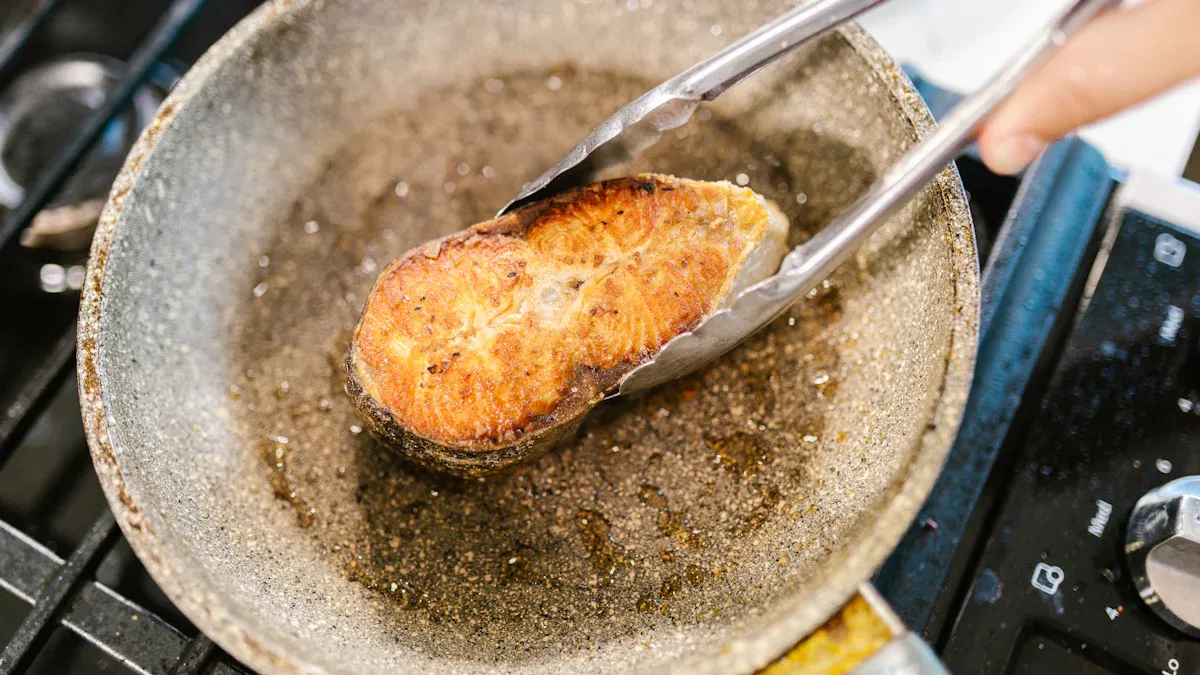
You might wonder if chicken fat is good for you. Chicken fat, also known as schmaltz, serves as a flavorful ingredient in many kitchens. People use it for roasting vegetables, baking, sautéing, and spreading on bread. It provides high calories, healthy monounsaturated fats, and linoleic acid. This fat helps your body absorb vitamins that dissolve in fat. You should know, though, that eating too much can raise your cholesterol and may pose cancer risks if you consume processed poultry. Understanding both benefits and risks helps you make smart choices.
Key Takeaways
Chicken fat, or schmaltz, adds rich flavor and texture to dishes. Use it for sautéing, roasting, or baking to enhance your meals.
Moderation is key. While chicken fat provides healthy fats and vitamins, excessive consumption can raise cholesterol levels and pose health risks.
Chicken fat contains beneficial nutrients like vitamins E and D, and choline, which support brain health and cell protection.
Store rendered chicken fat properly in a sealed container. Refrigerate for up to six months or freeze for up to a year to maintain freshness.
Explore substitutes like olive oil, butter, or tofu for cooking. Each offers unique flavors and health benefits, allowing for versatile meal preparation.
What Is Chicken Fat?
Schmaltz Explained
Chicken fat is the natural fat found in chickens. You often see it called schmaltz, especially in Jewish cooking. Schmaltz is a special type of rendered chicken fat. When you make schmaltz, you slowly cook chicken skin or fat until the fat melts and separates from the solids. This process gives you a soft, flavorful fat that stays spreadable at room temperature.
You can find chicken fat in many cultures. For example, Scottish and West African cooks used chicken fat for frying long before it became popular in the United States. Ancient Romans also fried chicken in fat. In Jewish kitchens, schmaltz is a key ingredient for matzo balls and frying foods. It adds a rich taste and smooth texture to traditional dishes.
Note: Chicken schmaltz is not just for flavor. It also helps create the right texture in recipes like matzo ball soup.
Here is a table showing the difference between chicken fat and schmaltz:
Aspect | Chicken Fat | Schmaltz |
|---|---|---|
Preparation | Fat from chicken, not always rendered | Rendered poultry fat, often from chicken |
Usage | Used in many dishes | Essential in Jewish cuisine |
Chicken fat stands out for its high amount of unsaturated fatty acids. Look at the table below to see how it compares to other animal fats:
Fat Type | Unsaturated Fatty Acids (%) | Saturated Fatty Acids (%) |
|---|---|---|
Chicken Fat | 65.5 | 30.3 |
Bovine Tallow | 44-50 | N/A |
Pork Fat | <20 | N/A |
Rendered Chicken Fat Extraction
You can make rendered chicken fat at home by slowly heating chicken skin or fat. This process is called rendering chicken fat. The fat melts and separates from the solid parts. You can use different methods to do this, such as microwave rendering, oven baking, or water cooking. Each method gives you a different amount of fat.
Here is a chart that shows the yield of rendered chicken fat from different methods:
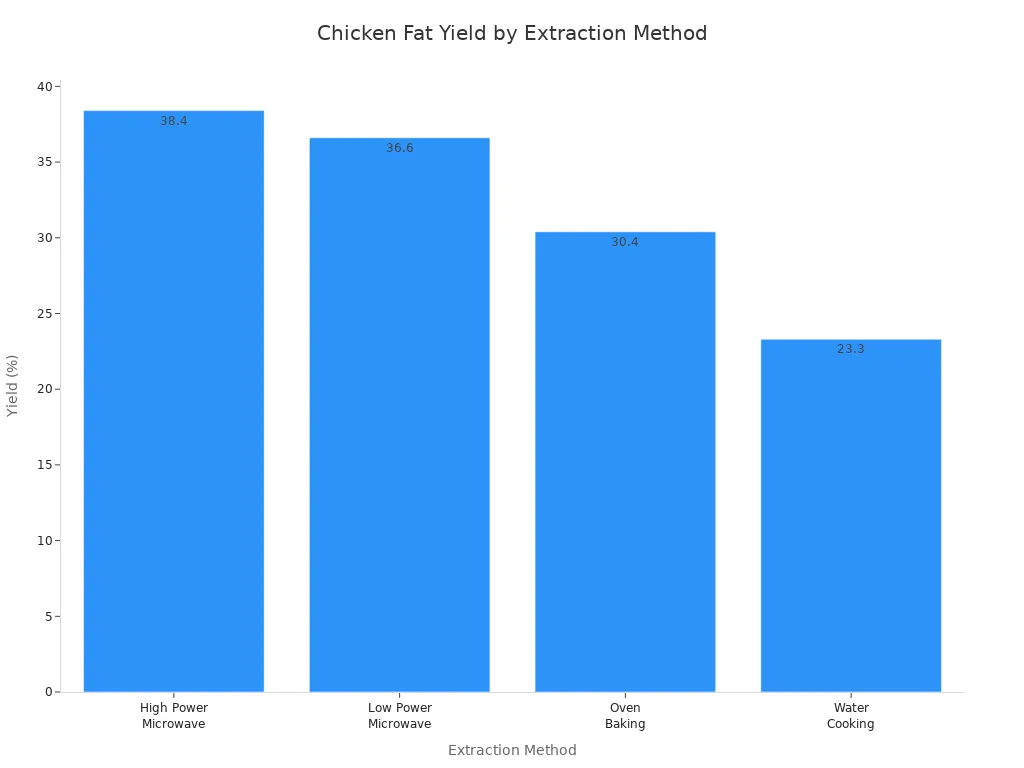
Microwave rendering gives you the highest yield, while water cooking gives you the least. The way you render the fat can also change its nutrition. Using the right time and power keeps more healthy fats and lowers oxidation.
Chicken Fat Uses
Culinary Applications
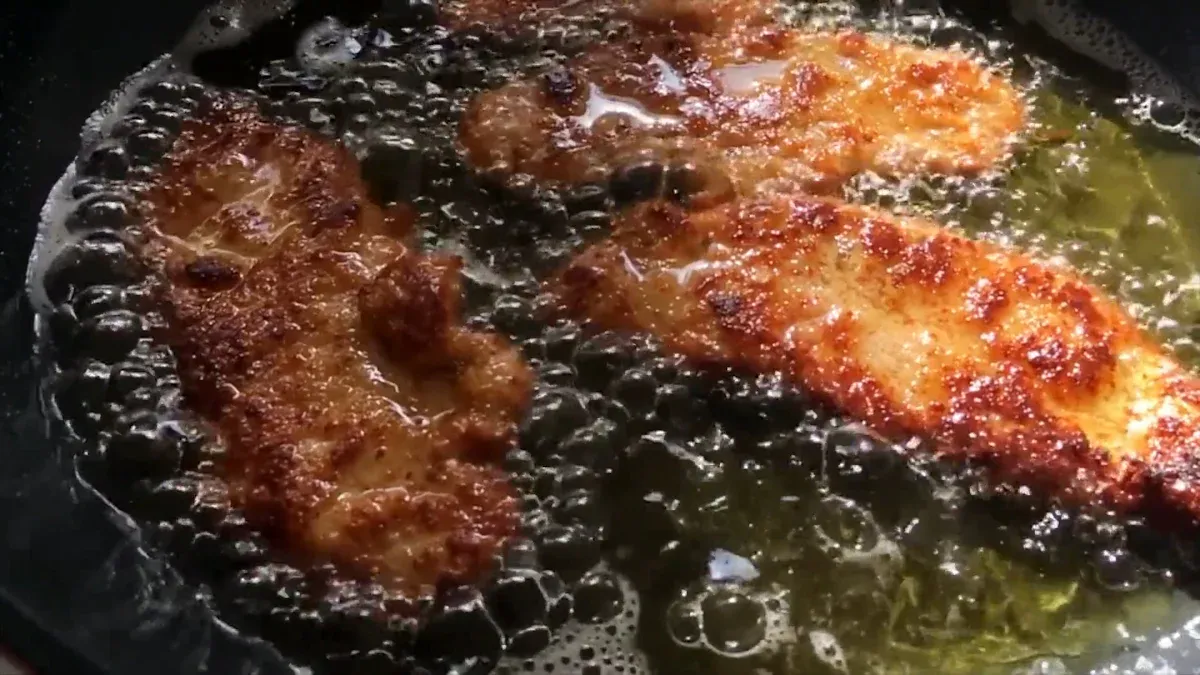
You can find chicken fat in many kitchens around the world. People use it to add flavor and texture to a variety of recipes. When you cook with chicken fat, you get a creamy, buttery taste that makes dishes rich and satisfying.
Schmaltz is a soft and creamy fat with a pleasing buttery taste. It is nothing more than rendered chicken fat which has been melted out of chicken skin and tissues into a pure oil.
You might use chicken fat for sautéing vegetables, frying potatoes, or making soups. Many cooks add it to pie crusts for extra flakiness. If you enjoy traditional Jewish recipes, you will see chicken fat in matzo balls and kugel. Chicken pot pie is another classic dish that benefits from the smooth texture and deep flavor of chicken fat. Some people spread schmaltz on bread or use it to roast root vegetables. You can also try new uses for schmaltz in modern recipes, such as adding it to pasta sauces or rice dishes.
Here are some popular ways you can use chicken fat in cooking:
Sautéing onions and garlic for soups or stews
Making crispy roasted potatoes
Adding richness to pie crusts and biscuits
Preparing matzo balls and other Jewish recipes
Enhancing the flavor of chicken pot pie
Spreading on bread as a savory topping
Non-Culinary Uses
Chicken fat has important uses outside the kitchen. You will find it in pet food, where it adds nutrition and flavor for dogs and cats. Manufacturers also use chicken fat to make biodiesel, a renewable fuel that helps reduce waste.
Application | Description |
|---|---|
Pet Food | Chicken fat is added to pet food and animal feed, providing nutritional value. |
Biodiesel Production | Waste chicken fat is used as a cost-effective feedstock for biodiesel, derived from poultry wastes. |
Chicken fat biodiesel stands out for its high yield and eco-friendly properties. It produces fewer greenhouse gas emissions than other animal fats. Chicken production uses less water and land compared to beef and pork. You help the environment when you choose products made from chicken fat, especially those that use non-edible waste.
Chicken fat biodiesel has lower greenhouse gas emissions compared to other animal fats.
The production of chicken meat requires less water and land than beef and pork.
Chicken fat is derived from non-edible waste, making it a sustainable option for biodiesel production.
Chicken Fat Nutrition
Calories and Fat Content
When you use chicken fat in your cooking, you add a rich source of energy to your meals. One tablespoon of chicken fat contains about 115 calories. You get this information from several nutrition sources, which all agree on the calorie count.
1 tablespoon of chicken fat contains 115 calories.
Another source confirms that 1 tablespoon of chicken fat has 115 calories.
A third source states that a typical serving of chicken fat (1 tbsp) provides approximately 115.2 calories.
Chicken fat gives you a mix of different types of fats. You find saturated, monounsaturated, and polyunsaturated fats in each tablespoon. Here is a table showing the breakdown:
Type of Fat | Amount (g) |
|---|---|
Saturated Fat | 3.814 |
Monounsaturated Fat | 5.722 |
Polyunsaturated Fat | 2.675 |
You see that monounsaturated fat makes up the largest portion. This type of fat can help support heart health when you use it in moderation. Saturated fat is also present, so you need to watch your intake if you want to keep your cholesterol levels healthy.
Vitamins and Nutrients
Chicken fat offers more than just calories and fat. You get important nutrients that support your body. The nutritional value of chicken fat includes vitamins and minerals that you might not expect from animal fat.
Here is a table comparing chicken fat to lard, another common cooking fat:
Nutrient | Chicken Fat (per 100g) | Lard (per 100g) |
|---|---|---|
Water Content | 0.2 g | 0 g |
Choline | 122.4 mg | 49.7 mg |
Total Lipids | 99.8 g | 1 g |
Saturated Fatty Acids | 29.8 g | 39.2 g |
Polyunsaturated Fatty Acids | 20.9 g | 11.2 g |
Cholesterol | 85 mg | 95 mg |
Vitamin E (alpha-tocopherol) | 2.7 mg | 0.6 mg |
Vitamin D2 and D3 | 4.8 µg | 2.5 µg |
Zinc | 0 mg | 0.11 mg |
You get more choline and vitamin E from chicken fat than from lard. Choline helps your brain and nerves work well. Vitamin E protects your cells from damage. Chicken fat also contains vitamin D, which helps your bones stay strong.
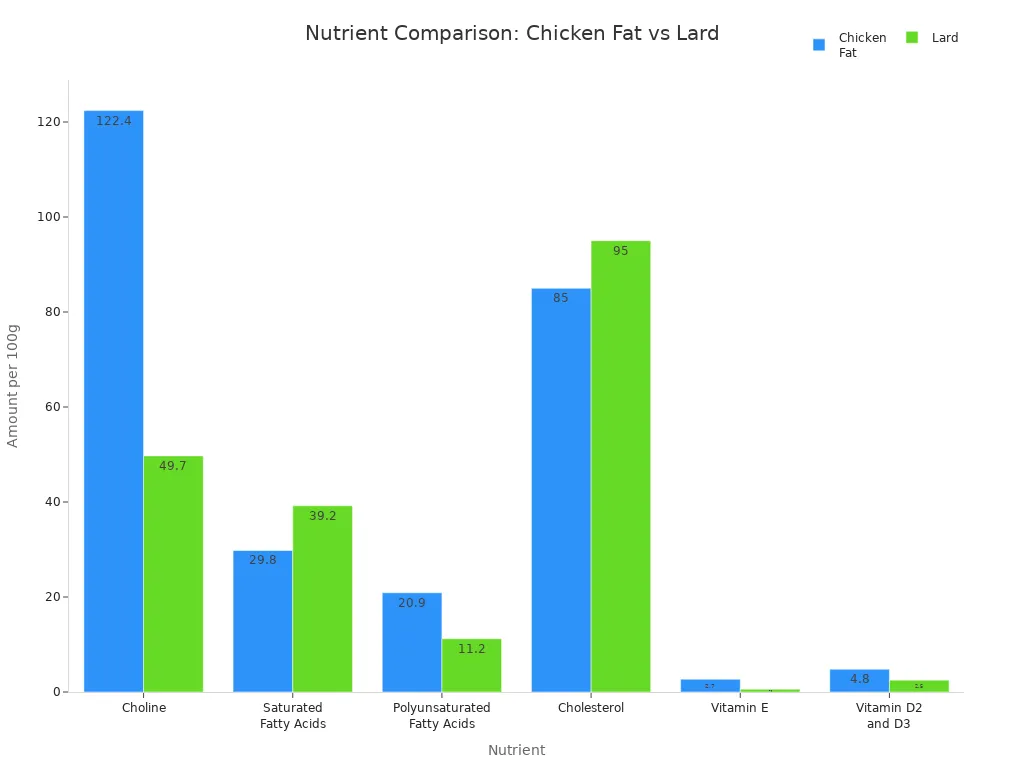
You notice that chicken fat has a higher amount of polyunsaturated fatty acids compared to lard. These fats can help lower bad cholesterol when you use them instead of saturated fats. You also get less cholesterol from chicken fat than from lard.
Tip: If you want to boost the nutritional value of your recipes, you can use chicken fat in place of other animal fats. You get more vitamins and healthy fats with each serving.
Chicken Fat Health
Benefits
You may wonder what health benefits chicken fat offers. This animal fat contains a mix of saturated and unsaturated fatty acids. When you include chicken fat in your diet, you get a source of energy and nutrients that support your body in several ways.
Chicken fat provides unsaturated fatty acids, which help manage cholesterol levels. These fats can lower your risk of cardiovascular disease.
The fatty acid profile in chicken fat supports healthy skin, hair, and nails. Unsaturated fats help keep your skin soft and your hair shiny.
A balanced ratio of polyunsaturated to saturated fatty acids in chicken fat can reduce the chance of developing certain diseases.
Chicken fat helps your body absorb fat-soluble vitamins, such as vitamins A, D, E, and K. These vitamins play a role in bone health, immune function, and cell protection.
Tip: If you use chicken fat in recipes, you add flavor and nutrition at the same time. You can replace other animal fats with chicken fat to boost the amount of healthy unsaturated fats in your meals.
Many people believe that eating fat will make them gain weight. This is not always true. Your body needs some fat for energy and to absorb important nutrients. Low-fat diets do not always lead to better health or weight loss. You should focus on the type and amount of fat you eat.
Risks and Precautions
You need to know what risks come with eating chicken fat. While chicken fat has health benefits, eating too much can cause problems.
Total fat intake should make up 20% to 35% of your daily calories. You need at least 20% for energy and vitamins, but you should not go above 35% to avoid weight gain and high cholesterol.
Saturated fats in chicken fat can raise LDL cholesterol. High LDL levels increase your risk of heart disease.
Excessive consumption of chicken fat can lead to higher levels of fasting free fatty acids in your blood. This can make it harder for your body to process and store fat, which may cause cardiovascular issues.
Here is a table that shows how different types of meat affect LDL cholesterol compared to plant-based proteins:
Meat Type | Effect on LDL Cholesterol | Comparison to Plant-Based Proteins |
|---|---|---|
Red Meat | Raises LDL | Higher than plant-based |
White Meat | Raises LDL | Higher than plant-based |
Plant-Based | Does not raise LDL | Baseline |
You should use chicken fat in moderation. People with heart disease, high cholesterol, or obesity need to be extra careful. Children and older adults also need to watch their intake of animal fats.
Note: Some people think plant-based meats are always healthier than chicken. This is not true. Plant-based options can contain high levels of sodium and saturated fats. You should check nutrition labels before choosing any product.
If you make chicken fat at home by rendering chicken fat, you should store it properly. Improper storage can lead to spoilage and foodborne illness. Always keep rendered fat in a sealed container in the refrigerator.
Cooking Tips and Storage
Using Rendered Chicken Fat
You can use rendered chicken fat in many ways to boost flavor in your recipes. If you want to know how to make schmaltz, start by removing most meat scraps from the fat before rendering. This step helps you get a cleaner taste and safer product. Replace oil or butter with homemade schmaltz when you cook root vegetables or brown meats. Schmaltz has a medium-high smoke point, so you can caramelize onions or fry potatoes without burning them. Try using the crispy bits left after rendering, called gribenes, as a crunchy topping for salads or soups. If you wonder how to make schmaltz for baking, swap it for other fats in pie crusts to get a flaky texture.
Tip: Save gribenes for a snack or sprinkle them on dishes for extra crunch.
Safe Storage
You need to store chicken fat properly to keep it fresh and safe. Place rendered chicken fat in a tightly covered container. Keep it in the refrigerator at less than 40°F (4°C) for up to six months. If you want to store it longer, use a freezer-safe container and freeze it for up to one year. Many people save chicken fat for later use, especially if they cook often.
Storage Method | Duration | Temperature |
|---|---|---|
Refrigerator | Up to 6 months | Less than 40°F (4°C) |
Freezer | Up to 1 year | Freezer-safe container |
Note: Always check for signs of spoilage before using stored fat. If you see mold or smell something sour, discard it.
Substitutes
You may want to use alternatives to chicken fat for baking or cooking. Olive oil and butter work well in most recipes. Olive oil has less saturated fat and a lower smoke point, so it suits gentle sautéing. Butter adds richness but contains more saturated fat. Tofu can replace animal fats in some dishes, offering protein and minerals like calcium and magnesium.
Nutrient | Chicken (per 100g) | Tofu (per 100g) |
|---|---|---|
Protein | 31 grams | 17 grams |
Fat | 3-5 grams | 4-6 grams |
Calories | 165 calories | 144 calories |
B Vitamins | Yes | Yes |
Calcium | No | Yes |
Iron | Yes | Yes |
Magnesium | No | Yes |
Selenium | Yes | No |
Tip: Choose substitutes based on your health needs and the flavor you want in your recipes.
Chicken fat gives you flavor, nutrients, and many uses in your kitchen. You can use it for cooking, baking, or even making pet food. It offers healthy fats and vitamins, but too much can raise your cholesterol. Always use chicken fat in moderation. Check your health needs before adding it to your meals.
Tip: Store chicken fat safely and try it in new recipes for the best results.
FAQ
What is the best way to use chicken fat in cooking?
You can use chicken fat for frying, roasting, or baking. It adds flavor to vegetables, soups, and pie crusts. Try replacing butter or oil with chicken fat for a richer taste.
Tip: Use chicken fat to sauté onions for extra flavor.
What nutrients do you get from chicken fat?
Chicken fat gives you energy, healthy fats, and vitamins like E and D. You also get choline, which helps your brain work well. It contains less cholesterol than lard.
Nutrient | Benefit |
|---|---|
Vitamin E | Cell protection |
Choline | Brain health |
What are the risks of eating too much chicken fat?
Eating too much chicken fat can raise your cholesterol. High cholesterol increases your risk of heart disease. You should use chicken fat in moderation and check your health needs.
Note: People with heart problems should limit animal fats.
What is schmaltz and how do you make it?
Schmaltz is rendered chicken fat. You make it by slowly cooking chicken skin or fat until the fat melts. Strain out the solids and store the liquid fat in a sealed container.
What can you use instead of chicken fat?
You can use olive oil, butter, or tofu as substitutes. Olive oil has less saturated fat. Butter gives a rich taste. Tofu works well in plant-based recipes.
Olive oil: Good for sautéing
Butter: Adds richness
Tofu: Plant-based option