

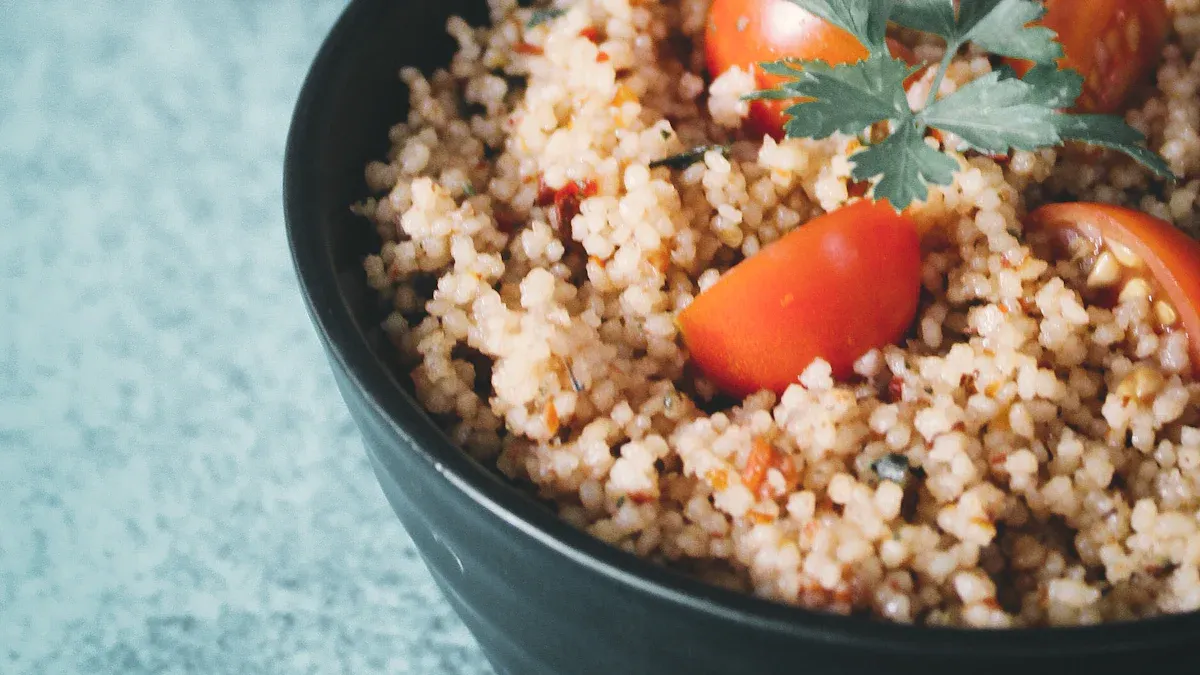
Couscous has quickly become a global favorite, showing up in kitchens everywhere. The global couscous market is booming, valued at over $32 billion in 2024 and projected to hit $45 billion by 2033. This growth highlights its increasing popularity. But what exactly is this popular food? Couscous is tiny pasta granules with ancient Berber origins, possibly tracing back to 3rd-century BC Numidia. People traditionally hand-rolled semolina into these small pellets. You can prepare couscous quickly, and it fits into many recipes. This makes it a versatile addition to your meals. This guide explores couscous nutrition, its benefits, and practical ways you can use this healthy food.
Key Takeaways
Couscous is a tiny pasta, not a grain. It comes from durum wheat. It offers good energy and nutrients.
Couscous provides protein, fiber, and important vitamins and minerals. These include selenium and B vitamins. It supports your immune system and digestion.
Couscous is easy to cook in about 5-10 minutes. You can use it in many meals. It works as a side dish or a main course.
Couscous contains gluten. People on a gluten-free diet should choose other options. Whole wheat couscous helps manage blood sugar better.
What is Couscous?

Grain or Pasta? Defining Couscous
Many people wonder if couscous is a grain. It looks like a grain, but it is actually a type of pasta. You make couscous from semolina, which comes from durum wheat. Traditional methods involve rolling semolina dough into tiny pellets. This process makes it similar to other pasta products you might enjoy.
When you compare standard white flour couscous to traditional pasta, you find they are very similar nutritionally. Both come primarily from white flour. This means they offer comparable amounts of protein, calories, carbohydrates, vitamins, minerals, and fiber. They also have a high glycemic load. The main nutritional differences appear when you look at whole-wheat varieties. Whole-wheat options provide more fiber and B vitamins.
They also have a medium glycemic load, which helps keep your blood sugar levels more stable. Couscous and traditional pasta, both from semolina wheat, share remarkable nutritional similarities when you compare them by equal weights. Cooked, they average 23–25 grams of carbohydrates per 100 grams. Refined versions of both can cause quicker blood sugar spikes. However, whole-wheat choices can help lessen this effect.
Quick Facts on Couscous Nutrition
Couscous offers a simple yet valuable nutritional profile. It provides a good source of energy and essential nutrients. Understanding its basic couscous nutrition facts helps you make informed dietary choices.
Here is a quick look at the macronutrient breakdown for a typical serving of cooked couscous:
Serving Size | Calories | Carbohydrates | Protein |
|---|---|---|---|
1 cup (157g) cooked couscous | 176 | 36g | 6g |
This chart further illustrates the macronutrient content:
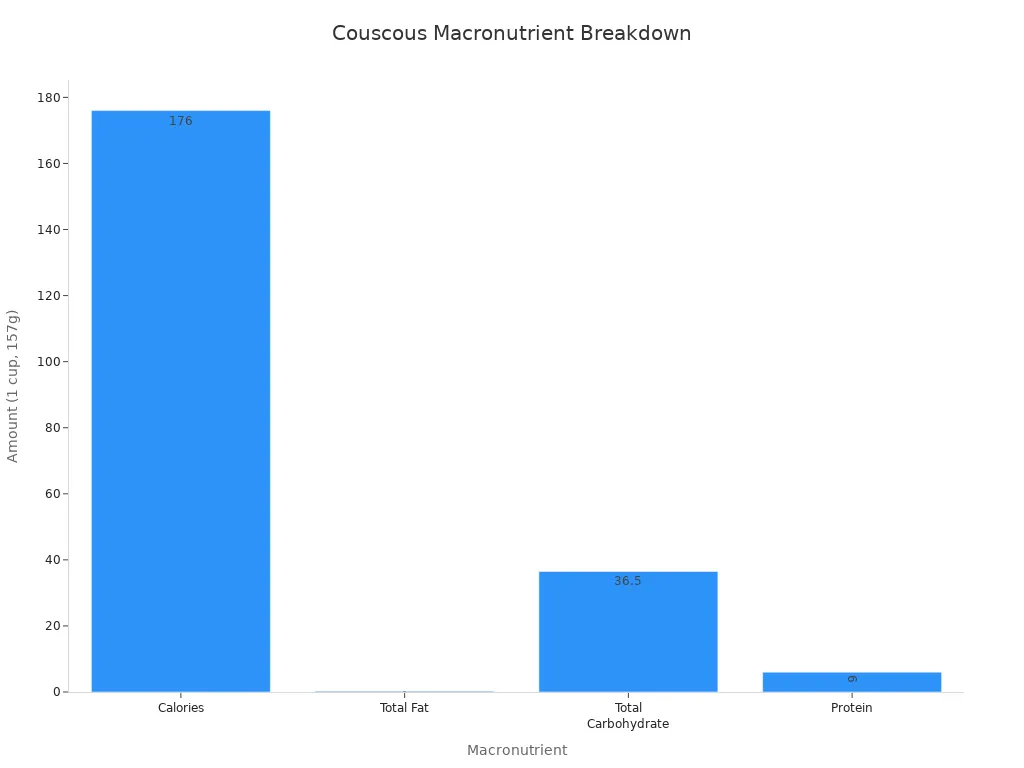
As you can see, couscous is a carbohydrate-rich food. It also provides a decent amount of protein and very little fat. This makes it a versatile food for many meals. Its overall nutrition contributes to a balanced diet.
Understanding Couscous Nutrition
Couscous Nutrition Facts at a Glance
You want to know what you eat. Understanding the specific couscous nutrition facts helps you make smart food choices. A typical serving of cooked couscous offers a good mix of energy and essential components.
Here is a closer look at the main components in one cup of cooked couscous:
Nutrient | Value |
|---|---|
Carbs | 37g |
Protein | 7g |
Fats | 1g |
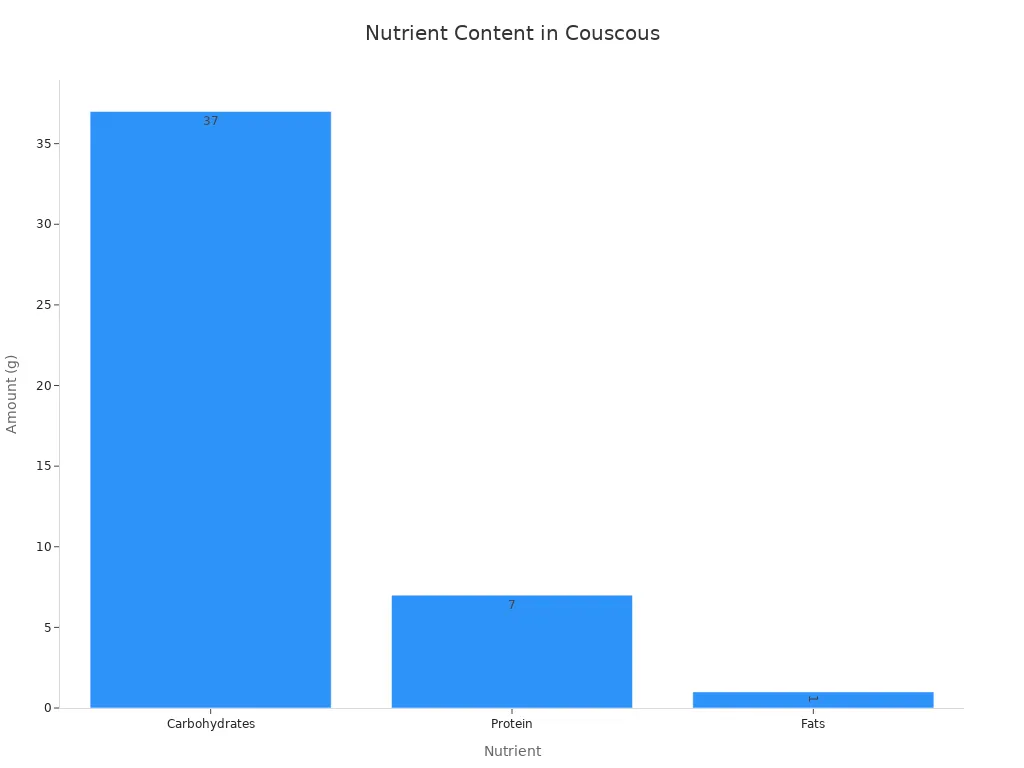
This serving also provides about 176 calories. You get a good amount of fiber, typically between 2.2 and 3 grams. This makes couscous a valuable addition to your diet.
Macronutrient Profile
When you look at the nutritional profile of couscous, you see that carbohydrates are the main energy source. They make up most of the calories. This gives you the fuel you need for your daily activities.
Let’s break down where the calories come from in cooked couscous:
Macronutrient | Grams (per serving) | Calories (kcal) | Percentage of Total Calories |
|---|---|---|---|
Carbohydrates | 36.5 | 146 | 82.95% |
Protein | 6 | 24 | 13.64% |
Fat | 0.3 | 2.7 | 1.53% |
Total | 176 | 100% |
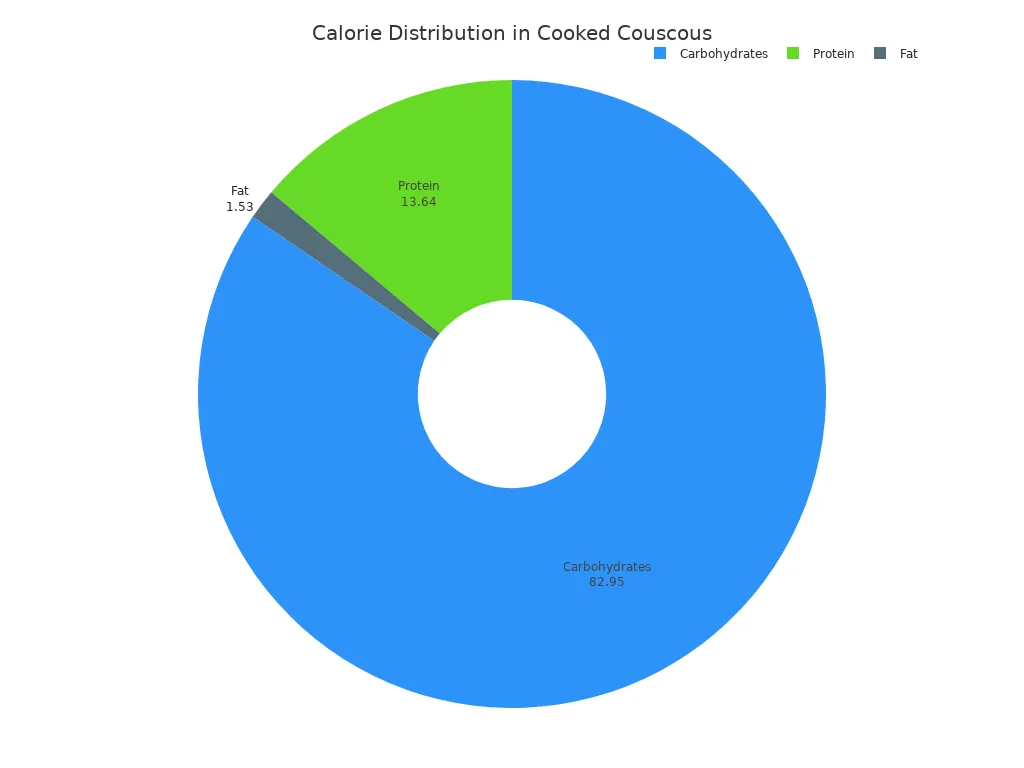
As you can see, approximately 85% of the calories in cooked couscous come from carbohydrates. Protein contributes about 14%, and fat makes up only about 1%. This nutritional profile makes couscous a great food for energy.
Essential Micronutrients
Couscous offers more than just macronutrients. It also provides important vitamins and minerals. These micronutrients play key roles in your body’s functions.
You will find several B vitamins in couscous. These include:
Thiamine (B1)
Niacin (B3)
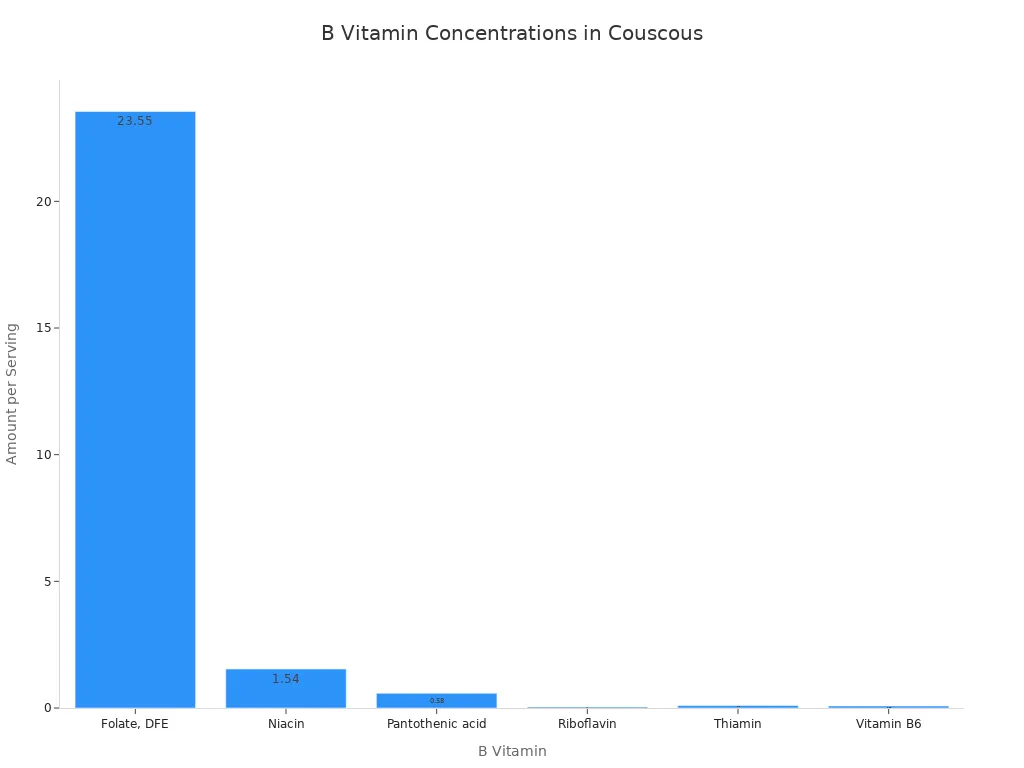
Here is a detailed look at the B vitamins you get from a serving:
Nutrient | Amount per Serving |
|---|---|
Folate, DFE | 23.55 mcg |
Niacin | 1.54 mg |
Pantothenic acid | 0.58 mg |
Riboflavin | 0.04 mg |
Thiamin | 0.1 mg |
Vitamin B6 | 0.08 mg |
Couscous also contains important minerals. These include manganese, magnesium, phosphorus, copper, and selenium. Helen Tieu, a registered dietitian at Diet Redefined, notes:
“Couscous is a source of various nutrients, including B vitamins, manganese, magnesium, phosphorus, copper and selenium.”
These minerals are vital for your health. Manganese helps with bone health and metabolism. Magnesium supports muscle and nerve function. Phosphorus is essential for strong bones and teeth. Copper plays a role in your immune system. Selenium acts as a powerful antioxidant.
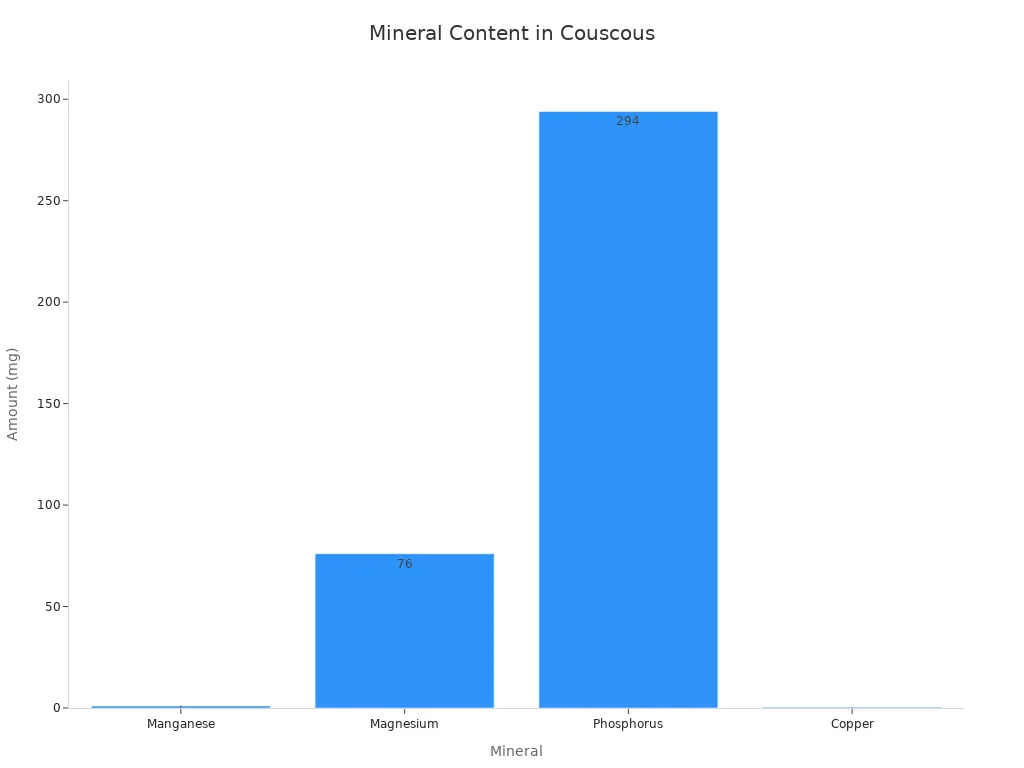
Here are the amounts of these minerals in a one-cup serving of couscous:
Mineral | Amount per 1 cup (173g) serving |
|---|---|
Manganese | 1 mg |
Magnesium | 76 mg |
Phosphorus | 294 mg |
Copper | 0.4 mg |
Selenium | – |
This rich array of vitamins and minerals makes couscous a truly nutrient-dense option for your meals. You get many benefits from this simple food.
Health Benefits of Couscous
Immune Support and Cancer Risk Reduction
You might wonder about the specific health benefits of couscous. This healthy option offers several advantages for your body. Couscous is rich in selenium. This important mineral plays a big role in your immune system. It helps your body fight off infections and stay healthy. Selenium also acts as a powerful antioxidant. Antioxidants protect your cells from damage. This protection may help lower your risk of certain cancers.
Digestive Health and Fiber
Couscous is a good source of fiber. Fiber is crucial for a healthy digestive system. An 80g serving of cooked couscous contains 1.8g of fiber. This fiber helps move food through your intestines. It can relieve constipation. One serving of Traditional Pearl Couscous provides 2 grams of dietary fiber. This fiber also helps improve the balance of good bacteria in your gut. The fiber found in whole grains, including couscous, acts as a prebiotic. Prebiotics are important for better digestion and overall gut health. Fiber helps food move quickly through your intestinal tract. This can prevent constipation. A diet rich in fiber may also reduce the risk of intestinal and breast cancers.
Plant-Based Protein for Satiety
You will find that couscous provides plant-based protein. This protein helps you feel full and satisfied after meals. Couscous has a higher protein content than white rice. This higher protein content helps maintain satiety. Couscous offers a moderate amount of plant-based protein. This protein aids in satiety, especially when you eat it with other protein sources. For example, quinoa is known for its high-quality protein. This protein helps you feel fuller for longer. Couscous can also contribute to this feeling of fullness.
Energy and Metabolism Boost
Couscous can give you sustained energy. It has a moderate glycemic index (GI). The glycemic index measures how quickly a food raises your blood sugar. Couscous has a GI of 65. This moderate GI means it releases sugar into your bloodstream more slowly than many refined carbohydrates. This provides a steady supply of energy. A 2019 study in Nutrients showed that semolina-based products like couscous offer better glycemic control than white bread. This is good for managing your blood sugar levels.
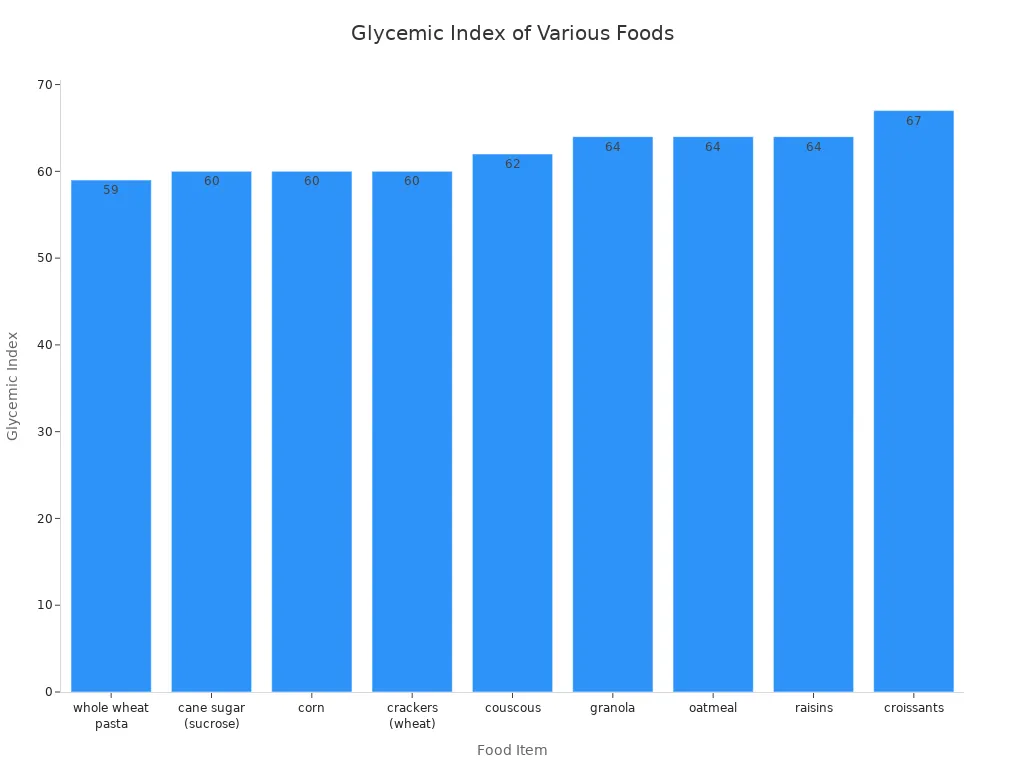
Here is a look at the glycemic index of couscous compared to other foods:
Food | Glycemic index |
|---|---|
cane sugar (sucrose) | 60 |
corn | 60 |
couscous | 62 |
croissants | 67 |
crackers (wheat) | 60 |
granola | 64 |
oatmeal | 64 |
raisins | 64 |
whole wheat pasta | 59 |
Increases in blood sugar after eating can lead to dips. Small changes are normal. However, large spikes and “crashes” can make you feel tired or low in energy. Over time, these big fluctuations can increase your risk of chronic inflammation. They can also increase the risk of metabolic illnesses. These include heart disease, stroke, and type 2 diabetes. The moderate GI of couscous helps you avoid these sharp spikes. This supports stable energy levels and a healthy metabolism. This makes couscous a smart choice for your nutrition.
Couscous vs. Other Grains
You have many choices when you pick grains for your meals. Let’s see how couscous compares to other popular options. This helps you make the best choices for your diet.
Couscous vs. Quinoa
You might often compare couscous with quinoa. Quinoa is a seed, not a grain, but people use it like one. It stands out because it is a complete protein. This means it has all nine essential amino acids your body needs.
Couscous, on the other hand, is not a complete protein. You need to combine it with other protein sources to get all amino acids. Quinoa is also naturally gluten-free. Couscous contains gluten because it comes from wheat. If you avoid gluten, quinoa is a better choice for you. Both are good sources of fiber and minerals.
Couscous vs. Rice
You often see couscous and rice on dinner plates. Both are staple foods, but they have different nutritional profiles. Couscous contains slightly more protein and micronutrients than white rice. It also has a bit more protein and fiber than brown rice. However, brown rice offers more of some micronutrients than couscous. For example, one cup of cooked couscous gives you about 6 grams of protein. One cup of white rice has about 4 grams. Brown rice provides 5 grams. Overall, both brown rice and couscous offer similar nutritional value. Couscous can be a healthier alternative to white rice.
Here is a quick look at how they compare:
Characteristic | Regular Couscous | Whole Wheat Couscous | Brown Rice | White Rice |
|---|---|---|---|---|
Glycemic Index (GI) | 65 (Medium) | 50-55 (Low-Medium) | 50 (Low) | Generally higher than brown rice |
Dietary Fiber (per serving) | 2g | 4-5g | Higher than white rice | Not specified |
Protein (per 1 cup cooked) | 6g | 7g | 5g | 4g |
Diabetes Management Impact | Requires careful management | Better blood sugar control | Lower GI supports better blood sugar control | Less favorable than whole wheat couscous or brown rice |
Overall Nutritional Value | Similar to brown rice | Similar to brown rice | Similar to couscous | Less protein and micronutrients than couscous |
You can see that whole wheat couscous and brown rice are good choices for managing blood sugar. Couscous is a healthier alternative to white rice due to its higher protein and fiber content.
Couscous vs. Pasta
You already know couscous is a type of pasta. It comes from semolina, just like many other pastas. When you compare regular couscous to traditional pasta made from white flour, their nutritional values are very similar. Both provide carbohydrates for energy. They also offer similar amounts of protein and fiber. If you choose whole-wheat pasta, you get more fiber and B vitamins. Whole-wheat couscous also gives you these benefits. So, when you pick between them, consider your preference for texture and how you want to use them in your food.
Easy Meal Uses & How to Cook Couscous
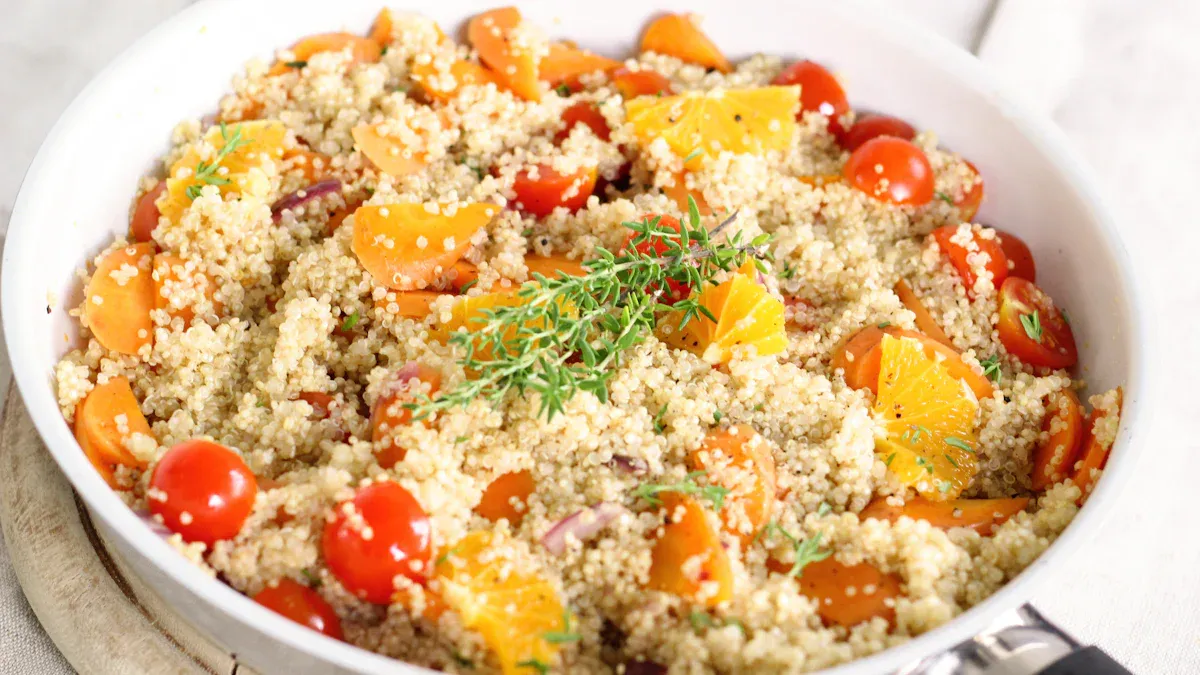
You will find couscous incredibly simple to prepare. Its ease of preparation makes it a favorite for many home cooks. You can create delicious meals in minutes. This section shows you how to cook couscous and integrate it into various dishes.
Basic Couscous Preparation
Cooking couscous is straightforward. You need only a few steps to achieve perfectly fluffy grains.
Here is a basic method for how to cook couscous:
Boil Water or Broth: Bring 2 cups of water or broth to a boil in a saucepan.
Add Couscous: Stir in 1 ½ cups of dry couscous (Moroccan or Golden, small grains).
Cover and Rest: Remove the pan from heat immediately. Cover it tightly with a lid. Let it sit for 5-10 minutes. The couscous will absorb the liquid.
Fluff: Use a fork to fluff the couscous. This separates the grains and makes them light.
For optimal texture, a common ratio is one cup of water to two-thirds cup of couscous. You can adjust this ratio slightly. Use less water for a drier couscous. This works well for salads or dishes with sauces. Use more water for a softer, stickier result. This general ratio applies to different types of couscous.
Tip: For extra flavor, add a pinch of salt and a tablespoon of olive oil or butter to the water before boiling.
Versatile Side Dishes
Couscous makes an excellent side dish. It pairs well with many main courses. You can easily customize its flavor.
Consider these popular flavor pairings for your couscous side dishes:
Spices: Moroccan couscous often features complex spices.
Aromatics: Onions are a key ingredient for depth.
Sweet & Savory Elements: Add raisins and prunes for a unique taste.
Protein: Spiced chickpeas boost protein content.
Texture: Nuts add a satisfying crunch.
You can also enhance the flavor with various seasonings:
Oils: Olive oil adds great flavor. Coconut or vegetable oil also works.
Aromatics: Garlic and onion are essential for aroma.
Spices: Turmeric, cumin, cinnamon, allspice, and coriander give authentic Moroccan flavor. Paprika, thyme, parsley, or cayenne pepper also work. Pre-made seasonings like Creole or Italian seasoning are convenient.
Citrus: Lemon juice brightens the dish.
Herbs: Fresh parsley adds a peppery, earthy note.
Broth: Chicken broth (or vegetable stock) adds savory flavors.
Sweet & Tangy: Raisins provide natural sweetness and tang.
Protein & Texture: Chickpeas add protein and fiber. Sliced almonds or other nuts add crunch.
These couscous recipes for sides are quick and easy to prepare.
Main Course Integration
You can easily make couscous the star of your meal. It serves as a fantastic base for many main courses. This makes it a healthy quick meal option.
Here are some ideas for integrating couscous into main dishes:
Chicken with Couscous: Serve a Mediterranean-flavored chicken and vegetable stew over fluffy couscous.
Lemon Herb Chicken with Couscous and Cucumber Salad: Combine lemon and herb chicken breasts with couscous and a refreshing cucumber feta salad.
Turkey Veggie Meatloaf Cups: Mix couscous directly into ground turkey, zucchini, and red bell pepper for flavorful meatloaf cups.
Sweet Chili Lime Chicken with Cilantro Couscous: Simmer chicken breast cubes in a sweet and spicy glaze. Serve them with cilantro-infused couscous.
Lemon-Pepper Salmon with Couscous: Sauté salmon with your favorite ingredients. Serve it over a bed of couscous.
These couscous recipes are quick to prepare and satisfying.
Creative Culinary Ideas
Couscous is not just for savory dishes. You can use it in creative ways, even for breakfast or dessert.
Consider this sweet couscous recipe:
Ingredients: 1 cup couscous, 1 ¼ cups water, 2 tablespoons unsalted butter (divided), ¼ cup powdered sugar.
Garnishes: Coconut flakes, nuts, more powdered sugar (optional).
Instructions:
Boil water with 1 tablespoon butter.
Add couscous and boil for 1 minute.
Cover, remove from heat, and let rest for 10 minutes.
Fluff with a fork. Mix in ¼ cup powdered sugar and the remaining butter.
Garnish with toppings like nuts, raisins, dried cranberries, or coconut flakes.
You can serve this for breakfast with warm milk, like a cereal bowl.
How to store couscous: Store uncooked couscous in an airtight container in a cool, dry place. It lasts for several months. For cooked couscous, refrigerate it in an airtight container for up to 3-4 days. You can also freeze cooked couscous for longer storage.
Dietary Considerations for Couscous
Gluten Content and Alternatives
You need to consider some important things about couscous if you have specific dietary needs. First, traditional couscous comes from durum wheat semolina. This means it contains gluten. If you follow a gluten-free diet, couscous is not a suitable food for you. However, you have many excellent gluten-free alternatives. You can choose millet, quinoa, or rice. Other great options include sorghum, short-grain rice, riced cauliflower, brown rice, risotto rice, and buckwheat. You can also find maize or corn semolina as a gluten-free substitute. Fonio, an ancient super-grain, is another naturally gluten-free choice.
Blood Sugar Impact
You should also know about couscous and its effect on your blood sugar. Couscous has a glycemic index (GI) of 65. This means it can cause your blood glucose levels to rise after you eat it. A study even showed that couscous might pose greater risks for people with insulin-dependent diabetes compared to regular pasta. However, the fiber in couscous can help. Fiber slows down how quickly your body absorbs glucose into your bloodstream. If you choose whole grain durum wheat couscous, it has a lower glycemic index. This makes it less likely to cause big spikes in your blood sugar. Understanding this aspect of couscous nutrition helps you make informed choices.
Not Ideal for Low-Carb or Keto Diets
If you follow a low-carb or ketogenic diet, couscous may not fit your meal plan. Ketogenic diets typically limit your carbohydrate intake to 20-50 grams per day. Couscous contains a significant amount of carbohydrates. For example, a 1/3 cup serving (50g) of Traditional Pearl Couscous has 39 grams of carbs. Golden Couscous (1/3 cup/60g) contains 45 grams. Even Whole Wheat Pearl Couscous (1/3 cup/50g) has 38 grams of carbs. These amounts are too high for most low-carb or keto diets. Therefore, couscous is not ideal if you are trying to keep your carb intake very low.
You now understand the great nutritional value of couscous. It provides protein, fiber, and essential micronutrients. You can use it in many different dishes. Preparing it is very easy. This makes it a perfect choice for quick, healthy meals. We encourage you to add couscous to your diet. You will enjoy its delicious taste and health benefits. Explore new culinary possibilities with this versatile food.
FAQ
Is couscous a healthy food choice?
Yes, couscous is a healthy choice. It gives you energy from carbohydrates, plant-based protein, and fiber for good digestion. You also get important minerals like selenium and magnesium.
Does couscous contain gluten?
Yes, traditional couscous contains gluten. It comes from durum wheat semolina. If you follow a gluten-free diet, you should choose alternatives like quinoa, rice, or millet.
How quickly can I cook couscous?
You can cook couscous very quickly. It usually takes only 5 to 10 minutes. Just add boiling water or broth, cover the pot, and let it sit. Then, fluff it with a fork. ⏱️
Can couscous help with weight management?
Couscous can help you manage your weight. Its fiber and protein content make you feel full and satisfied. This can help you eat less. Choose whole wheat couscous for more fiber and better satiety.