

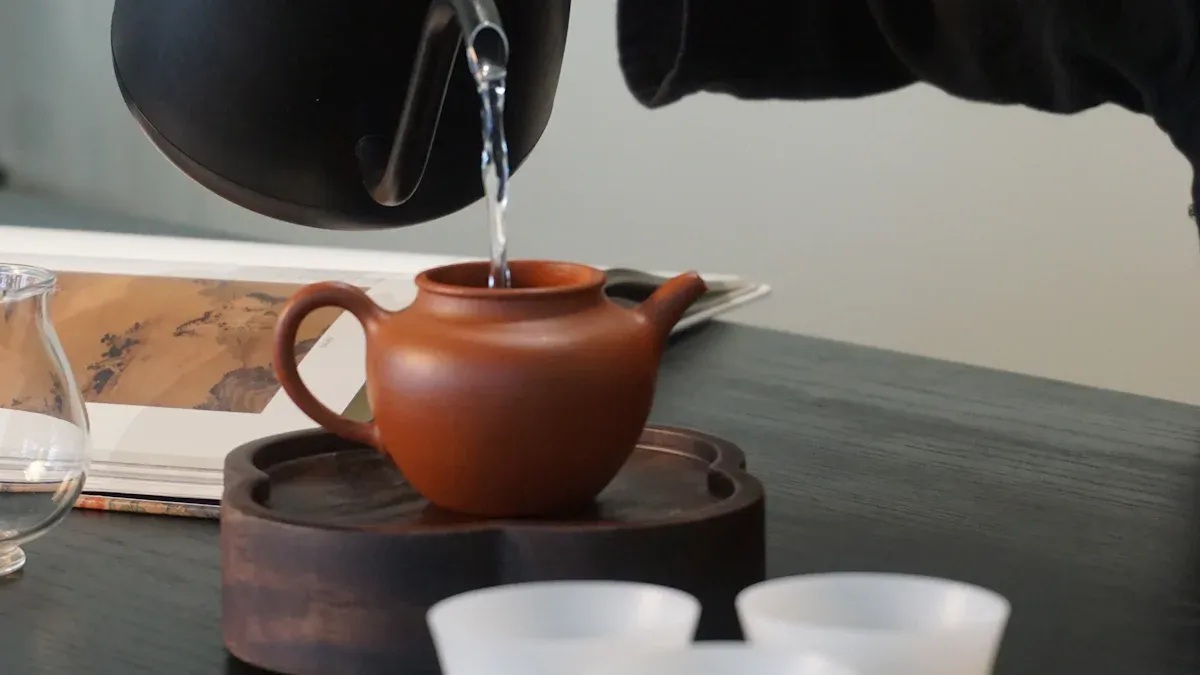
Few things rival the simple pleasure of a perfectly brewed cup of black tea. This guide shows you how to make black tea with ease. You will achieve perfect flavor every time. We demystify the brewing process. This elevates your daily tea experience. Making black tea is accessible to everyone. You just need the right approach. A delicious cup of black tea offers comfort and contributes to your overall well-being.
Key Takeaways
Adjust steeping time to change your tea’s strength. Shorter times make lighter tea. Longer times make stronger tea.
Water temperature is very important. The right temperature helps tea leaves release their best flavors.
Bitter tea often comes from steeping too long or using water that is too hot. Adjust these to fix it.
If your tea is weak, use more tea leaves. You can also brew with hotter water or steep for a longer time.
Cloudy tea happens when it cools too fast. Poor water quality can also cause it. Use filtered water for clear tea.
Black Tea Basics
What is Black Tea
Black tea is a fully oxidized tea. You make it from the leaves of the Camellia sinensis plant. The oxidation process gives black tea its dark color and rich flavor. This process involves several key steps.
First, you wither the fresh tea leaves. This removes moisture. It also starts chemical changes that build flavor. Next, you roll the withered leaves. This breaks their cell walls. It releases important elements for taste. Then comes oxidation. This is a crucial step. Enzymes in the leaves react with oxygen. This creates compounds that give black tea its color and taste. The leaves turn from green to coppery brown. Careful control of this step prevents bitterness. After oxidation, you dry the leaves. This stops the enzymatic reactions. It locks in the flavor. Finally, you classify and package the dried leaves. This ensures quality and freshness.
Many chemical compounds create black tea’s unique taste. For example, linalool gives citrus notes. Geraniol adds rose-like flavors. Phenylacetaldehyde brings honey-like sweetness. These compounds work together for the complex flavor you enjoy.
Popular Varieties
Many types of black tea exist. Each one offers a different taste experience. Here are some popular varieties you might encounter:
Tea Variety | Flavor Characteristics | Aroma |
|---|---|---|
Assam | Full-bodied, brisk, strong malty sweetness | Rich, hints of fruit or honey |
Darjeeling | Hints of muscatel with a bit of astringency | Somewhat like muscat grapes |
Ceylon | Wide range of flavors depending on elevation and soil | Almost citrusy |
Assam tea comes from India. It has a strong, malty flavor. You often find it in breakfast blends. Darjeeling tea also comes from India. People call it the “Champagne of Teas.” It has a lighter taste with fruity notes. Ceylon tea comes from Sri Lanka. Its flavor can vary greatly. It often has a bright, citrusy quality. Each variety offers a unique journey for your taste buds.
Tools and Ingredients
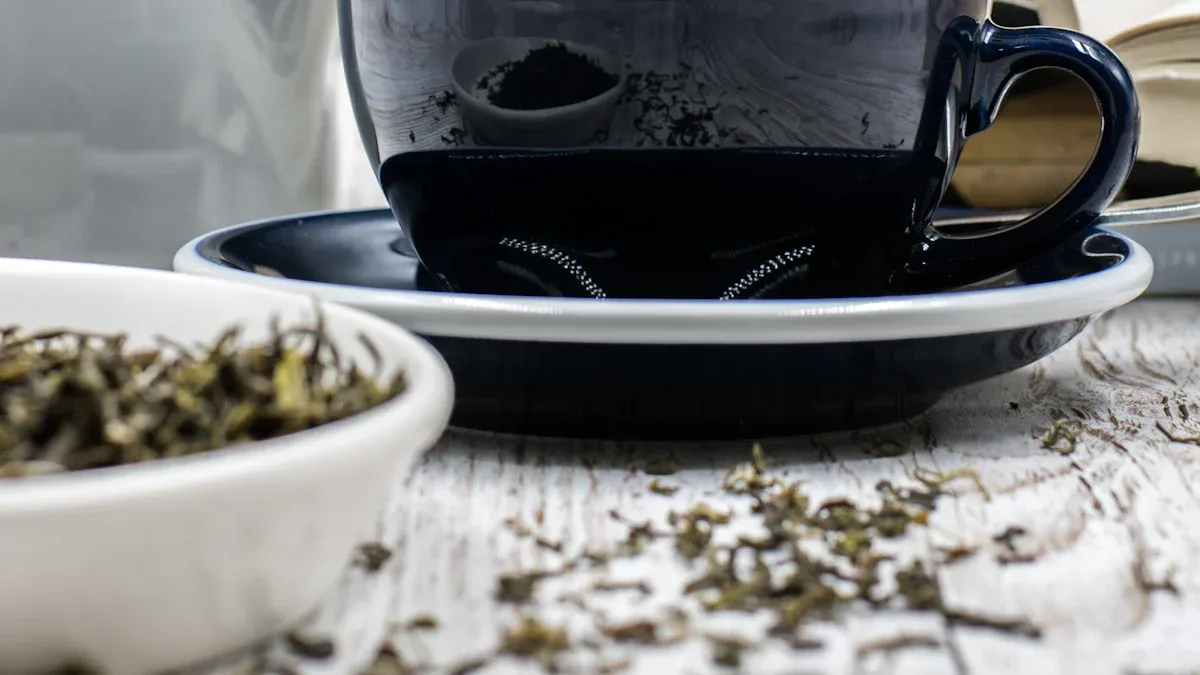
Making great black tea starts with the right tools and ingredients. You need a few key items. These items help you brew a perfect cup every time.
Quality Tea Leaves
You begin with quality tea leaves. Good tea leaves make a big difference in taste. Look for loose leaf tea. It offers a richer flavor than tea bags. Fresh tea leaves also have more aroma. They give you a better tea experience. Choose a variety you enjoy, like Assam or Darjeeling.
Water Quality
Water is a main ingredient in your tea. Good water makes your tea taste better. You should use spring water or freshly drawn filtered water. Hard water can change your tea. It has many minerals like calcium and magnesium. These minerals can create “tea cream.” This is a cloudy solid that forms as tea cools. Hard water can also cause “tea scum.” This is a film on the surface of your tea.
A study found that hard water does not change how much you like the flavor. But, it can make your tea look different. People noticed color differences in tea made with different waters. Hard water can also make tea taste less sweet. It can increase bitterness. Softer water makes tea clearer. It also makes it lighter in color. It is less likely to form scum. Always use good water for the best results.
Essential Equipment
You need some basic equipment to brew tea. First, you need a kettle. This heats your water. An electric kettle works well. Next, you need a mug or teapot. Choose one that holds heat well. You also need a tea infuser or a strainer. This holds your loose tea leaves. It keeps them out of your cup. A timer helps you steep your tea for the right amount of time. These simple tools help you make delicious black tea.
How To Make Black Tea: Step-by-Step
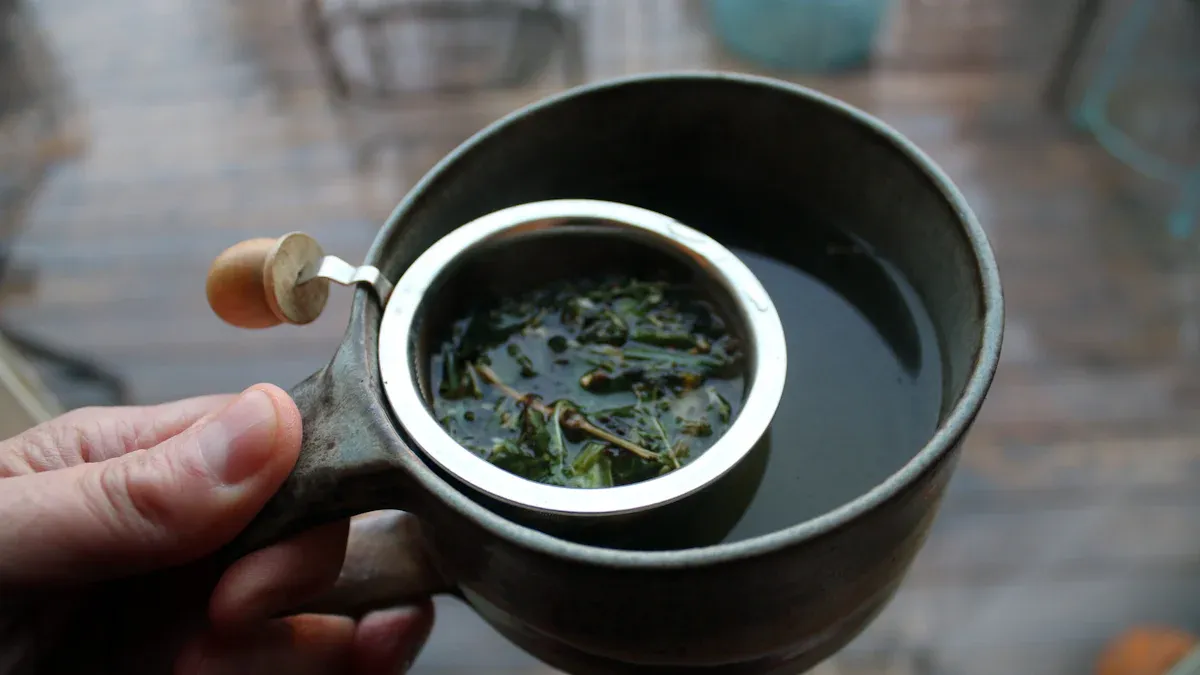
You can achieve a cup of black tea with perfect flavor by following these simple steps. This guide shows you how to make black tea with precision.
Water Heating
First, you need to heat your water. Bring fresh, filtered water to a rapid boil. This means it reaches 212°F (100°C). For optimal extraction, you should then allow the water to cool slightly. Aim for a brewing temperature between 190°F and 200°F. This range helps to cut bitterness. For example, you can steep most black teas at 200°F. Darjeeling black tea can even steep at a lower temperature to reduce bitterness. The ideal steeping range for most black teas is between 200°F to 208°F (93-98°C). This allows you to taste the tea’s subtle flavors. Temperatures below 190°F can lead to under-extraction. This means your tea will lack flavor. Temperatures above 208°F can cause tannins and bitterness to overpower delicate tea notes. A suitable general range for steeping black tea is between 195°F to 212°F (90-100°C). If you prefer a very robust flavor, you can pour the water immediately after it boils.
Tea Measurement
Next, measure your tea leaves. A good starting point is 1 to 2 teaspoons of tea leaves for every 8 to 10 ounces of water. However, the density of tea leaves affects this amount. Different drying methods create varying volumes for the same weight of tea. Therefore, you must consider the tea’s density for accurate measurement.
Fluffy Black Tea: For teas like some Yunnan golden needle, you will use more leaves than you might initially think. These teas take up more space.
Twisted Black Tea: For teas such as No. 18, Sun Moon Lake, Qi Men, Dian Hong, or Darjeeling first flush, use a medium amount of leaf. Just enough to cover the bottom of your infusing vessel works well.
A full leaf white tea can occupy five times the volume of a rolled oolong. A small piece of Puerh can weigh as much as an entire package of black tea. Adjust your measurement based on the tea’s appearance.
Steeping Time
Now, it is time to steep black tea. Steeping time is crucial for flavor. Three minutes is a good starting point. You can adjust this by 30 seconds to a minute for your desired strength. Black teas typically brew for approximately 4 minutes. You should not steep for less than 30 seconds. You should also not exceed about five minutes. Bitterness can occur if you steep for more than five minutes. Sometimes, bitterness appears as early as three minutes. Other times, it does not appear at all, even with longer steeping. The precise ideal steeping time depends on the type of tea and water quality. For black tea, a steeping duration of 2-3 minutes is also a good suggestion.
To adjust the strength of your black tea, vary the amount of tea leaves you use. Do not alter the steeping time. Steeping time significantly influences both caffeine content and antioxidant levels in black tea. Caffeine extraction is directly proportional to temperature. Higher temperatures speed up the mass transfer rate. For black tea, the ‘hot + ice’ method yields the highest caffeine levels. This happens due to a greater leaves-to-water ratio and favorable extraction conditions at high temperatures. Conversely, cold infusion generally results in the highest total phenolic content. This measures antioxidant levels. The ‘hot + ice’ method follows, then the hot method. Extended extraction times in cold infusions help more active compounds migrate. Lower temperatures protect these molecules from degradation. High temperatures promote caffeine extraction. However, they can also destroy antioxidant molecules through oxidation, epimerization, and polymerization. The rapid cooling in the ‘hot + ice’ method appears to lessen these destructive effects. This offers a protective benefit to antioxidant molecules.
Serving Your Tea
Finally, you are ready to serve your tea. Before brewing, preheat your cup with boiling water. This helps maintain the tea’s temperature. Pour out the hot water. Then, pour your freshly brewed black tea into the warm cup. You should always use hot water for brewing. Do not use cold water for brewing, even if you plan to make iced tea. Making black tea correctly ensures a delightful experience.
Achieving Perfect Flavor
<<>>
Achieving Perfect Flavor
You can elevate your black tea experience. Focus on a few key elements. These elements help you achieve perfect flavor. You control these factors. This ensures a delicious cup every time.
Adjusting Steep Time
Steeping time directly impacts your tea’s strength and taste. You can make your tea stronger or milder. Just change how long you steep black tea. A shorter steep time gives you a lighter, more delicate flavor. A longer steep time creates a bolder, more robust cup.
Think about your personal preference. Do you like a gentle morning tea? Steep it for less time. Do you prefer a strong, invigorating brew? Steep it for a bit longer. Experiment with different times. You will find your ideal balance. Remember, the goal is to extract flavor, not bitterness. Knowing how long to steep black tea is key to your enjoyment.
Temperature Control
Water temperature is very important for brewing black tea. It affects how well the tea leaves release their flavors. The right brewing temperature unlocks the tea’s full potential. The wrong temperature can ruin your cup.
Look at how water temperature changes your tea:
Water Temperature | Consequences |
|---|---|
Feature | Description |
— | — |
Origin | Black tea comes from the leaves of the Camellia sinensis plant. |
Processing | It undergoes full oxidation, which gives it its dark color and rich flavor. |
Flavor Profile | Generally robust, malty, and sometimes fruity or floral, depending on the variety. |
Caffeine Content | Typically higher than green or white tea, providing an energizing effect. |
Popular Varieties | Assam, Darjeeling, Ceylon, Keemun, Lapsang Souchong. |
Popular Varieties
Many types of black tea exist. Each one offers a different taste experience. Here are some popular varieties you might encounter:
Tea Variety | Flavor Characteristics | Aroma |
|---|---|---|
Assam | Full-bodied, brisk, strong malty sweetness | Rich, hints of fruit or honey |
Darjeeling | Hints of muscatel with a bit of astringency | Somewhat like muscat grapes |
Ceylon | Wide range of flavors depending on elevation and soil | Almost citrusy |
Keemun | Mellow, wine-like, with hints of fruit and pine | Smoky, floral |
Lapsang Souchong | Distinctive smoky flavor, often described as woodsy or campfire-like | Smoky, tarry |
Assam tea comes from India. It has a strong, malty flavor. You often find it in breakfast blends. Darjeeling tea also comes from India. People call it the “Champagne of Teas.” It has a lighter taste with fruity notes. Ceylon tea comes from Sri Lanka. Its flavor can vary greatly. It often has a bright, citrusy quality. Keemun tea originates from China. It offers a mellow, wine-like taste. Lapsang Souchong, also from China, is famous for its smoky aroma and flavor. Each variety offers a unique journey for your taste buds.
Tools and Ingredients
Making great black tea starts with the right tools and ingredients. You need a few key items. These items help you brew a perfect cup every time.
Quality Tea Leaves
You begin with quality tea leaves. Good tea leaves make a big difference in taste. Look for loose leaf tea. It offers a richer flavor than tea bags. Fresh tea leaves also have more aroma. They give you a better tea experience. Choose a variety you enjoy, like Assam or Darjeeling.
Water Quality
Water is a main ingredient in your tea. Good water makes your tea taste better. You should use spring water or freshly drawn filtered water. Hard water can change your tea. It has many minerals like calcium and magnesium. These minerals can create “tea cream.” This is a cloudy solid that forms as tea cools. Hard water can also cause “tea scum.” This is a film on the surface of your tea.
A study found that hard water does not change how much you like the flavor. But, it can make your tea look different. People noticed color differences in tea made with different waters. Hard water can also make tea taste less sweet. It can increase bitterness. Softer water makes tea clearer. It also makes it lighter in color. It is less likely to form scum. Always use good water for the best results.
Essential Equipment
You need some basic equipment to brew tea. First, you need a kettle. This heats your water. An electric kettle works well. Next, you need a mug or teapot. Choose one that holds heat well. You also need a tea infuser or a strainer. This holds your loose tea leaves. It keeps them out of your cup. A timer helps you steep your tea for the right amount of time. These simple tools help you make delicious black tea.
How To Make Black Tea: Step-by-Step
You can achieve a cup of black tea with perfect flavor by following these simple steps. This guide shows you how to make black tea with precision.
Water Heating
First, you need to heat your water. Bring fresh, filtered water to a rapid boil. This means it reaches 212°F (100°C). For optimal extraction, you should then allow the water to cool slightly. Aim for a brewing temperature between 190°F and 200°F. This range helps to cut bitterness. For example, you can steep most black teas at 200°F. Darjeeling black tea can even steep at a lower temperature to reduce bitterness. The ideal steeping range for most black teas is between 200°F to 208°F (93-98°C). This allows you to taste the tea’s subtle flavors. Temperatures below 190°F can lead to under-extraction. This means your tea will lack flavor. Temperatures above 208°F can cause tannins and bitterness to overpower delicate tea notes. A suitable general range for steeping black tea is between 195°F to 212°F (90-100°C). If you prefer a very robust flavor, you can pour the water immediately after it boils.
Tea Measurement
Next, measure your tea leaves. A good starting point is 1 to 2 teaspoons of tea leaves for every 8 to 10 ounces of water. However, the density of tea leaves affects this amount. Different drying methods create varying volumes for the same weight of tea. Therefore, you must consider the tea’s density for accurate measurement.
Fluffy Black Tea: For teas like some Yunnan golden needle, you will use more leaves than you might initially think. These teas take up more space.
Twisted Black Tea: For teas such as No. 18, Sun Moon Lake, Qi Men, Dian Hong, or Darjeeling first flush, use a medium amount of leaf. Just enough to cover the bottom of your infusing vessel works well.
A full leaf white tea can occupy five times the volume of a rolled oolong. A small piece of Puerh can weigh as much as an entire package of black tea. Adjust your measurement based on the tea’s appearance.
Steeping Time
Now, it is time to steep black tea. Steeping time is crucial for flavor. Three minutes is a good starting point. You can adjust this by 30 seconds to a minute for your desired strength. Black teas typically brew for approximately 4 minutes. You should not steep for less than 30 seconds. You should also not exceed about five minutes. Bitterness can occur if you steep for more than five minutes. Sometimes, bitterness appears as early as three minutes. Other times, it does not appear at all, even with longer steeping. The precise ideal steeping time depends on the type of tea and water quality. For black tea, a steeping duration of 2-3 minutes is also a good suggestion.
To adjust the strength of your black tea, vary the amount of tea leaves you use. Do not alter the steeping time. Steeping time significantly influences both caffeine content and antioxidant levels in black tea. Caffeine extraction is directly proportional to temperature. Higher temperatures speed up the mass transfer rate. For black tea, the ‘hot + ice’ method yields the highest caffeine levels. This happens due to a greater leaves-to-water ratio and favorable extraction conditions at high temperatures. Conversely, cold infusion generally results in the highest total phenolic content. This measures antioxidant levels. The ‘hot + ice’ method follows, then the hot method. Extended extraction times in cold infusions help more active compounds migrate. Lower temperatures protect these molecules from degradation. High temperatures promote caffeine extraction. However, they can also destroy antioxidant molecules through oxidation, epimerization, and polymerization. The rapid cooling in the ‘hot + ice’ method appears to lessen these destructive effects. This offers a protective benefit to antioxidant molecules.
Serving Your Tea
Finally, you are ready to serve your tea. Before brewing, preheat your cup with boiling water. This helps maintain the tea’s temperature. Pour out the hot water. Then, pour your freshly brewed black tea into the warm cup. You should always use hot water for brewing. Do not use cold water for brewing, even if you plan to make iced tea. Making black tea correctly ensures a delightful experience. <<>>
Troubleshooting Brews
<<>>
Troubleshooting Brews
Even with the best intentions, your black tea might not turn out perfectly. You might encounter common issues like bitterness, weakness, or cloudiness. Understanding these problems helps you fix them.
Bitter Tea Fixes
If your black tea tastes bitter, you can adjust your brewing method. Bitterness often comes from over-steeping or water that is too hot. Here are some ways you can reduce bitterness:
Choose the right tea: Some tea processing methods naturally reduce bitterness. For example, oxidation, roasting, and microbial fermentation are effective.
Control temperature: Bitter compounds are sensitive to high temperatures. Brewing at a slightly lower temperature can help.
Consider theanine: Theanine is a natural compound in tea. It can mask bitterness.
Experiment with shade-grown teas: Shade treatment is an agricultural practice. It reduces bitterness and astringency in tea leaves.
Weak Tea Solutions
Does your black tea lack flavor or strength? You can easily fix a weak brew.
Increase tea leaves: Use more tea leaves for the same amount of water. This is the simplest way to get a stronger brew.
Rinse your leaves: Briefly rinse your tea leaves with hot water (around 60-70℃). This removes impurities and can help with flavor release.
Use crushed tea: Crushed tea, often found in tea bags, brews stronger than full leaf tea. It releases flavor faster.
Brew hotter: Use water at a higher temperature, even up to boiling point. This extracts more flavor from the leaves.
Extend steeping time: Steep your tea for a longer period. Longer brewing times result in a stronger infusion.
Choose the right teaware: Ceramic, porcelain, or clay teaware retain heat better than glass. This helps with better flavor extraction.
Cloudy Tea Causes
Sometimes your black tea looks cloudy or hazy, especially after it cools. This is a common issue.
Rapid temperature changes: Quickly cooling hot tea, especially for iced tea, can cause cloudiness. This happens due to a chemical reaction.
Water quality: Poor water quality can lead to a cloudy drink. Always use good quality, filtered water.
Tea type: Some teas are more prone to clouding with fast temperature changes. Not all teas are ideal for iced tea preparations.
When tea cools, compounds like amino acids, minerals, sugars, and polyphenols interact. These compounds bind together. In hot tea, they remain dissolved. As the temperature drops, the cooler water cannot keep these complexes dissolved. They precipitate out, creating a visible haze. This is often called “tea cream” or “tea haze.” It does not mean your tea is bad, but it can affect its appearance.
<<>>
Brewing black tea correctly is simple and rewarding. You now understand the importance of quality ingredients, precise water temperature, and mindful steeping. These steps ensure a perfect cup. Experiment with different teas and times to find your personal favorite. Making black tea becomes a delightful daily ritual. Enjoy your perfect brew.
FAQ
What is the best water temperature for black tea?
You should heat your water to a rapid boil (212°F/100°C). Then, let it cool slightly to 190°F-200°F (88°C-93°C). This range helps you get the best flavor without bitterness.
How long should I steep black tea?
Steep black tea for 3 to 5 minutes. Start with 3 minutes. You can adjust the time by 30 seconds to a minute. This helps you find your preferred strength.
Can I reuse black tea leaves?
Yes, you can often reuse good quality black tea leaves. Many black teas give a second or even third infusion. The flavor will be lighter each time.
Why does my black tea taste bitter?
Your black tea tastes bitter if you steep it too long. It can also happen if the water is too hot. Try reducing the steeping time. You can also use slightly cooler water.
What causes cloudy black tea?
Cloudy black tea often happens when you cool it too quickly. This is common when making iced tea. Using hard water can also make your tea cloudy. Use filtered water for a clearer brew.