


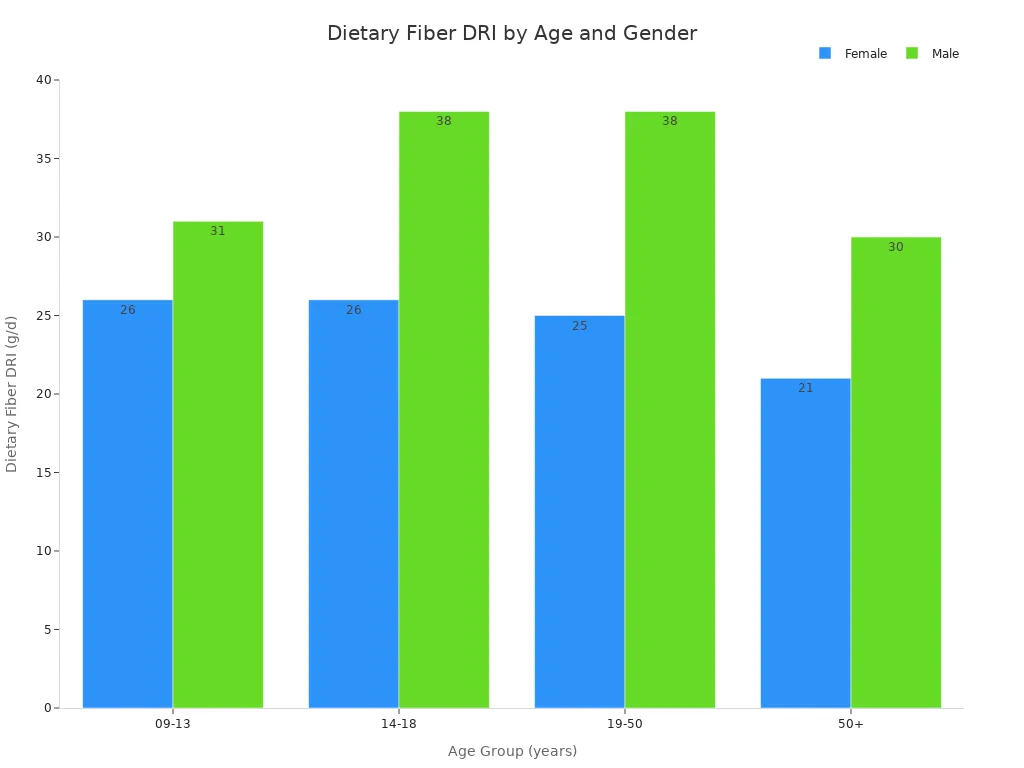
Do you wish for better digestion and overall well-being? Many people do. You might struggle to get enough fiber. The average American consumes only about 16-17 grams of fiber daily. This is far below recommended levels.
Psyllium husk offers a natural, fiber-rich solution. This soluble fiber comes from the Plantago ovata plant seeds. It provides excellent psyllium husk nutrition benefits. The health benefits of psyllium are vast. This article explores how psyllium husk improves your digestion and overall gut health. You will learn about its many health benefits and how to use this powerful fiber source.
Key Takeaways
Psyllium husk is a natural fiber from a plant. It helps your digestion and gut health.
This fiber can make your bowel movements regular. It helps with both constipation and diarrhea.
Psyllium husk also helps your heart and blood sugar. It can help you manage your weight.
Always mix psyllium husk with lots of water. Drink extra water throughout the day to avoid problems.
Talk to a doctor before using psyllium husk. This is important if you have health issues or take other medicines.
Understanding Psyllium Husk: The Fiber Powerhouse

What is Psyllium Husk
Psyllium husk comes from the Plantago ovata plant. This annual herb belongs to the Plantaginaceae family. People also know it as Desert Indianwheat or Blond Psyllium. Psyllium is a common name for several Plantago genus members. Their seeds are used to make mucilage. Psyllium gum is a highly branched polysaccharide. It comes from Plantago seeds. Its main structure has arabinose (22.6%) and xylose (74.6%). It also has a small amount of other sugars. Psyllium gum is an arabinoxylan polysaccharide. It has a β-(1→4)-linked xylopyranose backbone. Side chains attach at the O-2 or O-3 site. This unique composition makes psyllium husk a powerful source of dietary fiber.
Soluble and Insoluble Fiber
Dietary fiber has two main types: soluble and insoluble. Each type helps your health in different ways. Soluble fiber dissolves in water. It forms a gel-like substance. This gel helps relieve diarrhea and bulks stools. It also improves bowel regulation. Soluble fiber can lower LDL cholesterol. It also helps reduce blood glucose levels. This may lower your risk of diabetes. Insoluble fiber does not dissolve in water. It attracts water to your stool. This softens the stool and makes it easier to pass. It helps relieve constipation and regulates digestion. Insoluble fiber supports insulin sensitivity. It may also reduce your diabetes risk.
Fiber Type | Key Physiological Effects |
|---|---|
Soluble Fiber | Dissolves in water, forms a gel-like substance, helps relieve diarrhea, bulks stools, improves bowel regulation, reduces LDL cholesterol, lowers blood glucose levels, may reduce diabetes risk. |
Insoluble Fiber | Does not dissolve in water, attracts water to stool, softens stool, eases passage, relieves constipation, regulates digestion, supports insulin sensitivity, may reduce diabetes risk. |
The Role of Psyllium Fiber
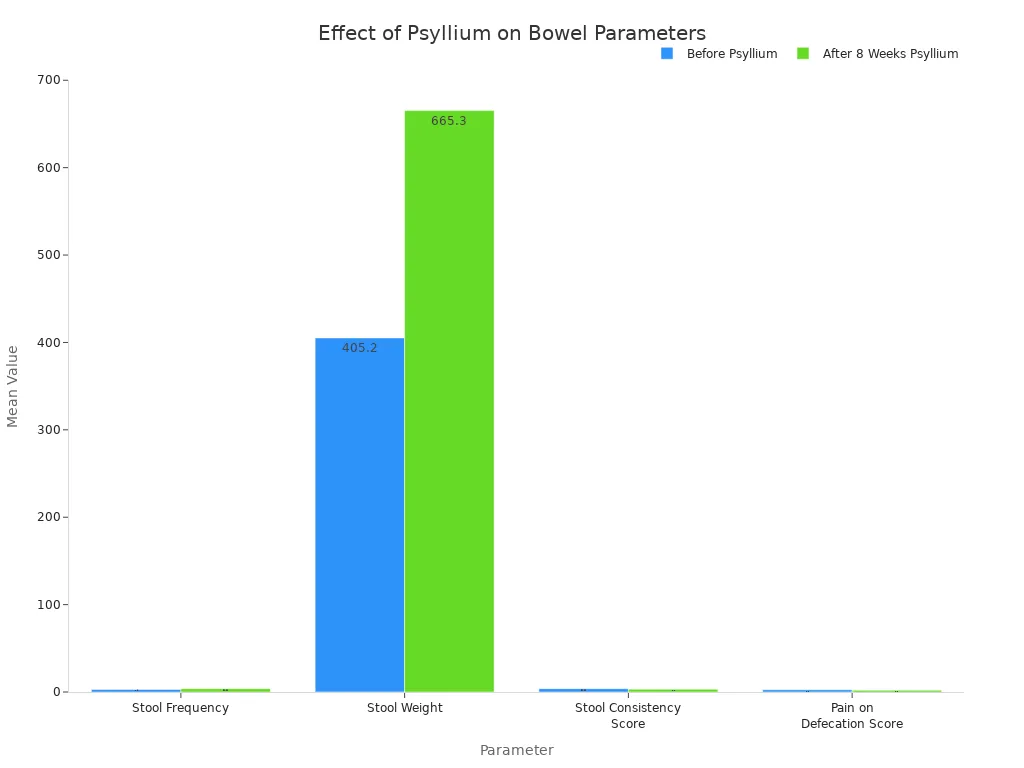
Psyllium fiber works by absorbing water. It turns into a thick, viscous compound. Your small intestine does not digest this compound. Psyllium husk, the active ingredient, absorbs and holds water. This absorption makes the psyllium husk swell. The swelling adds bulk and moisture to hard stools. It increases their volume. This increased volume helps stools move through your colon more easily. This eases constipation. Psyllium fiber is a bulk-forming laxative. It first binds to partially digested food in your stomach and small intestine. Then, it absorbs water. This increases the size and moisture of your stools. This makes stools larger and easier to pass. It helps relieve constipation. Psyllium fiber effectively increases stool frequency and weight. It also improves stool consistency. This is true for people with idiopathic constipation. These benefits come from making the defecation process easier.
Psyllium Husk for Digestive Health

Psyllium husk offers significant benefits for your digestive health. It helps your body in many ways. You can experience improved regularity, relief from common digestive issues, and support for your gut microbiome.
Promoting Regularity
Psyllium fiber is excellent for promoting regularity. It helps you maintain regularity in your bowel movements. A study looked at 170 patients with chronic constipation. These patients took 10 grams of psyllium husk daily. Their mean stool water content increased from 71% to 74% by day three. This meant they had normal, shaped stools. This effect lasted for two weeks. This was more effective than another treatment, sodium docusate. You will generally find your body adapts to the increased fiber within about one week. You might feel full or bloated at first. To see improvements in your bowel regularity, you need consistent daily intake for 2 to 4 weeks.
Constipation and Diarrhea Relief
Psyllium husk helps with both constipation and diarrhea. It acts as a bulk-forming laxative. This means it increases the bulk of your stools. This increased bulk stimulates your bowels. It helps move stools through your digestive system. This relieves constipation. You will notice improved stool consistency, leading to looser stools. You will also experience decreased straining during bowel movements and reduced bloating.
For diarrhea, psyllium fiber works differently. It has a water-holding effect in your intestines. This helps bulk up watery stool. It can also bind some toxins that might cause acute diarrhea. Psyllium husk absorbs water. It forms a gel-like substance called mucilage. This mucilage adds substance to stools, making them firmer. It also delays the passage of stools through your digestive tract. This leads to less frequent bowel movements. The increased thickness slows down your overall digestive process. This gives your intestines more time to absorb water. It creates a more solid stool consistency. Four randomized cross-over clinical trials show psyllium’s effectiveness in treating both acute and chronic diarrhea. One study found psyllium husk significantly improved stool consistency. It more than doubled its viscosity. This produced soft, formed stools despite high water content.
Gut Microbiome Support
Your gut microbiome is a community of bacteria in your intestines. Psyllium fiber supports a healthy gut microbiome. It acts as a prebiotic. This means it feeds beneficial gut bacteria. When you take psyllium husk, you can see changes in your gut bacteria.
Level | Increased Abundance | Decreased Abundance |
|---|---|---|
Phylum | Firmicutes, Actinobacteria, Euryarchaeota, Tenericutes | Bacteroidetes, Fusobacteria, Proteobacteria, Synergistetes, Verrucomicrobia, Acidobacteria |
Genus | Faecalibacterium, Romboutsia, Bifidobacterium, Streptococcus | Bacteroides, unidentified_Lachnospiraceae, Megamonas, Megasphaera, Paraprevotella, Lactobacillus |
Specific Taxa | c_Clostridia, o_Clostridiales, f_Ruminococcaceae | f_Enterobacteriaceae, o_Enterobacteriales, s_Bacteroides_vulgatus (more abundant in placebo group) |
You can see an increase in beneficial bacteria like Firmicutes and Bifidobacterium. These changes contribute to better digestive health.
Managing IBS Symptoms
Irritable Bowel Syndrome (IBS) causes abdominal pain and changes in bowel habits. Psyllium fiber can help manage IBS symptoms. A study looked at children with IBS. It found psyllium fiber reduced abdominal pain. Children in the psyllium group had a greater reduction in pain episodes. This was compared to a placebo group. The American College of Gastroenterology (ACG) recommends psyllium hydrophilic mucilloid for treating IBS. They give it a grade of 2C. This means it is moderately effective. A meta-analysis supports this recommendation. It showed psyllium improved global symptoms in many studies. The ACG notes that many studies had limitations. These included small sample sizes and short follow-up periods. However, psyllium husk remains a valuable option for managing IBS symptoms.
Broader Psyllium Husk Nutrition Benefits
Psyllium husk offers many health benefits beyond just digestion. You can experience systemic improvements throughout your body. These broader psyllium husk nutrition benefits include better heart health, stable blood sugar, and help with weight management.
Heart Health and Cholesterol
Psyllium fiber also contributes to heart health. It can impact your cholesterol levels, triglycerides, and blood pressure. You might wonder about its effect on LDL cholesterol, often called “bad” cholesterol. Some research shows varied results. One study found no change in total or LDL cholesterol, even with a daily dose greater than 10.2 grams. This was the amount for which the FDA allows health claims. However, other studies have shown different outcomes. For example, one report noted a 2% reduction in LDL cholesterol in hypercholesterolemic veterans. Another study found psyllium treatment reduced LDL cholesterol, even if total cholesterol lowering was similar to a placebo. Conversely, some studies did not find lipid-lowering effects in certain groups, such as children or elderly patients with high cholesterol. So, while the evidence on directly lowering LDL cholesterol can be mixed, psyllium fiber still plays a role in overall cardiovascular wellness.
Psyllium husk can also help with other cardiovascular risk factors. You can see improvements in triglyceride levels and blood pressure.
Psyllium counteracts high triglycerides and high blood pressure. These are risk factors for heart disease.
Consuming psyllium reduces your risk of developing many cardiovascular diseases. These include high cholesterol, high triglycerides, high blood sugar, and high blood pressure.
Psyllium consumption significantly decreases systolic blood pressure (SBP). It non-significantly increases diastolic blood pressure (DBP).
Overall, viscous soluble fiber leads to lower SBP and DBP. This can lower your risk of cardiovascular diseases.
Psyllium helps people with high blood pressure lower their numbers.
Eating both soluble and insoluble fiber decreases blood pressure.
If you have high-normal blood pressure and consume a lot of salt, regular psyllium fiber intake can lower your SBP.
A meta-analysis of many studies showed a significant decrease in systolic blood pressure after psyllium consumption. It also showed a non-significant decrease in triglyceride levels.
Six months of psyllium husk use showed a significant decrease in both SBP and DBP among overweight individuals with high blood pressure. These health benefits highlight the importance of psyllium husk in a heart-healthy diet.
Blood Sugar Control
Psyllium fiber helps manage blood sugar levels. This is especially important if you have type 2 diabetes or want to prevent it. Psyllium husk, a soluble fiber, stabilizes blood sugar by slowing glucose absorption into your bloodstream. It forms a gel-like substance in your gut. This gel regulates blood sugar and improves insulin sensitivity. This allows glucose to move more quickly to your liver or muscle tissue for storage. Psyllium husk may also encourage the growth of beneficial gut bacteria. These bacteria link to better glucose metabolism and a lower risk of diabetes.
Psyllium’s mechanism for reducing blood sugar in diabetic patients is similar to other soluble fibers. It works by:
Reducing sugar absorption.
Slowing how fast food moves through your intestines.
Increasing feelings of satiety.
Decreasing blood sugar and insulin needs.
The thickness of soluble fiber slows down how quickly your body absorbs nutrients. It also protects against digestive enzymes.
Coating your intestinal surface to prevent nutrient passage.
Causing a lower insulin response and lower blood glucose levels due to enough fiber content.
Changing intestinal hormones, which leads to less glucose after meals.
A study reported a significant reduction in post-meal blood glucose levels with psyllium. Another study with diabetic patients showed psyllium fiber reduced maximum post-meal glucose elevation by 14% at breakfast and 20% at dinner. It also reduced post-meal serum insulin concentrations by 12% after breakfast. A “second-meal effect” was also seen, with a 31% reduction in post-meal glucose after lunch. These benefits were consistent for patients on diet control and those using oral medications. Taking psyllium husk with a meal can help curb post-meal spikes in blood sugar and insulin. The glycemic health benefits of psyllium are often more noticeable in people with compromised metabolic function.
Weight Management
Psyllium husk can also support your weight management goals. It helps you feel full and can reduce your appetite. This is because psyllium fiber forms a gel in your intestines by absorbing water. This slows digestion. Other ways it works include releasing gut peptides that promote satiety, slowing stomach emptying, and regulating your blood sugar response after meals.
The bulk created by psyllium can trigger stretch receptors in your small and large intestines. These signal your brain to reduce appetite. When you take psyllium husk with water, it swells into a gelatinous mass in your stomach. This creates a feeling of fullness and temporarily eases your appetite. Its water-absorbing properties create a gel-like substance in your stomach. This enhances feelings of fullness and can lead to you eating fewer calories. Psyllium may also help stabilize blood sugar, which can reduce sudden hunger and cravings. These mechanisms help you increase satiety.
Clinical evidence supports psyllium husk’s role in weight management. A meta-analysis looked at psyllium husk’s impact on body weight, BMI, and waist circumference in overweight and obese individuals. It found that a mean dose of 10.8 grams per day of psyllium husk, taken just before meals for about 4.8 months, decreased body weight by 2.1 kg, BMI by 0.8 kg/m², and waist circumference by 2.2 cm. Another study showed sustained weight loss. Participants who took 3.5 grams of psyllium husk twice daily before breakfast and dinner lost an average of 3.3 kg. A review also indicated that psyllium supplementation improved blood lipid profiles, glycemic response, and increased satiety. All these factors indirectly support weight management. These psyllium husk nutrition benefits make it a valuable tool for maintaining a healthy weight.
Using Psyllium Husk Safely
You can gain many benefits from psyllium husk. You must use it safely and correctly. This involves understanding proper dosages, preparation, and potential side effects.
Dosage and Preparation
You need to know the right amount of psyllium husk to take. The recommended daily fiber intake for adults is 25-38 grams. Psyllium fiber can help you reach this goal.
Condition | Form | Dosage (per dose) | Frequency |
|---|---|---|---|
Constipation | Rounded teaspoonfuls | 1 to 2 | 1 to 3 times a day |
Packets | 1 to 2 | 1 to 3 times a day | |
Wafers | 1 to 2 | 1 to 3 times a day | |
Capsules | 5 to 6 | 1 to 3 times a day | |
Irritable Bowel Syndrome | Rounded teaspoonfuls | 1 to 2 | 1 to 3 times a day |
Packets | 1 to 2 | 1 to 3 times a day | |
Wafers | 1 to 2 | 1 to 3 times a day | |
Capsules | 5 to 6 | 1 to 3 times a day | |
Constipation (general) | Grams | 2.5 to 30 g | Per day in divided doses |
Always mix psyllium with enough liquid. Do not mix psyllium with food like applesauce. You should mix psyllium with liquid and drink it right away. This prevents it from thickening too much. If you have trouble swallowing, do not use psyllium. It can form a mass and block your throat. Stop using psyllium and call your doctor if you choke or have trouble swallowing.
The laxative properties of psyllium are due to the swelling of the husk when it comes in contact with water. This forms a gelatinous mass that keeps feces hydrated and soft, provided it is taken with sufficient water.
You must drink plenty of water when you take psyllium fiber. This helps prevent bloating and blockages.
Side Effects and Precautions
You might experience some side effects when you first start taking psyllium husk. These often happen if you take too much or do not drink enough water.
Abdominal pain and cramping
Gas
Bloating
Loose stools or diarrhea
Frequent bowel movements
Nausea
Vomiting
Psyllium can affect how your body absorbs other medicines. There are 29 known drug interactions. Two are moderate, and 27 are minor. Acarbose is one medicine that interacts with psyllium. Always talk to your doctor if you take other medications.
Incorporating into Diet
You can easily incorporate psyllium fiber into your daily diet. Many ways exist to enjoy this beneficial fiber.
Mix with water, juice, or smoothies. Drink it immediately.
Stir into oatmeal or yogurt.
Use in gluten-free baking to bind ingredients.
Add to soups or stews as a natural thickener.
Blend into homemade energy bars.
You can also incorporate psyllium fiber into flavored beverages like lemonade or shakes.
These methods help you increase your fiber intake. They make it simple to add psyllium husk to your routine. Remember to drink plenty of fluids with any fiber supplements.
Psyllium husk offers significant psyllium husk nutrition benefits. This powerful dietary fiber improves your digestion, gut health, and overall well-being. Remember to drink plenty of water when you consume psyllium husk. This is crucial. Consider psyllium husk as a natural way to support your health goals. Its psyllium fiber provides many health benefits. This psyllium fiber can truly make a difference. Before you start any new fiber supplements, consult a healthcare professional or dietitian. This is especially important if you have underlying health conditions or take medications.
FAQ
What is psyllium husk?
Psyllium husk comes from the Plantago ovata plant. It is a natural, fiber-rich solution. This soluble fiber absorbs water. It forms a gel-like substance in your digestive system. This helps your digestion.
How do you take psyllium husk?
You should mix psyllium husk with plenty of liquid. Drink it right away. You can use water, juice, or smoothies. Always drink extra water throughout the day. This prevents blockages and discomfort.
How long does psyllium husk take to work?
You might see changes in bowel regularity within 2 to 4 weeks. Some effects, like increased stool water content, can appear in a few days. Consistency is key for best results.
Can psyllium husk cause side effects?
Yes, you might experience some side effects. These include gas, bloating, or abdominal cramping. These often happen if you start with too much or do not drink enough water. Start with a small dose.
Who should not take psyllium husk?
You should not take psyllium husk if you have trouble swallowing. It can block your throat. Always talk to your doctor before starting any new supplement. This is important if you take other medications.