

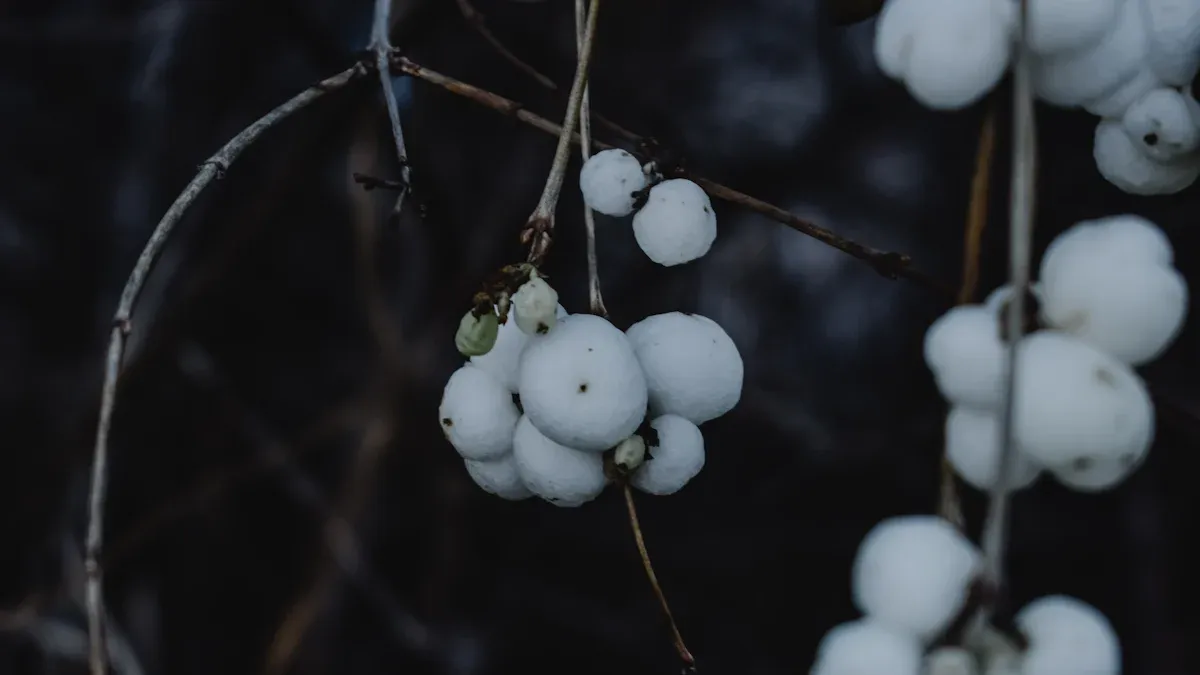
Snowberry is a small shrub with white, round berries. You can spot it in many places, such as North America and England. The berries look waxy and grow in clusters. People often wonder if snowberry offers nutrition or health benefits. The plant appears in different regions, as shown below:
Region | Description |
|---|---|
North America | Common snowberry grows from Hudson Bay to Alaska, south to California and east to North Carolina. |
England | Introduced in 1817 and now well naturalized. Listed as an introduced species in Delaware. |
States | Found in various states including AK, CA, CO, CT, DE, ID, IL, IN, IA, KS, KY, MD, MA, MI, MN, MT, NE, NH, NJ, NM, NY, ND, OH, OR, PA, RI, SD, TN, UT, VT, VA, WA, WV, WI, WY, DC. |
You might feel curious about snowberry’s nutrition, how it helps your body, and its traditional uses.
Key Takeaways
Snowberry berries are not safe for human consumption due to their mild toxicity. Avoid eating them to prevent stomach upset.
Snowberry contains beneficial compounds like saponins, which may help reduce inflammation and support immune health.
The plant plays a vital ecological role by providing food and shelter for wildlife, especially during winter months.
About Snowberry
Identification
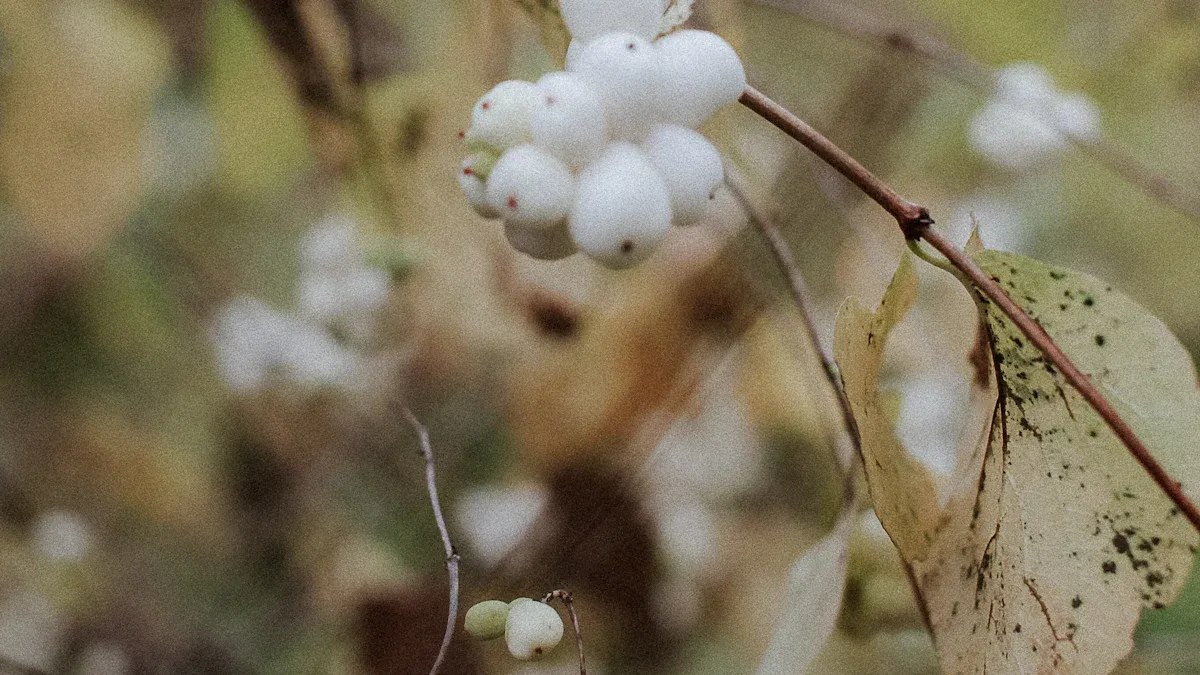
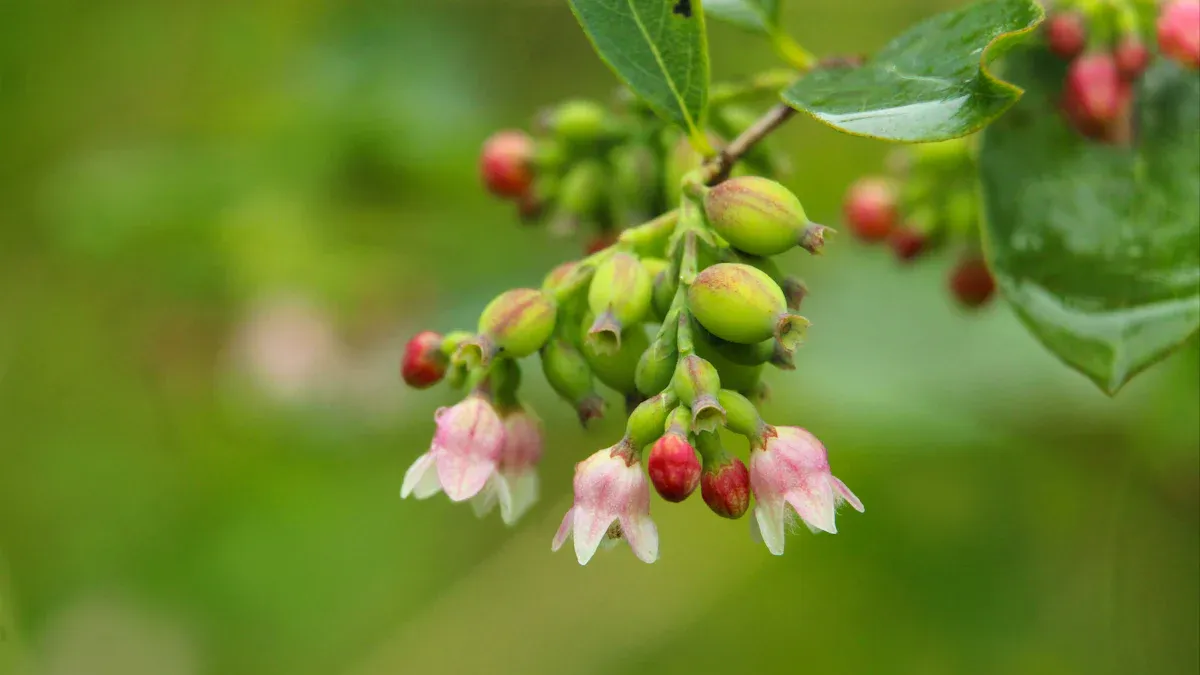
You can recognize snowberry by its upright, bushy shape and clusters of white, round berries. The plant belongs to the honeysuckle family (Caprifoliaceae) and grows as a deciduous shrub. Most snowberry shrubs reach up to 6 feet tall. You will notice small clusters of pink or white flowers from May to August. The leaves grow in pairs on opposite sides of the stem and can look oval or even deeply lobed. One unique feature is the way the leaves are arranged-few shrubs in the Pacific Northwest have leaves that grow this way.
Characteristic | Description |
|---|---|
Family | Caprifoliaceae |
Plant Type | Deciduous erect shrub |
Height | Up to 6 feet tall |
Flower/Fruits | Small clusters of pink/white flowers; white round berries that remain on the stem into winter |
Flowering Season | May-August |
Leaves | Opposite; varies in shape (generally elliptic/ovate, can be deeply lobed) |
Notable feature | One of the few shrubs in the PNW with oppositely arranged leaves |
You often find snowberry in moist, shady places, along streambanks, or forming dense thickets in woodlands.
Types
Several types of snowberry grow in North America. Each type has its own look and preferred habitat.
Common Snowberry (Symphoricarpos albus): White berries, variable leaf shape, grows aggressively.
Western Snowberry (Symphoricarpos occidentalis): Slightly green berries, waxy ovate leaves, prefers sandy and dry soils.
Coralberry (Symphoricarpos orbiculatus): Pink berries, found in southern regions, not native to Minnesota.
You may also see coralberry with yellowish-green flowers and red-purple fruit.
Edibility
Snowberry berries look attractive, but you should not eat them. The common snowberry contains saponins, which are mildly toxic to humans and pets. Eating a small amount may not cause harm, but larger amounts can lead to stomach upset. Birds and some wildlife can eat the berries without problems. For people, snowberry is not a safe food source, so you should not use it for nutrition.
Snowberry Nutrition & Benefits
Nutrition Profile
You might wonder what nutrition snowberry contains. Although you should not eat snowberry berries, the plant holds many interesting compounds. Scientists have found a variety of phytochemicals and bioactive substances in snowberry. These include flavonoids, coumarins, tannins, iridoids, saponins, triterpenes, sugars, pectins, alkaloids, choline, and several organic acids. The table below shows some of the main compounds found in snowberry:
Phytochemicals/Bioactive Compounds | Type |
|---|---|
Flavonoids | Quercetin |
Flavonoids | Apigenin |
Flavonoids | Luteolin |
Coumarins | Aesculin |
Coumarins | Fraxetin |
Tannins | N/A |
Iridoids | N/A |
Saponins | N/A |
Triterpenes | N/A |
Sugars | N/A |
Pectins | N/A |
Isoquinoline Alkaloids | N/A |
Choline | N/A |
Organic Acids | Chlorogenic Acid |
Organic Acids | Quinic Acid |
Organic Acids | Aminobutyric Acid |
Organic Acids | Malic Acid |
Organic Acids | Tartaric Acid |
Organic Acids | Citric Acid |
You see that snowberry contains many plant-based chemicals. These compounds do not provide nutrition in the same way as vitamins or minerals, but they play a role in traditional medicine and plant health.
Note: Snowberry berries are not safe for human consumption. Eating them can cause stomach upset and other symptoms. Always avoid using snowberry as a food source.
Health Benefits
Snowberry offers several health-related properties, especially in traditional medicine. You find saponins in snowberry, which show anti-inflammatory effects. Saponins can help your body fight inflammation and may support immune function. Some studies suggest that saponins also help lower cholesterol levels.
Snowberry contains saponins, which show anti-inflammatory properties.
Saponins may boost your immune system.
Saponins can help reduce cholesterol.
You also discover that snowberry has been used for its antiemetic and purgative effects. People have used snowberry to treat stomach problems, fevers, and skin issues. The plant’s compounds, such as flavonoids and coumarins, may help with these effects.
However, you should know about the risks. Snowberry can be toxic if you eat the berries. Symptoms of poisoning include vomiting, confusion, and even hallucinations. Some people have experienced changes in heart rate and brain activity after eating snowberry. These effects can last up to 24 hours.
Tip: Always consult a healthcare professional before using any plant for health purposes. Snowberry is best used externally or under expert guidance.
Ecological Role
Snowberry plays an important role in local ecosystems. You see snowberry shrubs providing shelter and nesting sites for birds and mammals. The plant’s flowers attract pollinators, such as bumblebees, butterflies, and hummingbirds. These pollinators rely on snowberry for nectar and pollen.
Snowberry flowers attract Anna’s and rufous hummingbirds, bees, and butterflies.
The plant supports pollinator populations by offering nectar and pollen.
Birds like towhees, thrushes, robins, grosbeaks, and waxwings eat the berries.
Snowberry thickets give birds shelter and protection.
Mammals such as black bears, white-tailed deer, and elk feed on snowberry parts.
You also notice that snowberry provides food for wildlife when other sources are scarce. The berries offer protein and fat for birds and mammals during winter. Snowberry helps maintain biodiversity and supports healthy habitats.
The conservation status of snowberry species varies. Most snowberry plants are secure, but some types face risks. The table below shows how conservation groups rank snowberry species:
Rank | Status Description |
|---|---|
G1 | Critically Imperiled – Very high risk of extinction or elimination. |
G2 | Imperiled – High risk of extinction or elimination. |
G3 | Vulnerable – Moderate risk of extinction or elimination. |
G4 | Apparently Secure – Fairly low risk of extinction or elimination. |
G5 | Secure – Very low risk of extinction or elimination. |
GH | Possibly Extinct – Only historical occurrences, hope of rediscovery. |
GNA | Not Applicable – Not a suitable target for conservation activities. |
GNR | Global rank not yet assessed. |
GX | Presumed Extinct – No likelihood of rediscovery. |
You help protect snowberry by supporting local habitats and learning about native plants. Snowberry’s ecological role makes it valuable for wildlife and the environment.
Traditional Uses
Medicinal Uses
You find that snowberry has a long history in traditional medicine. Many Indigenous peoples used different parts of the plant for a variety of health concerns. You might see snowberry used in these ways:
People made infusions from the plant to use as an eyewash for sore eyes.
Some rubbed the berries on the skin to treat burns, rashes, and sores.
Decoctions of roots and stems helped with urinary problems, tuberculosis, and fevers, especially those linked to teething.
Some groups used the berries to settle the stomach after eating too much fatty food.
You also notice that snowberry played a role in treating fevers, colds, wounds, and as an anti-parasitic. For example, the Klallam tribe used a decoction of leaves as a cold remedy. The Skagit tribe used the berries as an antidote to poisoning and the bark for tuberculosis. The Chehalis tribe used berries to clean hair, leaves for injuries, and root bark for venereal disease.
Tribe | Traditional Use |
|---|---|
Chehalis | Used berries to clean hair; leaves for injuries; root bark for venereal disease |
Klallam | Decoction of leaves as a cold remedy |
Skagit | Berries as antidote to poisoning; bark for tuberculosis remedy |
You see that snowberry was not only used for internal health but also for external problems. People often prepared teas, strong decoctions, and infusions from the leaves. They also made tinctures and ointments for topical use. These methods helped make the plant safer and more effective.
Preparation Method | Part Used | Plant State | Dosage | Description |
|---|---|---|---|---|
Tea | Leaves | Fresh or dried | 4-6 ounces as needed | Steep leaves in almost boiling water for 20 minutes. |
Strong Decoction | Leaves | Fresh or dried | 4-6 ounces as needed | Boil leaves in water until reduced by half. |
Infusion | Leaves | Fresh or dried | 4-6 ounces as needed | Steep leaves in almost boiling water for 8-10 hours. |
Infused Oil | Leaves | Fresh or dried | Use to make ointment | Solar infusion of leaves in oil for a month. |
Ointment or Salve | Infused oil | N/A | Apply topically as needed | Mix infused oil with beeswax to create ointment. |
Tincture | Leaves | Fresh | 40-60 drops up to 4 times daily | Blend leaves with alcohol, steep for 30 days. |
Tincture | Leaves | Dried | 40-60 drops up to 4 times daily | Blend dried leaves with alcohol, steep for 30 days. |
Note: You should always consult a healthcare professional before using any plant for medicinal purposes.
Skin & External Applications
You discover that snowberry is well known for its use on the skin. Indigenous people and settlers used the leaves and berries for generations to treat skin problems. The plant contains saponins, which act as a natural antibiotic and microbial agent. You can see how snowberry helps with burns, rashes, eczema, and sores.
People used the berries and leaves as a poultice for wounds and injuries.
Infusions of the whole plant helped with skin rashes.
Chewed leaves applied directly to the skin promoted healing.
External washes made from snowberry soothed skin complaints.
You also learn that products containing snowberry, sometimes called ghostberry, can help minimize skin issues like eczema. The antimicrobial and anti-inflammatory effects of the plant make it useful for these conditions.
Scientists have found that Alaskan wild berries, including snowberry, show anti-inflammatory, antioxidant, and antimicrobial properties. These properties may help promote wound healing by stimulating collagen production and supporting skin repair. While research on snowberry itself is limited, studies on similar berries suggest that these plants can help with dermal wound repair.
Tip: You should never eat snowberry berries, but you can use external preparations under expert guidance.
Cultural Significance
You see that snowberry holds a special place in many cultures. People have used the plant in ceremonies, crafts, and as a symbol of purity and protection.
Use/Meaning | Description |
|---|---|
Holiday Arrangements | Snowberries are popular in floral arrangements for Christmas and New Year celebrations. |
Protective Qualities | Used in wreaths to protect against bad luck. |
Wedding Decor | Symbolizes purity and harmony in winter-themed weddings. |
Snowberry also carries deep symbolism:
Symbolism | Description |
|---|---|
Purity | Associated with the pristine quality of its white fruit. |
Enduring Love | Gifting snowberries conveys sentiments of love and protection. |
Spiritual Protection | Historically seen as guardians against evil spirits when planted around homes. |
You might notice that some groups used snowberry branches to make brooms or hollowed twigs for pipe-stems. These practical uses show how snowberry became part of daily life and tradition.
Fun Fact: You can find snowberry in many winter decorations because of its bright white berries and its meaning of purity.
You now understand what makes snowberry important in traditional medicine, skin care, and cultural practices. While you should not eat the berries, you can appreciate the plant’s role in history and its value for both people and wildlife. If you want to explore natural remedies, always seek expert advice and learn about the plant’s properties and safe uses. Snowberry offers more than just nutrition; it brings a rich story of healing and tradition.
You see snowberry offers unique value in nature and tradition. Wildlife eat the berries, but you should avoid them. People have used snowberry for skin and digestive issues. The plant supports local ecosystems.
Aspect | Details |
|---|---|
Nutritional | Snowberries are edible for some wildlife, providing sustenance during winter and spring. |
Medicinal | Used in various traditions for treating skin rashes, urinary issues, and digestive problems. |
Ecological | Supports local wildlife, though toxic to humans and pets; may have been used by indigenous peoples for fishing. |
Before using snowberry for health, talk to an expert. Some side effects can happen:
Side Effect | Description |
|---|---|
Vomiting | Mild symptoms can occur from ingestion. |
Dizziness | Reported in some cases, particularly in children. |
Sedation | Slight sedation effects noted in children. |
Appreciate snowberry’s history and role in nature, but always use caution.
FAQ
What happens if you eat snowberry berries?
You may feel sick. Snowberry berries contain saponins. These can cause vomiting, dizziness, or stomach pain. Always avoid eating them.
What animals eat snowberry berries?
Many birds, such as robins and waxwings, eat snowberry berries. Some mammals, like deer and bears, also feed on the plant.
What does snowberry look like in winter?
You see white, round berries that stay on the branches. The shrub loses its leaves, but the berries remain visible through winter.