


Carrots are vibrant, versatile vegetables. They pack amazing nutrition. You know them for supporting good vision. However, these common root vegetables offer a broader range of health benefits. They help prevent obesity and chronic diseases. Carrots are rich in vitamins, minerals, and antioxidants. What makes these humble carrots so extraordinarily beneficial? Let’s explore their comprehensive nutrition and health benefits.
Key Takeaways
Carrots are full of important vitamins like Vitamin A, Vitamin K1, and Vitamin C. They also have minerals like potassium.
Carrots have a lot of fiber. This helps your digestion, makes you feel full, and is good for your heart.
Carrots contain strong antioxidants like beta-carotene. These protect your body’s cells from harm.
Eating carrots helps your eyes, heart, and immune system. They can also help your skin and digestion.
Cooking carrots, especially with a little fat, helps your body use more of their good nutrients.
Carrots: A Nutritional Overview

Carrots offer you a powerhouse of nutrition. They are also low in calories. A medium-sized raw carrot, weighing about 61 grams, contains only 25 to 30 calories. This makes them a smart choice for a healthy snack. Raw carrots also have a high water content, about 88%. This means you get a lot of hydration along with your nutrients. Let’s explore the amazing carrot nutrition in detail.
Key Vitamins and Minerals
Carrots are rich in vitamins and minerals. They provide many essential nutrients your body needs.
Vitamin A (from Beta-Carotene): Carrots are a good source of beta-carotene. Your body converts beta-carotene into vitamin A. One regular raw carrot, weighing around 60 grams, gives an adult woman nearly 72% of her daily vitamin A needs. It provides about 56% of an adult man’s daily needs. This means one medium carrot can supply your body with vitamin A for two days. Beta-carotene is crucial for many body functions.
Vitamin K1: You also get Vitamin K1 from carrots. A medium carrot provides about 9% of your daily value. Vitamin K1 helps your blood clot properly. It also supports bone health.
Vitamin C: Carrots offer vitamin C too. A medium carrot gives you about 5% of your daily value. Vitamin C acts as an antioxidant. It also helps your immune system stay strong.
Other Important Nutrients: Carrots contain potassium, providing about 8% of your daily value. They also offer smaller amounts of calcium, magnesium, and folate. These vitamins and minerals work together to support your overall health.
Fiber Content and Importance
Carrots are an excellent source of fiber. One regular raw carrot gives you about 2 grams of dietary fiber. This is roughly 8% of your daily value. This fiber is very important for your health.
Digestive Health: Fiber helps your digestive system work smoothly. It adds bulk to your stool. This prevents constipation and promotes regular bowel movements.
Satiety and Weight Management: Fiber helps you feel full for longer. This can reduce overeating. It supports your weight management goals.
Heart Health: Dietary fiber also plays a role in maintaining a healthy heart. It helps manage cholesterol levels.
Antioxidants in Carrots
Carrots are rich in vitamins and other compounds that act as powerful antioxidants. These substances protect your body’s cells from damage.
Beta-carotene: This is the most well-known antioxidant in carrots. Your body converts beta-carotene into vitamin A. Beta-carotene protects your body against harmful free radicals. Free radicals can damage your cells and contribute to aging and disease. Vitamin A is also essential for good vision, reproduction, and healthy skin.
Vitamin C: This vitamin acts as both an antioxidant and a protector for healthy connective tissue. Vitamin C is involved in many metabolic processes in your body.
Flavonoids: Carrots contain flavonoids. These compounds act as protective factors. They may help guard against certain cancers, including those of the oral cavity, lungs, and skin.
Other Antioxidant Helpers: Carrots also provide B vitamins (like folic acid and B6), Vitamin K, and manganese. These work as co-factors for enzymes. They help catalyze important biochemical processes in your body. Manganese, for example, helps an enzyme called superoxide dismutase (SOD). This enzyme fights oxidative stress.
Are Carrots Good For You? Exploring Their Health Benefits
You might wonder, “Are carrots good for you?” The answer is a resounding yes! Carrots offer many health benefits. They provide essential nutrients that support your body in numerous ways. Regular carrot consumption can significantly improve your overall health. These carrot benefits come from their rich content of vitamins, minerals, and antioxidants.
Vision and Eye Health Support
Carrots are famous for helping your eyes. You get a lot of beta-carotene from carrots. Your body changes beta-carotene into vitamin A. This vitamin A is vital for good vision. It helps your eyes work well, especially in dim light. Beta-carotene also protects your eyes from damage. It acts as an antioxidant. This means it fights harmful molecules that can hurt your eyes. Studies show that eating carrots can reduce the risk of age-related macular degeneration. This is a common eye problem. You can even alleviate night blindness if you have low vitamin A levels. This shows the power of beta-carotene for eye health.
Cardiovascular Wellness
Carrots are good for your heart. They contain fiber and Vitamin C. These nutrients protect your heart health. Fiber helps lower cholesterol levels. High cholesterol is a risk factor for heart disease. Vitamin C is an antioxidant. It helps keep your blood vessels healthy. Eating carrots regularly can lead to lower blood cholesterol. This is a key factor in preventing heart disease. You give your heart a boost when you include carrots in your diet.
Cancer Risk Reduction
Eating carrots may help reduce your risk of cancer. Carrots are rich in carotenoids. These compounds offer protection against various cancers. This includes prostate, colon, and stomach cancers. You also find a reduced risk of cancer for breast cancer in women who eat many carotenoids. Research continues on how carrots protect against lung cancer.
Carrots contain powerful compounds that fight cancer.
Alpha-carotene (AC): This compound helps stop cancer cells from growing and spreading.
Glycerophosphocoline derivatives (GPC): These also stop cancer cells from growing.
Monogalactosyl-monoacylglycerol (MGMG): This compound has anti-proliferative effects.
Carrot pectic polysaccharide (CRPP): This helps stop cancer from spreading.
Beta-carotene: This makes chemotherapy more effective. It also acts as a chemo-sensitizer.
Falcarinol and Falcarindiol: These compounds activate pathways that protect your cells. They also cause colon and breast cancer cells to die.
Compound | Cancer-Protective Effect |
|---|---|
Alpha-carotene (AC) | Anti-proliferative, anti-metastatic |
Glycerophosphocoline derivatives (GPC) | Anti-proliferative |
Monogalactosyl-monoacylglycerol (MGMG) | Anti-proliferative |
Carrot pectic polysaccharide (CRPP) | Anti-metastatic |
Beta-carotene | Enhances chemotherapeutic cytotoxicity, acts as a chemo-sensitizer |
Falcarinol and Falcarindiol | Inhibit ABCG2 (BCRP) and mitochondrial aldehyde dehydrogenase (ALDH2), activate Keap1-Nrf2-signaling pathway (antioxidant, anti-inflammatory, cytoprotective effects), induce colon and breast cancer cell death by increasing lipid content and PPARγ2 expression |
Falcarinol-type oxylipins | Exhibit cytotoxic and anticancer activities |
You can see a reduced risk of cancer for several types. Consistent intake of raw carrots links to a reduced risk of lung cancer. You also see a 17% risk reduction for colorectal cancer. Raw carrot intake suggests a protective effect for pancreatic cancer and leukemia. These carrot benefits highlight their role in cancer prevention.
Digestive Health Improvement
Carrots are great for your digestion. They are a good source of fiber. This fiber helps your digestive system work smoothly. It makes your bowel movements regular. This prevents constipation. Fiber also feeds the good bacteria in your gut. These beneficial bacteria help your digestion and immune system. They produce short-chain fatty acids. These acids help good bacteria grow. This further aids regularity and overall gut health. You support a healthy digestive tract when you eat carrots.
Immune System Boost
Carrots help strengthen your immune system. They contain vitamin A and Vitamin C. Vitamin A plays a critical role in regulating immune functions. Vitamin C helps your body make collagen. Collagen is important for wound healing. This indirectly supports your immune response. Beta-carotene in carrots also helps your immune system. It reduces inflammation and oxidative stress. Other compounds like phenolic acid and flavonoids also contribute to carrot’s antioxidant properties. They help your body fight off illness.
Skin Health and Radiance
Carrots contribute to healthy, glowing skin. They contain beta-carotene and luteolin. Beta-carotene is a powerful antioxidant. It protects your skin from damage. It helps keep your skin youthful and nourished. This prevents premature aging. Your body converts beta-carotene into vitamin A. This is vital for skin health. Luteolin in carrots also acts as a strong antioxidant. It protects your skin from UV damage. Eating enough antioxidant micronutrients, like beta-carotene, can improve your skin’s defenses against UV radiation. This supports overall skin health and appearance.
Blood Sugar Management
Carrots are a good choice for managing blood sugar. They have a low glycemic index (GI). This means they cause a slow, gradual rise in blood sugar. Raw carrots have a GI of 16. Boiled carrots range from 32 to 49. These are all in the low GI category. The fiber in carrots also helps. It slows down how fast sugar enters your bloodstream. This is beneficial for managing diabetes. You can enjoy carrots without worrying about big blood sugar spikes. They are a safe option for individuals managing blood sugar. This makes them an effective weight loss diet component too.
Category | Glycemic Index (GI) | Glycemic Load (GL) |
|---|---|---|
Low | 1-55 | 1-10 |
Medium | 56-69 | 11-19 |
High | 70 or above | 20 or above |
Raw Carrots | 16 | ~8 (two small) |
Boiled Carrots | 32-49 | N/A |
Promoting Oral Health
Carrots can even help your teeth and gums. Chewing raw carrots acts like a natural toothbrush. Their abrasive texture helps remove plaque and tartar. The fiber in carrots rubs away food particles. This helps prevent cavities. Chewing carrots also makes you produce more saliva. Saliva helps wash away plaque and tartar. It promotes strong teeth and gums. Carrots fight harmful bacteria that cause plaque buildup and tooth decay. They contain beneficial vitamins and fiber that support overall oral health.
Maximizing the Health Benefits of Carrots
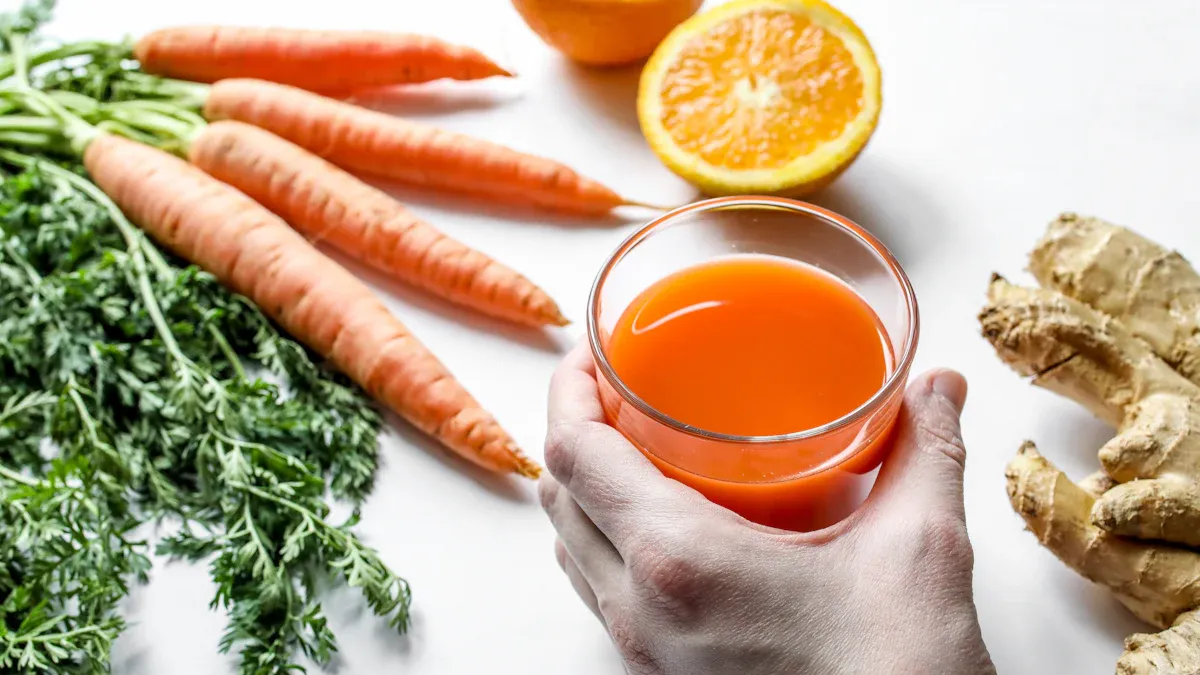
You can get the most out of carrots by preparing, eating, and storing them correctly. These simple steps help you absorb more nutrients. They also keep your carrots fresh and tasty.
Best Preparation Methods for Nutrient Absorption
How you prepare carrots affects how well your body absorbs their nutrients. Beta-carotene, a key nutrient in carrots, is fat-soluble. This means your body absorbs it better with some fat. Cooking carrots often increases beta-carotene absorption.
Preparation Method | Peak Plasma β-carotene Concentration (relative to raw) | AUC β-carotene Absorption (relative to raw) |
|---|---|---|
Fresh Carrot Juice | 2.33 times higher | 2.09 times greater |
Raw Carrots | 1 (baseline) | 1 (baseline) |
This table shows that carrot juice helps you absorb more beta-carotene than eating raw carrots.
Preparation Method | Bioavailability of β-carotene |
|---|---|
Stir-fried Carrots | Approximately 75% |
Raw Carrots | Only 11% |
Stir-frying carrots significantly improves beta-carotene absorption. You can also cook and puree carrots. This increases beta-carotene absorption compared to eating raw, chopped carrots. Your body absorbs about 65.1% of beta-carotene from cooked, pureed carrot meals. It absorbs only 41.4% from raw, chopped carrot meals.
Creative Ways to Enjoy Carrots
You can easily add more carrots to your diet.
Add shredded carrots to salads or coleslaw.
Blend carrots into smoothies or juices.
Roast carrots with herbs for a sweet side dish.
Use carrots in soups, stews, or stir-fries.
Bake carrots into muffins, cakes, or breads.
Enjoy baby carrots as a quick, healthy snack.
Proper Storage for Freshness
Store carrots correctly to keep them fresh.
Remove the green tops before storing. The tops draw moisture from the roots.
Place unwashed carrots in a plastic bag or airtight container.
Store them in the coldest part of your refrigerator.
Carrots can last for several weeks when stored properly.
Common Carrot Myths Debunked
You might have heard that carrots give you perfect night vision. This is a common myth.
“Whenever patients ask about carrots, I say, ‘Switch the channel. Popeye is definitely more knowledgeable than Bugs Bunny on this one.’” – Dr. Steven Newman, optometric physician and nutrition specialist.
This myth started as British propaganda during World War II. It aimed to hide radar technology. Carrots do contain beta-carotene. Your body converts it to vitamin A. Vitamin A is crucial for eye health. It helps prevent night blindness if you have a deficiency. However, eating more carrots will not give you “catlike night vision.” It will not improve your eyesight if it is already healthy. Carrots support normal vision. They do not enhance it beyond that.
Carrots are truly remarkable vegetables. They offer you many health benefits. You gain essential vitamins, fiber, and powerful antioxidants from these versatile carrots. These nutrients support your vision, heart health, and immune system. They also aid digestion and promote skin health. Make carrots a regular part of your meals. You will enjoy their delicious taste and boost your overall well-being. Start adding more carrots to your daily diet today.
FAQ
What makes carrots good for your eyes?
Carrots contain beta-carotene. Your body converts beta-carotene into vitamin A. Vitamin A is essential for good vision. It helps your eyes see in low light. This nutrient also protects your eyes from damage.
What kind of fiber do carrots have?
Carrots provide both soluble and insoluble fiber. Insoluble fiber adds bulk to your stool. This helps prevent constipation. Soluble fiber helps manage blood sugar and cholesterol levels. Both types support your digestive health.
What are the main antioxidants in carrots?
Carrots are rich in beta-carotene. This is a powerful antioxidant. They also contain vitamin C and flavonoids. These compounds protect your cells from damage. They help reduce inflammation in your body.
What happens if you eat too many carrots?
Eating too many carrots can turn your skin slightly orange. This condition is called carotenemia. It is harmless. You get it from too much beta-carotene. Simply reduce your carrot intake, and your skin color will return to normal.