

Did you know ricotta cheese is a surprisingly powerful nutritional ally? This creamy delight offers impressive ricotta cheese nutrition benefits. It provides high protein and rich calcium content. You also find incredible versatility in cooking. For example, 100 grams of ricotta cheese offers significant nutrients:
Nutrient | Amount per 100g |
|---|---|
Protein | 11g |
Calcium | 270mg |
This post explores these ricotta cheese nutrition facts. It shows you how easily you can add this amazing food to a healthy diet. Ricotta cheese is more than just a lasagna ingredient. It is a go-to for health-conscious individuals seeking great benefits.
Key Takeaways
Ricotta cheese is a good source of protein. It helps build and repair your body’s tissues.
Ricotta cheese has a lot of calcium. Calcium is important for strong bones and teeth.
Ricotta cheese can help you feel full. This can help you manage your weight.
You can use ricotta cheese in many dishes. It works in both sweet and savory recipes.
Ricotta cheese has many vitamins and minerals. These help your body stay healthy.
What is Ricotta Cheese?
You might know ricotta cheese as a creamy, white ingredient in your favorite Italian dishes. But what exactly is it? Let’s explore its history, how people make it, and the different kinds you can find.
Ricotta’s Origin
The story of ricotta cheese goes way back. People in the Italian peninsula made it during the Bronze Age. They used special ceramic pots called milk boilers. These pots helped them boil milk at high temperatures. This process created fresh, acid-coagulated cheeses. Later, cheesemakers had a lot of sweet whey left over from making other cheeses. They found a new way to use this whey. They mixed it with milk to create traditional ricotta. The word “ricotta” means “recooked” or “refined” in Italian. This name refers to reheating and acidifying the whey. Ancient Romans also made ricotta. Shepherds often ate it, but Roman aristocrats knew and enjoyed it too.
Production Process
Making ricotta is a clever process. You start with the liquid left over from making other cheeses, called whey. Cheesemakers gently heat this whey, sometimes adding a little fresh milk for a better yield. They stir the mixture as it heats to prevent scorching. When the mixture reaches a high temperature, around 195°F, they remove it from the heat. Then, they stir in an acid, like vinegar or citric acid. This acid makes the proteins in the whey clump together, forming soft curds. You will see these curds begin to separate from the liquid. Next, cheesemakers pour the mixture into a colander lined with a fine cloth. This allows the liquid whey to drain away. The curds left behind are your fresh ricotta. You can drain it for a short time for a soft texture or longer for a firmer consistency.
Ricotta Varieties
You can find many types of ricotta. Fresh ricotta is soft and creamy. It has a mild flavor. People often use it in desserts like cannoli or savory dishes such as lasagna. Aged ricotta undergoes a longer process. This gives it a denser texture and stronger flavors. You might grate aged ricotta over pasta or salads. Different regions in Italy have their own versions, like Ricotta Romana or Ricotta Siciliana. Cheesemakers also use various kinds of milk. They make ricotta from cow, sheep, goat, or water buffalo milk. Each milk type gives the cheese a unique taste and texture. You can also choose between whole milk ricotta, which is richer, and part-skim ricotta, which has less fat but still offers plenty of protein and calcium.
Ricotta Cheese Nutrition Facts
You want to understand what you eat. Ricotta cheese offers impressive nutritional properties. It provides a wealth of essential nutrients. Let’s break down the ricotta cheese nutrition facts. You will see why it is a smart choice for your diet.
Protein Content
Ricotta cheese stands out as a good source of protein. Protein is vital for building and repairing your body’s tissues. A standard half-cup serving of whole milk ricotta cheese (129g) gives you 10.1 grams of protein. If you choose part-skim ricotta cheese, a half-cup serving (124 grams) contains even more, providing 14 grams of protein. This makes ricotta cheese a fantastic option for increasing your daily protein intake.
Ricotta cheese primarily contains whey proteins. Whey protein is a fast-digesting protein. It quickly delivers amino acids to your muscles. If cheesemakers add milk during production, casein proteins are also present. Casein is a slow-release protein. This combination gives you both immediate and sustained protein benefits.
Calcium and Bone Health
You know calcium is crucial for strong bones. Ricotta cheese delivers a significant amount of this mineral. Whole milk ricotta cheese contains 289mg of calcium per 1/2 cup serving. This makes it an excellent food for bone health.
Ricotta cheese is a bone-building food. A 1/4 cup of part-skim ricotta cheese contains 300 mg of calcium per serving. This helps prevent osteoporosis. You can see how ricotta cheese compares to other cheeses in calcium content:
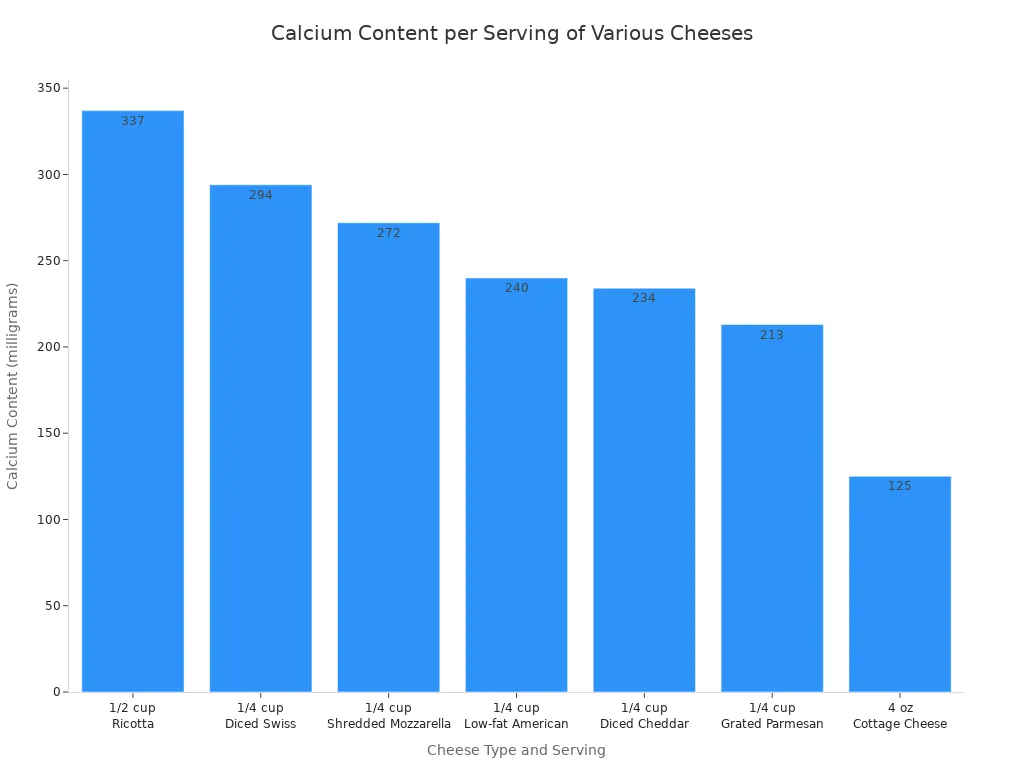
Ricotta cheese is identified as a bone-building food, with 1/4 cup of part-skim ricotta cheese containing 300 mg of calcium per serving.
This chart clearly shows ricotta cheese provides more calcium than many other popular cheeses. This makes it a top choice for maintaining bone density and strength.
Vitamins and Minerals
Ricotta cheese offers more than just calcium and protein. It contains a variety of other essential vitamins and minerals. A half cup of whole milk ricotta cheese provides:
257 milligrams calcium (26 percent DV)
18 micrograms selenium (26 percent DV)
196 milligrams phosphorus (20 percent DV)
0.2 milligrams riboflavin (14 percent DV)
552 International Units vitamin A (11 percent DV)
1.4 milligrams zinc (10 percent DV)
0.4 micrograms vitamin B12 (7 percent DV)
14.9 micrograms folate (4 percent DV)
130 milligrams potassium (4 percent DV)
Ricotta cheese also contains some vitamin B6, pantothenic acid (vitamin B5), iron, and magnesium. You also find vitamin B3 (niacin), vitamin E, vitamin K, vitamin B1 (thiamin), vitamin D, choline, manganese, and copper. Each of these plays a role in your overall health. For example, vitamin B12 promotes brain function and energy metabolism. This B12 is crucial. The vitamin B12 in ricotta supports your nervous system. You need vitamin B12 for red blood cell formation. This B12 helps convert food into energy. Getting enough vitamin B12 is important. The vitamin B12 content contributes to your daily needs. This B12 is a key nutrient. You benefit from this B12. Calcium supports bone health and prevents osteoporosis. Vitamin A supports overall health and well-being. Phosphorus also supports overall health and well-being. This B12 is a valuable addition to your diet.
Healthy Fats Profile
You might wonder about the fat content in ricotta cheese. It contains a mix of healthy fats. These fats are important for energy and nutrient absorption. Here is a breakdown of the fat types in a 1 oz serving:
Fat Type | Amount (per 1 oz serving) |
|---|---|
Saturated fats | 1g |
Monounsaturated fats | 1g |
Polyunsaturated fats | 0.1g |
You can choose whole milk ricotta for a richer flavor and texture. Part-skim ricotta offers a lower fat option. Both provide valuable nutrients.
Ricotta: A High-Protein Cheese
Ricotta cheese is a high-protein cheese. It offers excellent ricotta cheese nutrition. It provides 11.26 grams of protein per 100 grams. This is slightly higher than cottage cheese, which has 11.12 grams of protein per 100 grams. Both cheeses are rich in essential proteins for muscle building. Cottage cheese is particularly rich in casein. Casein is a slow-release protein. Ricotta cheese is rich in whey proteins. Whey proteins are fast-release proteins. This makes ricotta cheese nutrition a great choice for muscle recovery and growth. You get a powerful combination of calcium and protein. This makes ricotta cheese a versatile and healthy addition to your meals. You can easily incorporate these ricotta cheese nutrition facts into your daily eating plan.
Ricotta’s Health Benefits
Ricotta cheese offers many health benefits. You gain significant advantages by adding it to your diet. These benefits come from its rich ricotta cheese nutrition. Let’s explore how this delicious cheese supports your body.
Muscle Support
You know protein is essential for your muscles. Ricotta cheese is a good source of protein. It helps your muscles grow and repair. Ricotta cheese contains both whey and casein protein. Whey protein quickly rebuilds muscles after exercise. Casein protein works slowly. It supports muscle recovery for a longer time, even while you sleep.
Studies show ricotta cheese helps muscle health. One study looked at older adults. They ate 210 grams of ricotta cheese. This improved markers for sarcopenia. Sarcopenia is muscle loss. This means the protein in ricotta cheese helps your body make new muscle. It also increases overall muscle. Another study found that dairy proteins lead to more protein building and muscle gain in young people.
Adding ricotta cheese can boost your daily protein. One clinical trial found it increased protein intake from 0.9 grams to 1.2 grams per kilogram of body weight. This higher protein intake helps your muscles. It leads to more lean tissue. Dietary protein helps your body build muscle. It also increases your overall lean body mass. Ricotta cheese provides about 18.12 grams of protein daily in these studies. This shows the strong ricotta cheese nutrition benefits for muscle support.
Bone Strength
You need strong bones. Ricotta cheese boosts bone health. It provides a lot of calcium. This mineral is vital for keeping your bones dense and strong. Regular intake of calcium helps prevent bone diseases. It supports your skeletal structure throughout your life. The calcium in ricotta cheese makes it an excellent choice for maintaining bone density.
Satiety and Weight Management
Ricotta cheese can help you feel full. It is high in protein. High-quality protein makes you feel satisfied. This feeling of fullness helps you manage your weight. You eat less when you feel full. Dr. Stanford notes that ricotta is “naturally lower in fat than some other cheeses, and it is also very creamy, which helps a little bit go a long way.”
A half-cup serving of ricotta cheese has about 216 calories. It is also high in protein. This makes it good for a healthy weight loss diet. Ricotta provides all nine essential amino acids. These are building blocks your body needs. Increasing your protein intake by 15% can reduce how many calories you eat. It can also lower body weight and fat. The American Journal of Clinical Nutrition published this finding. Protein also lowers ghrelin levels. Ghrelin is the hormone that makes you feel hungry. A quarter-cup of ricotta cheese has 93 calories and 7 grams of protein. Choosing part-skim or fat-free ricotta can further reduce calories and fat. This helps you manage your weight. These are important health benefits.
Energy Boost
You need energy for your daily activities. Ricotta cheese gives you a steady energy boost. Its protein and healthy fats provide sustained fuel. The protein helps stabilize your blood sugar. This prevents energy crashes. The fats give you long-lasting energy. This combination helps you stay active and focused throughout the day. You get these nutritional benefits from the balanced ricotta cheese nutrition.
Ricotta’s Kitchen Versatility

You know ricotta cheese offers great nutrition. It also shines in your kitchen. You can use ricotta cheese in many ways. It adds creamy texture and rich flavor to countless dishes. Ricotta works well in both savory and sweet meals. You will find it easy to add to your daily cooking.
Savory Dishes
Ricotta cheese makes savory dishes special. You can create many delicious meals. Savory Ricotta Fritters with Quick Tomato Sauce are a popular choice. You make the fritters with ricotta cheese, olive oil, mozzarella, Pecorino Romano or Parmesan, egg, nutmeg, parsley, salt, and pepper. The tomato sauce includes olive oil, garlic, San Marzano peeled tomatoes, and sometimes white wine. You drain liquid from the ricotta, simmer the tomato sauce, then fry the fritters until golden brown. You can serve this dish as an appetizer or a main course.
Other savory options include:
Baked Pesto Ricotta
Ricotta and Herb Bread
Ricotta Gnocchi
Vegetarian Ricotta “Meatballs”
Sweet Creations
You can also make many sweet treats with ricotta cheese. It adds a light, creamy texture to desserts. Popular sweet dishes include:
Lemon ricotta cake
Chocolate ricotta cake
Ricotta Cream
Almond ricotta cake
Blueberry Ricotta Cake
Lemon Ricotta Muffins
Baked Ricotta Cheesecake
Homemade Cannoli
You can make a Quick Sweet Ricotta Recipe in just 5 minutes. You need 400 grams of well-drained ricotta cheese, ⅓ cup sifted icing sugar, and ⅛ teaspoon cinnamon. Place the ricotta in a food processor. Blend it on high for about 2 minutes. Scrape the sides, then process for another minute. Add the icing sugar and cinnamon. Process for another minute until smooth. Taste and adjust the sweetness. You can serve this with pizzelle, air fryer cookies, or fresh fruit. Use it as a filling for mini crepe cakes. It also works like a cannoli dip. For more flavor, gently fold in mini chocolate chips, candied citrus peel, or lemon zest. You can also add pure vanilla or almond extract.
Quick Recipes
You can find many quick ricotta cheese recipes. These are perfect for busy days. You can make a satisfying snack or a fast meal.
Ricotta Toast: Spread ricotta on toast. Add your favorite toppings.
Ricotta Spoonable: Enjoy ricotta straight from the spoon with a drizzle of honey.
Personal White Pizza With No-Yeast Dough: Make a 10-minute pizza using ricotta.
Spicy Scallion Pasta With Ricotta: This dish comes together quickly.
Toast With Buttered Raisins & Ricotta: This makes a satisfying snack.
Many websites offer a dedicated collection of quick and easy ricotta cheese recipes. You can explore these for more ideas.
Flavor Pairings
Ricotta pairs well with many flavors. These pairings make your ricotta cheese recipes even better. For savory dishes, try ricotta with:
Mozzarella and Parmesan (in baked ziti)
Asparagus and Prosciutto (in quiche)
Various vegetables (in lasagna, stuffed shells)
Sun-dried tomato pesto (with gnocchi)
Chives and Garlic (with bell peppers or fresh veggies)
Zucchini (in flatbread)
Spinach (in cannelloni, rustic pie)
Peas (in salad)
Tomatoes and Plums (in salad)
Broccolini and Mushrooms (in conchiglie)
For sweet dishes, ricotta goes well with:
Lemon (in cheesecake)
Honey (with seasonal fruit)
Crushed nuts and everything-bagel seasoning (as a snack)
Blueberries and slivered almonds (in pancakes)
Ricotta Consumption Considerations
You now understand the many benefits of ricotta cheese. However, you should also know some things before adding it to your diet. These considerations help you enjoy ricotta cheese safely and effectively.
Lactose Sensitivity
You might wonder about lactose if you are sensitive to dairy. Ricotta cheese does contain lactose. It typically has about 0.2-0.3 grams of lactose per ounce. Some sources indicate ricotta can have up to 5% lactose. If you have lactose intolerance, you should be aware of this amount. You might find that a small serving is fine, or you may need to avoid it. Always listen to your body.
Sodium Levels
You should also pay attention to sodium levels. The amount of sodium in ricotta cheese can vary. Different brands and types have different amounts. You should always check the nutrition label on the package. Choosing lower-sodium options helps you manage your daily salt intake. This is important for your overall health.
Moderation and Balance
You should eat even healthy foods in moderation. Ricotta cheese is no exception. A recommended serving size for ricotta cheese in the Dairy Group is ½ cup. This portion helps you get the benefits without consuming too much. You can easily fit ricotta into a balanced diet. Enjoy it as part of varied meals to get all the nutrients your body needs.
You have learned about the impressive ricotta cheese nutrition benefits. This includes its high protein and calcium content. These comprehensive ricotta cheese nutrition benefits support your overall well-being. The rich ricotta cheese nutrition makes it a smart choice. Ricotta cheese is also incredibly versatile. You can easily add it to sweet or savory dishes. Experiment with ricotta cheese in your cooking. You will discover its many health benefits. Make ricotta cheese a regular, healthy addition to your diet.
FAQ
Is ricotta cheese healthier than cottage cheese?
You find both cheeses nutritious. Ricotta often has more calcium and whey protein. Cottage cheese has more casein protein. You choose based on your dietary needs. Both offer great protein benefits.
Can you eat ricotta cheese every day?
You can enjoy ricotta daily in moderation. It offers protein and calcium. You should balance it with other healthy foods. This ensures a varied diet. You get many nutrients this way.
How do you store ricotta cheese?
You should store fresh ricotta in the refrigerator. Keep it in an airtight container. You can use it within 3-5 days after opening. Always check the expiration date. Proper storage keeps it fresh.
Is ricotta cheese good for weight loss?
Yes, ricotta can support weight loss. It is high in protein. Protein helps you feel full. You choose part-skim options for fewer calories. This helps manage your intake. It makes a satisfying snack.
Can you freeze ricotta cheese?
You can freeze ricotta cheese. Its texture may change after thawing. It becomes more crumbly. You can use it in baked dishes. Freezing works best for cooked recipes.